
Last updated September 23, 2026
Free visual inspection and a written scope of work before any mitigation begins - photos, moisture readings, and drying logs go in your claim file
The scope we write is the scope we bill. Anything new gets shown to you, in writing, before we touch it.
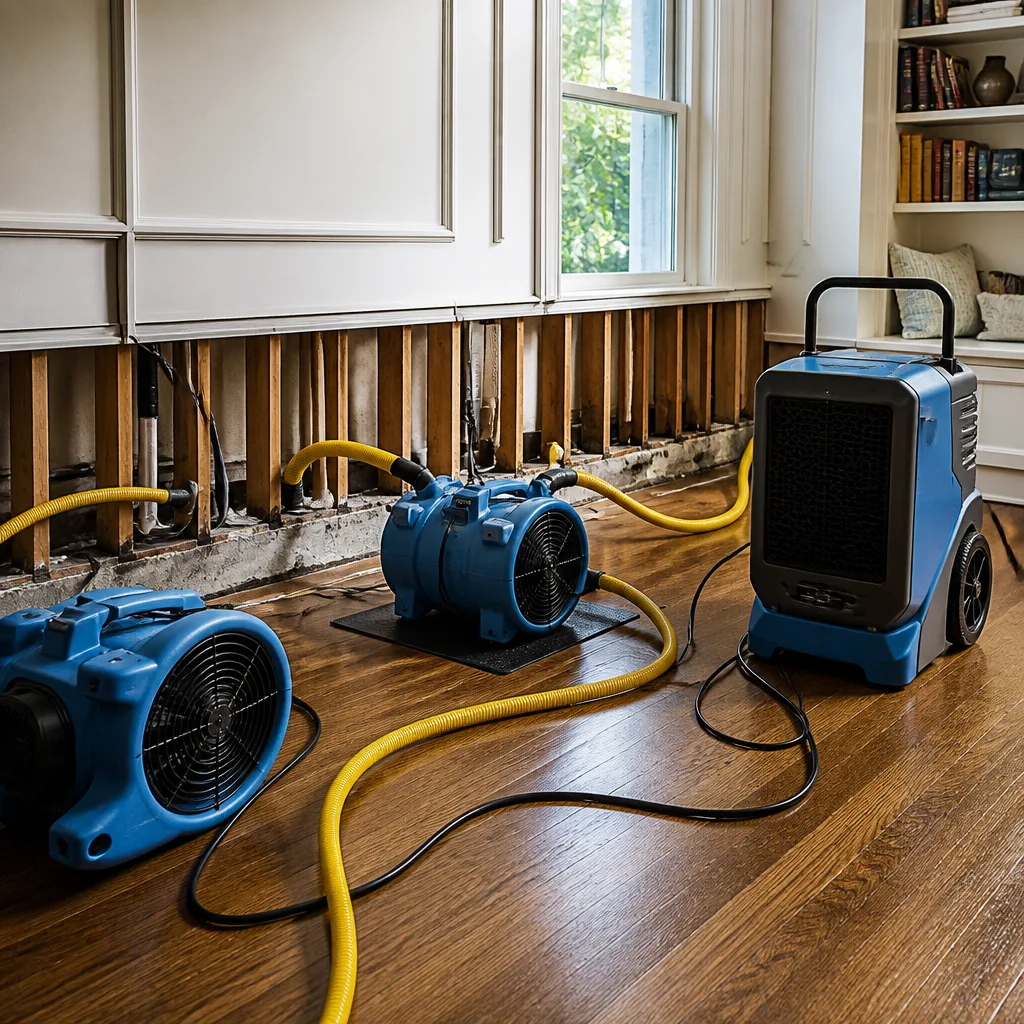
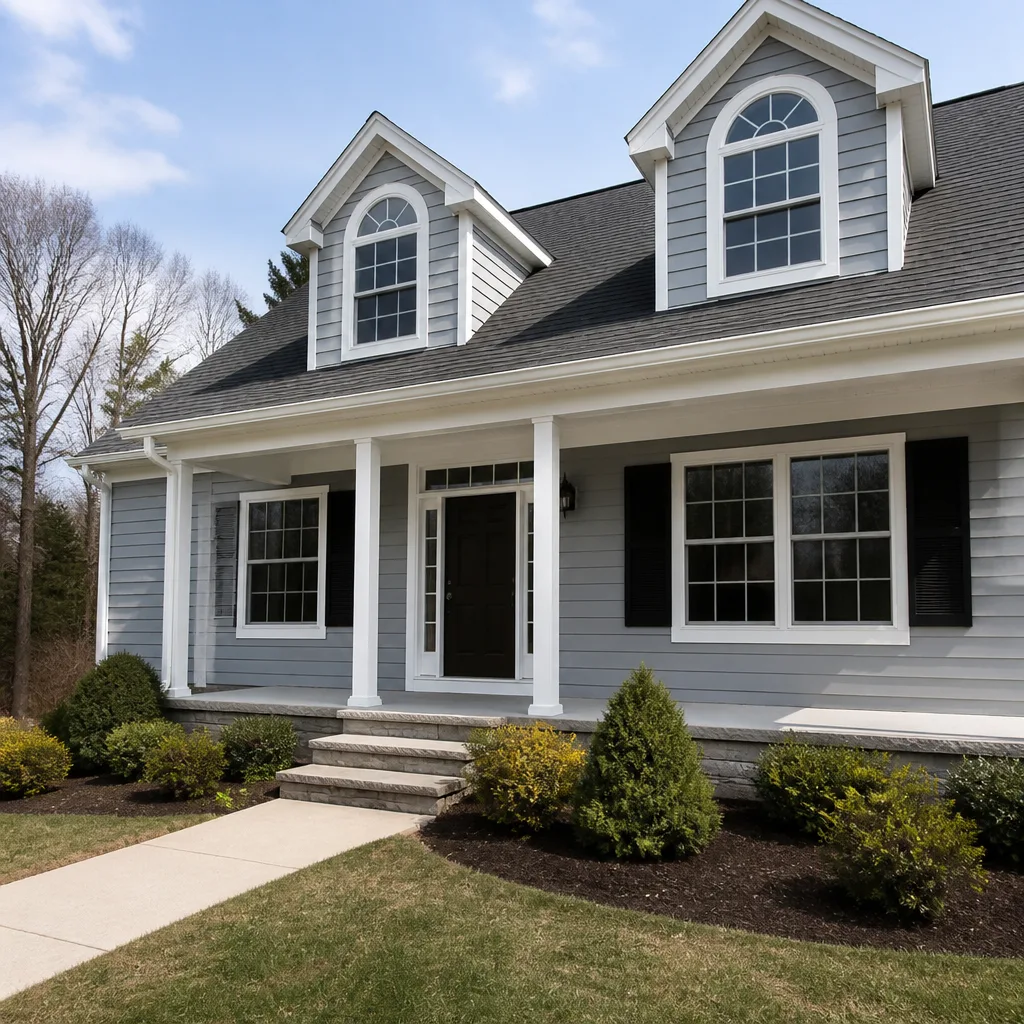
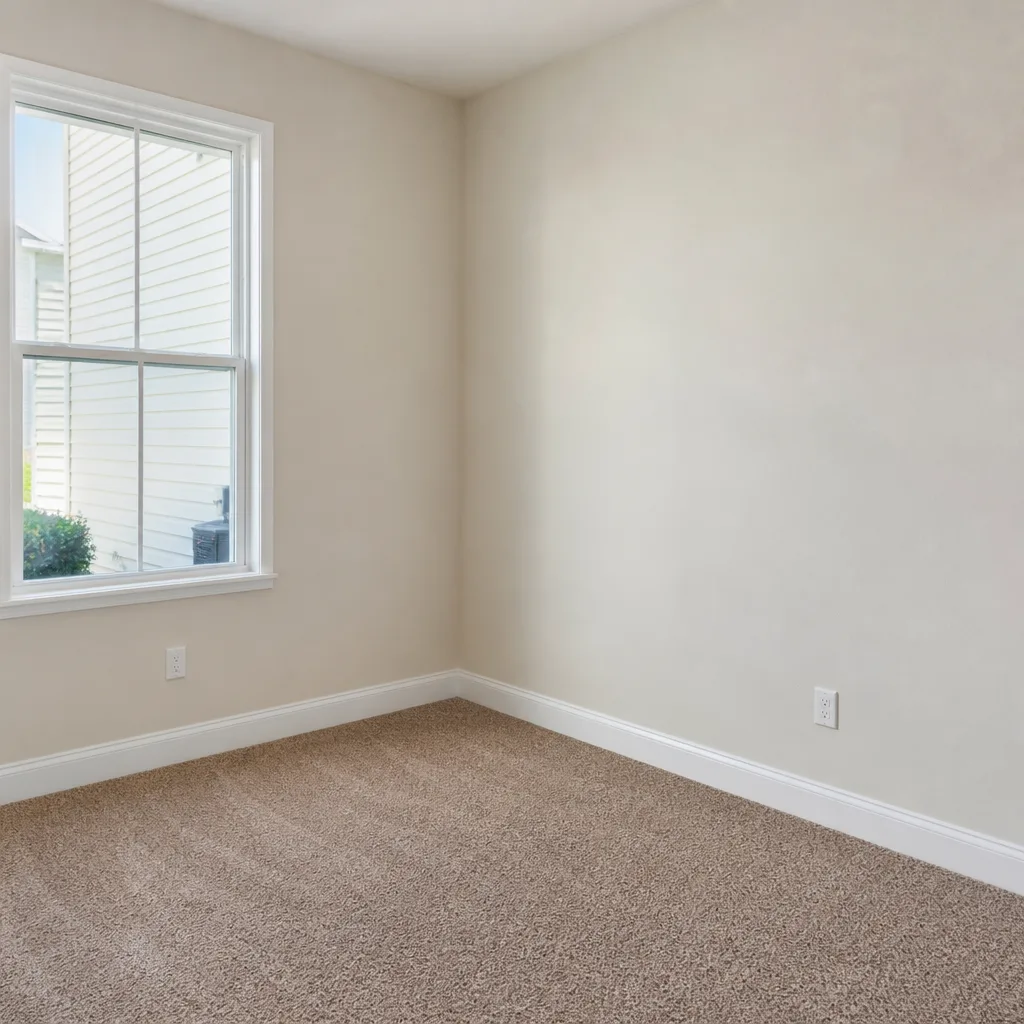

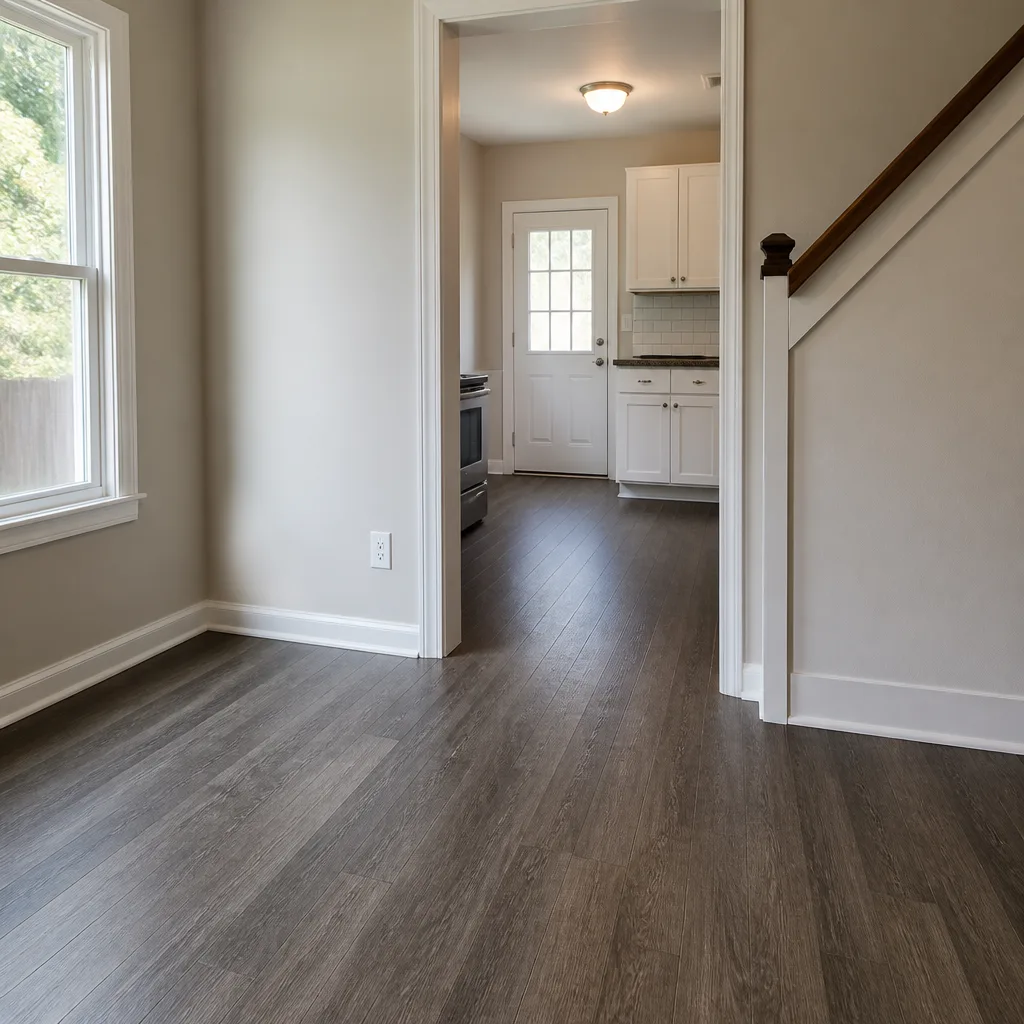

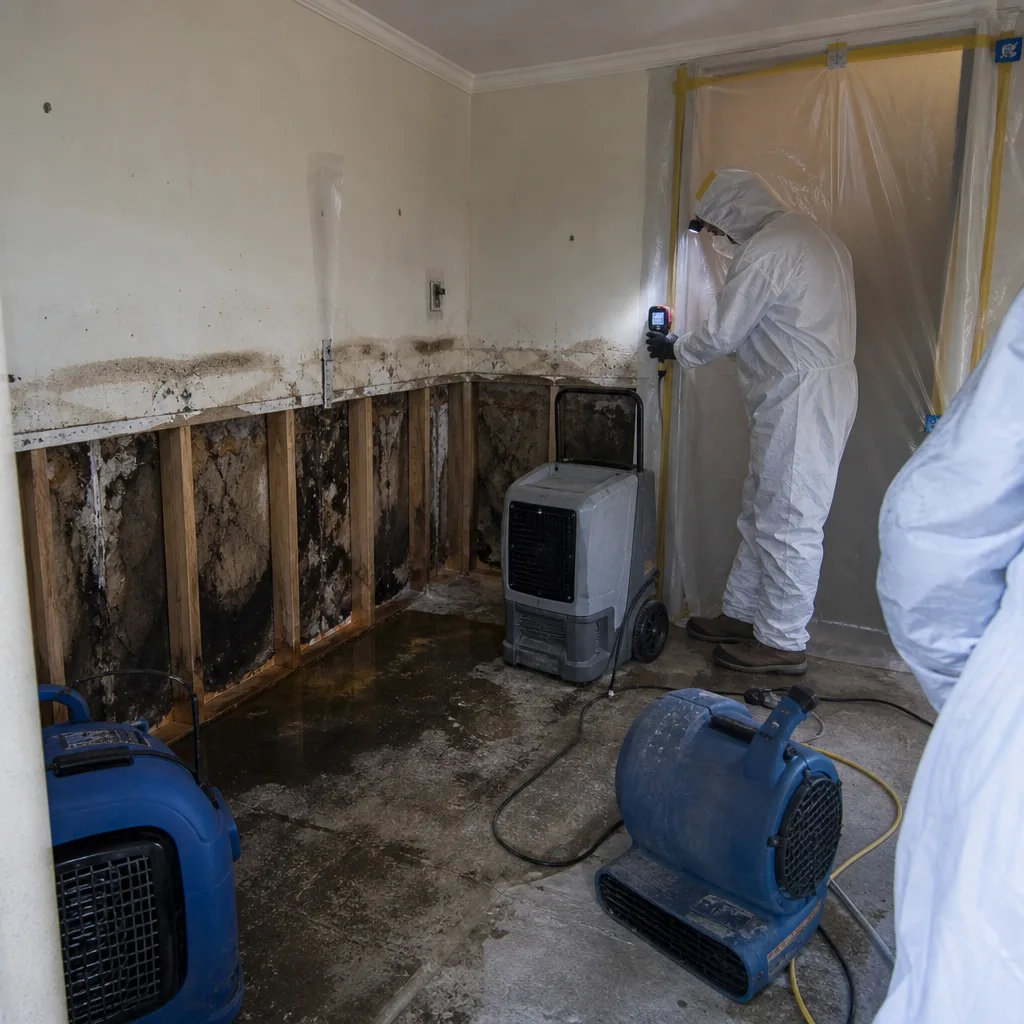 Before
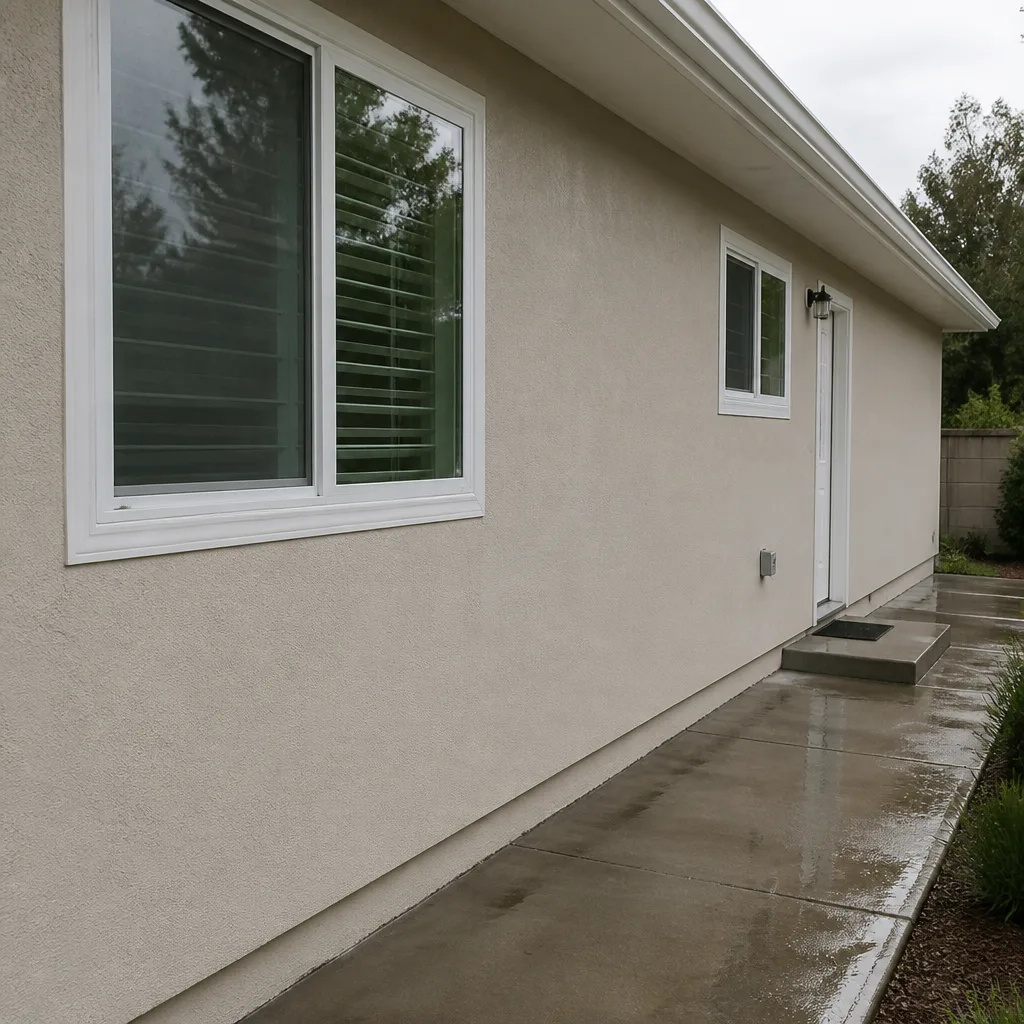 After
After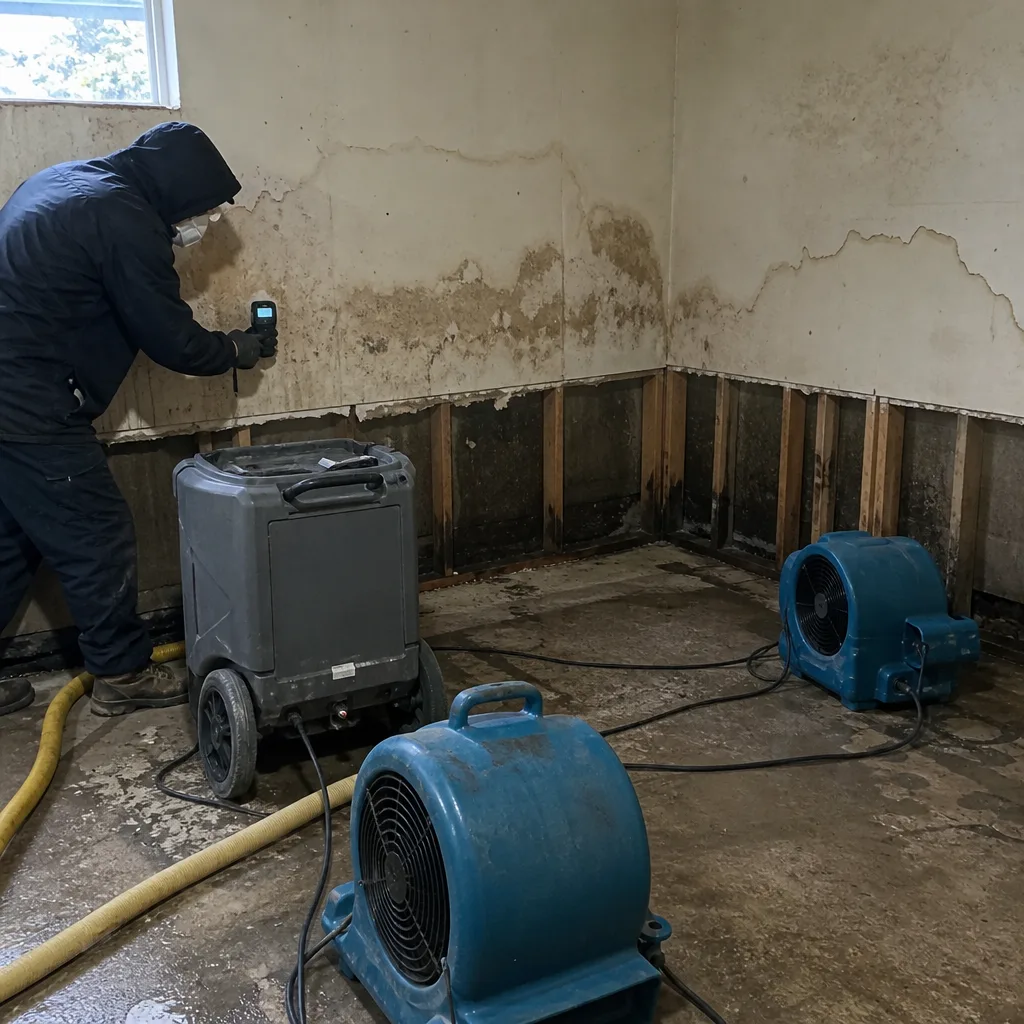 Before
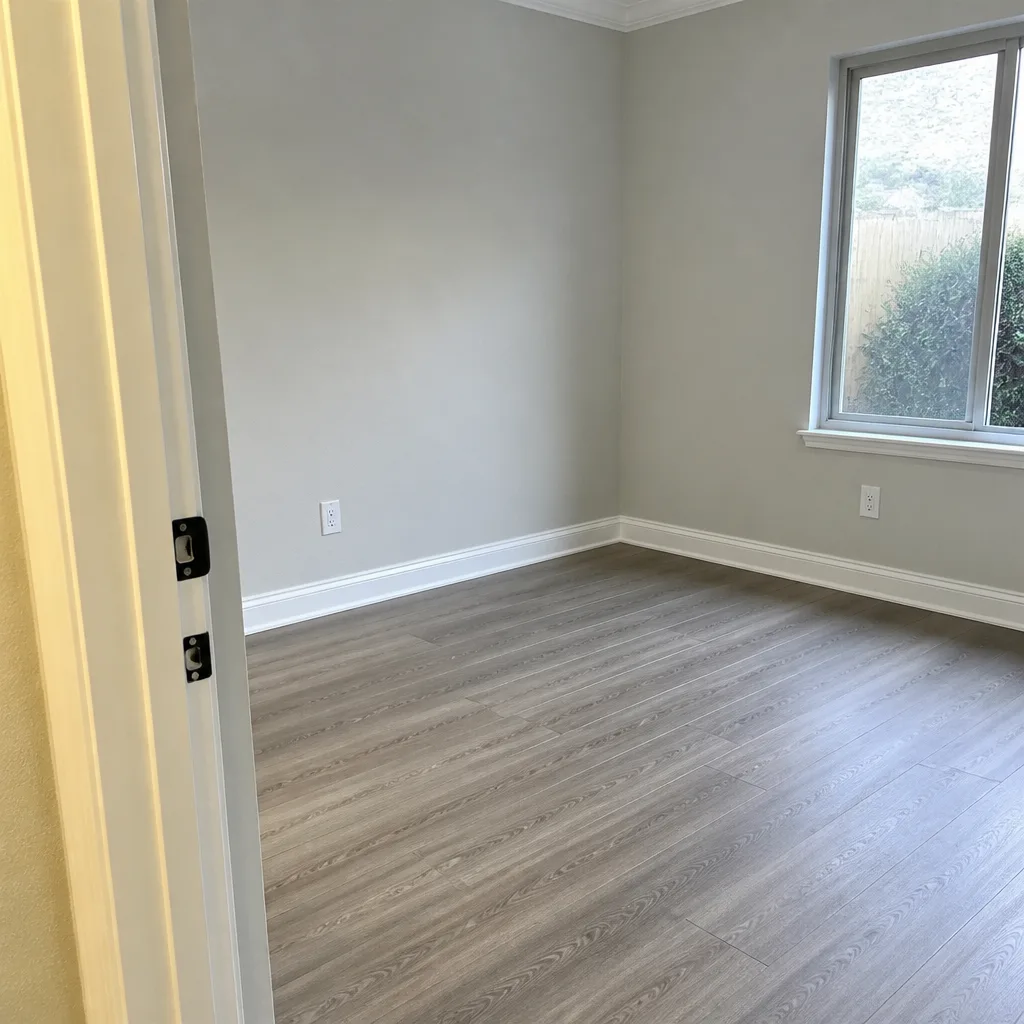 After
After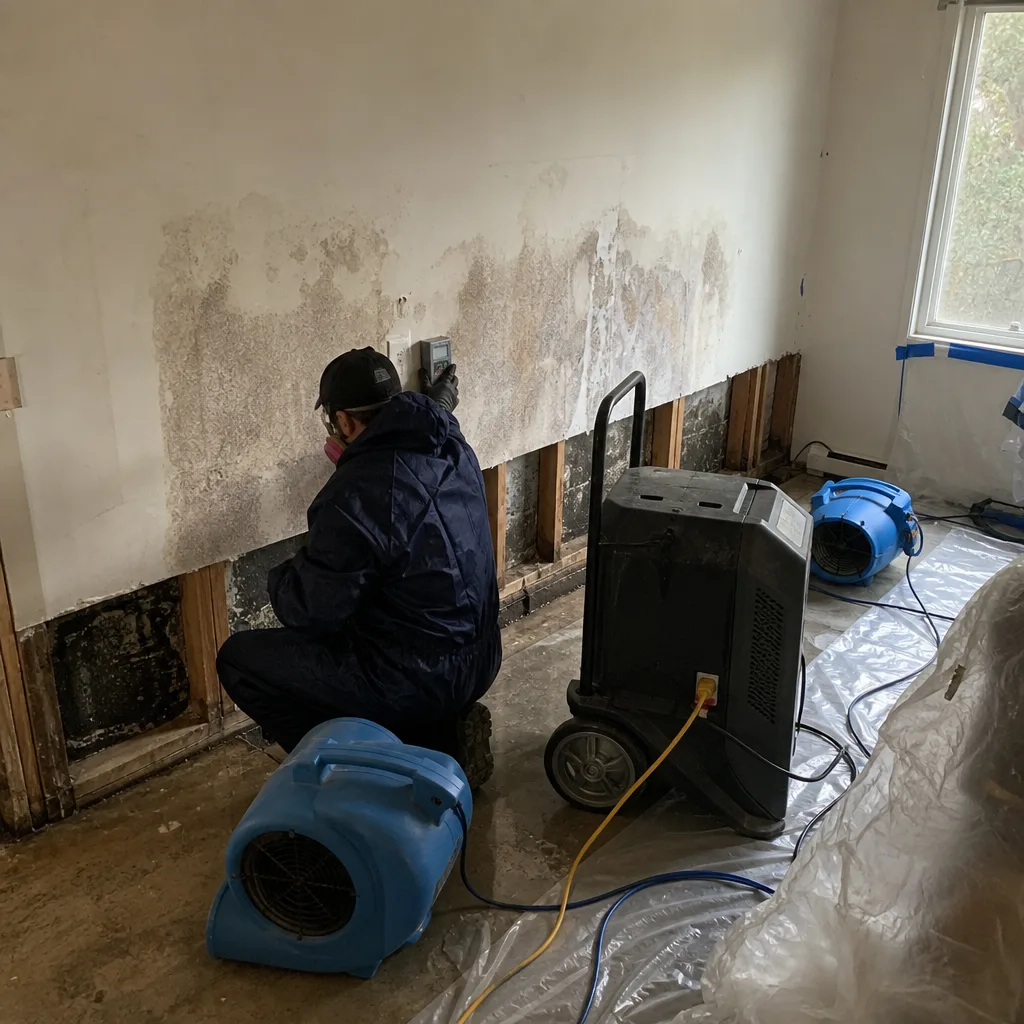 Before
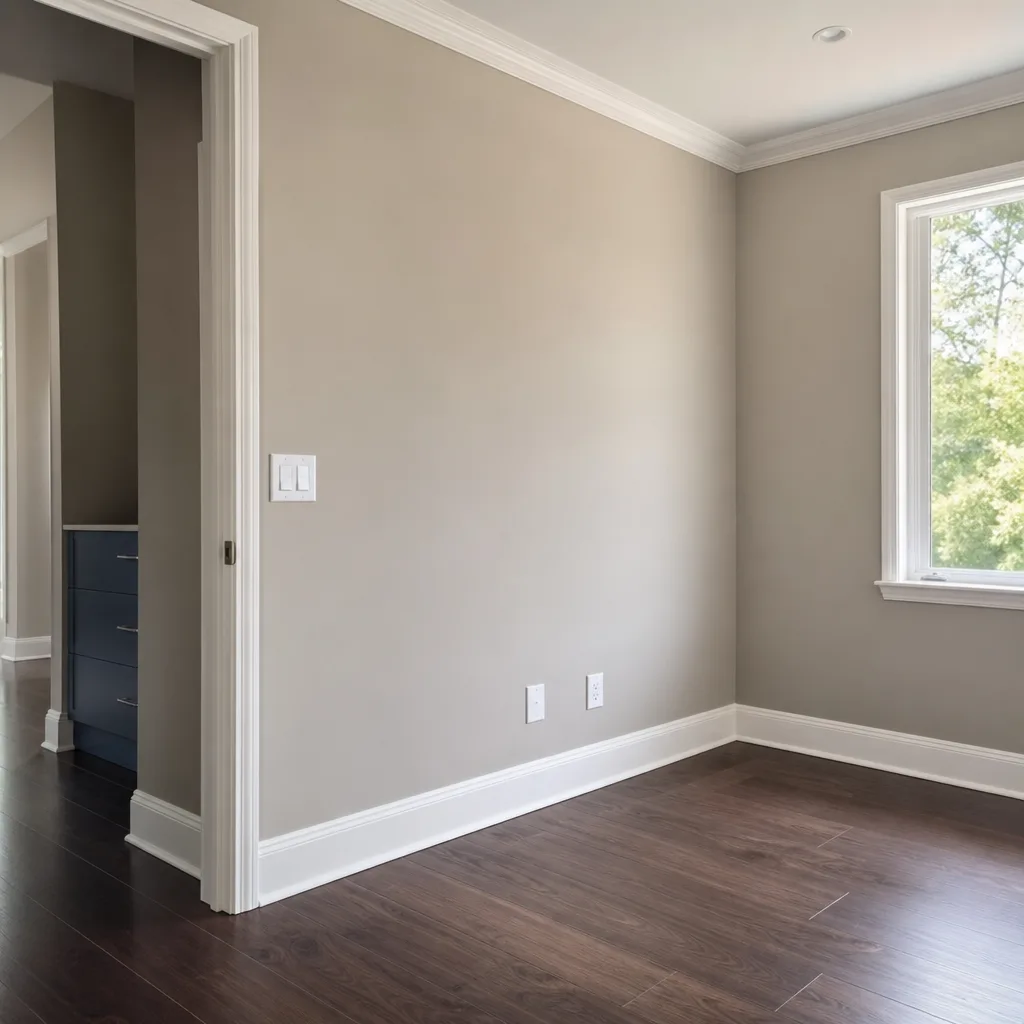 After
AfterThe Complete Guide to Damage Restoration in Poway
The average residential property claim takes 22 days to settle. Claims with incomplete contractor documentation take 47. That 25-day gap costs Poway homeowners real money in extended temporary housing, delayed mortgage draws, and out-of-pocket repairs that insurers later refuse to cover. It’s entirely preventable.
We’ve restored more than 12,000 homes since 2011, and the pattern is consistent: the disaster itself rarely causes the financial damage. The financial damage happens when a contractor leaves with wet drywall still behind the paint, or when a drying log can’t be produced because it was never kept. This guide maps every phase of restoration through what your insurer will demand to see, not what a contractor wants to sell, with Damage Restoration Warning Signs: A Poway Homeowner’s Reference Guide to help you spot problems early. If you own a home in Poway, the soil, wind patterns, and aging housing stock here create specific risks that adjusters know well and document carefully. You should too.
Quick Answer
Damage restoration in Poway follows a four-phase sequence: emergency mitigation, structural drying, reconstruction, and documentation close-out. Each phase produces specific documents, moisture readings, and photo records that determine whether your insurer pays the claim in 22 days or disputes it for 47. A properly documented restoration includes a written price before work starts, daily drying logs with psychrometric data, timestamped photo records, and a signed certificate of completion backed by a written warranty.
Table of Contents
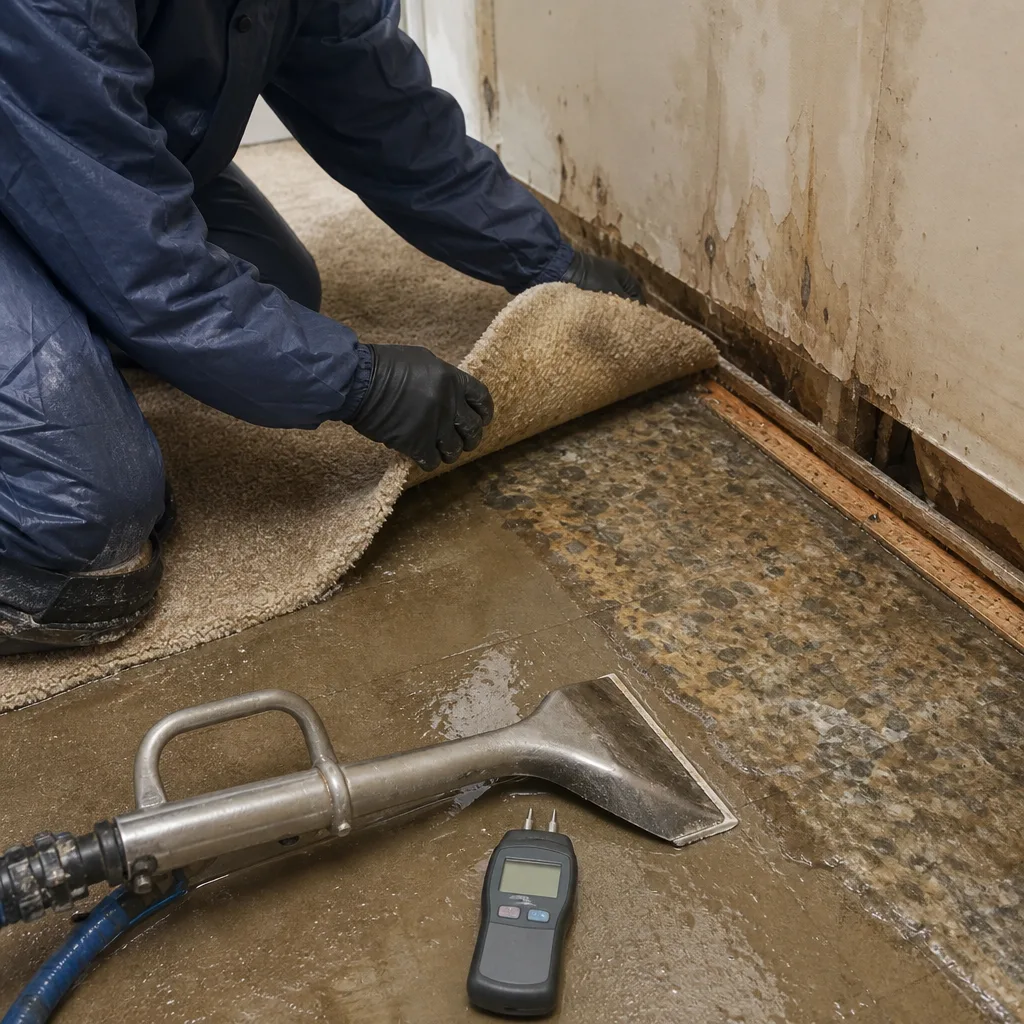
- The Four-Phase Restoration Sequence
- Poway’s Risk Profile: What Disasters Actually Look Like Here
- Mitigation vs. Reconstruction: Why Insurance Treats Them Differently
- The Documentation You Should Hold Before Anyone Leaves
- How to Cross-Check a Final Invoice Against the Written Scope
- Equipment and Drying Standards That Matter
- Common Mistakes to Avoid
- When to Call a Professional
- Frequently Asked Questions
 Before
 After
AfterThe Four-Phase Restoration Sequence
Every damage restoration job in Poway, whether it’s a slab leak in Old Poway or wind-driven rain in The Heritage, moves through four distinct phases. Each phase has a clear deliverable. Miss one, and your claim stalls.
Phase 1: Emergency Mitigation (Hours 0-72)
This is the stop-the-bleeding phase. The crew extracts standing water, removes saturated materials that can’t be dried in place, sets containment for mold, or secures fire-damaged structures against weather. The key document produced here is the initial written scope with a fixed price. Haven Standard, Clause 1: written price before work begins. No exceptions.
In Poway, mitigation crews often find secondary damage that isn’t visible to the homeowner. Clay-heavy soil around many foundations here slows drainage, so water that enters through a slab crack can wick laterally into baseboards before it ever shows on the surface. A proper mitigation assessment includes moisture mapping with pinless meters to find this migration.
What you should receive before mitigation ends:
- Written scope of emergency work with line-item pricing
- Photo record of all affected areas, timestamped
- Moisture readings from affected and unaffected materials (the “dry standard” baseline)
- Equipment placement plan showing dehumidifier and air mover locations
Phase 2: Structural Drying (Days 1-7, typically)
This is where most documentation failures occur. Drying isn’t “wait and see.” It’s a controlled process measured by psychrometric data: temperature, relative humidity, and vapor pressure differential (the force that actually moves moisture out of materials into the air). The crew adjusts equipment daily based on these readings.
The daily drying log is the document that turns a restoration invoice into a payable claim. Without it, an adjuster has no evidence that drying was necessary, that it was done correctly, or that it was complete before reconstruction started. We’ve seen Poway homeowners denied $8,000-$14,000 in drying charges because the contractor’s “log” was a few handwritten notes on a clipboard.
What the daily log should contain:
- Date and time of each reading
- Equipment inventory by serial number (Dri-Eaz, Phoenix, B-Air, or equivalent)
- Relative humidity and temperature in each affected room
- Moisture content readings from specific materials, mapped to floor plans
- Technician signature and any equipment adjustments made
Phase 3: Reconstruction (Scheduled, not emergency)
Once materials reach their dry standard, reconstruction begins. This is carpentry, drywall, flooring, painting, and finish work. It is not emergency service. It is scheduled, scoped in writing, and often requires permits, codes & inspections.
In Poway, reconstruction on homes built before 1990 frequently reveals asbestos-containing materials or lead paint that must be abated before normal work proceeds. A contractor who doesn’t document this discovery and pause for proper abatement creates liability that can void your homeowner’s policy. The written scope should include a change-order protocol for these discoveries.
Phase 4: Documentation Close-Out
The final phase produces the certificate of completion, the final photo record showing pre- and post-condition, and the warranty document. For DryMark Restoration Poway jobs, this includes the 365-Day Done Right Promise under The Haven Standard. It’s a signed guarantee, not a verbal assurance.
Water Damage Restoration in Poway follows this sequence precisely, with documentation requirements scaled to the water classification (clean, gray, or black).
Poway’s Risk Profile: What Disasters Actually Look Like Here
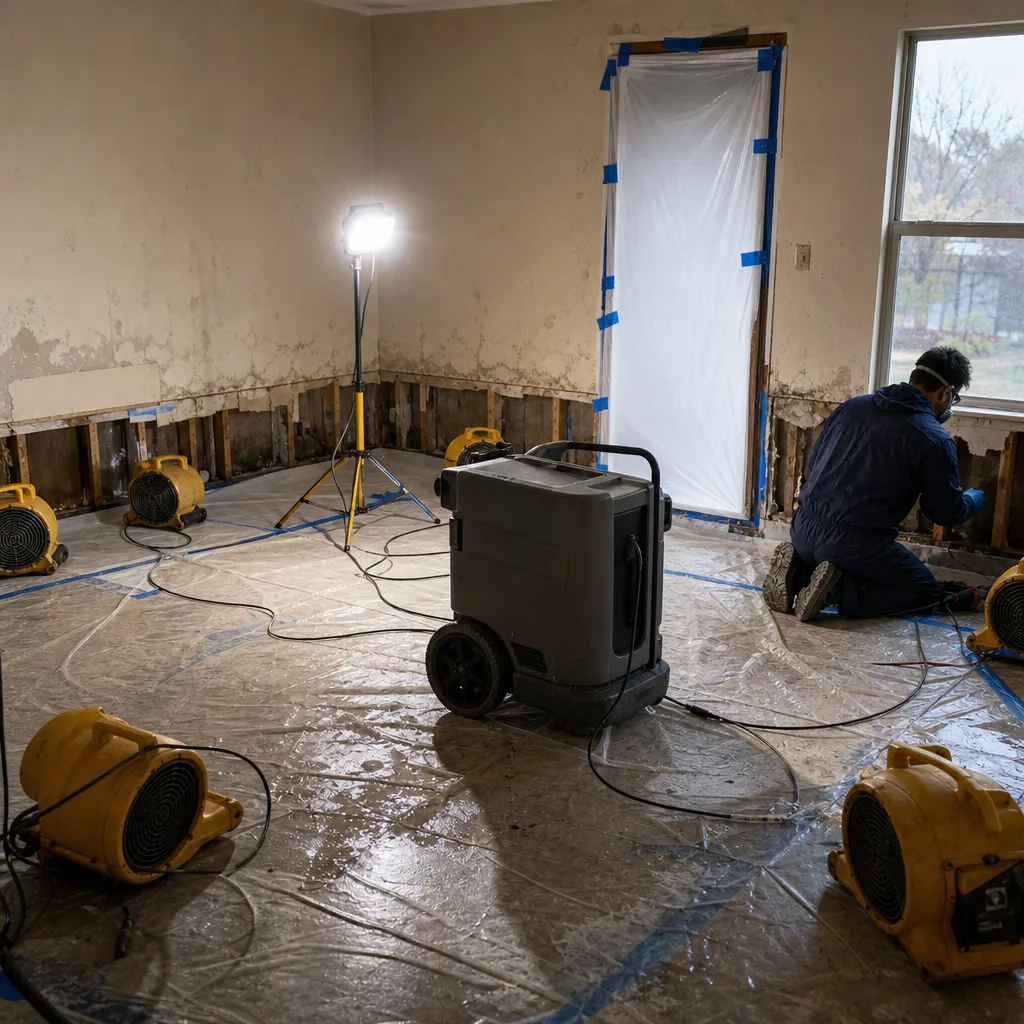
Poway sits at the western edge of the Poway valley, surrounded by hills that channel Santa Ana winds and create localized weather patterns that differ from coastal San Diego by 15-20 degrees and significantly lower humidity. These conditions shape the damage we see most often and the disputes that follow.
Santa Ana Wind Events and Fire Risk
The October-December Santa Ana season brings sustained winds of 25-45 mph with gusts to 70, humidity below 15%, and temperatures in the 90s even in November. In 2007, the Witch Creek Fire burned 197,990 acres and destroyed 1,141 homes in the region, including structures in Poway’s northern hills. The pattern hasn’t changed.
Fire damage restoration here often includes smoke infiltration into homes that never saw flame. Wildfire smoke is particularly invasive because of its particulate size and the chemicals it carries from burned vegetation and structures. Proper restoration requires HEPA air scrubbing, thermal fogging or ozone treatment (where appropriate), and duct cleaning with photo documentation of before-and-after conditions inside the HVAC system.
Clay-Heavy Soil and Foundation Issues
Poway’s soil is predominantly clay-loam with high expansion coefficients. When saturated, it swells; when dry, it contracts. This seasonal movement stresses slab foundations, particularly in the 1970s-1990s construction that dominates neighborhoods like Green Valley and Bridlewood. The result is slab cracks that admit water during rare heavy rains or irrigation overruns.
Water entering through a slab crack behaves differently than water from a pipe burst. It wicks slowly, often traveling 8-12 feet along the slab before showing visible damage. By the time a homeowner notices warping laminate or a musty smell, mold may be established in wall cavities. Mitigation here requires injectidry systems that force dry air into the wall cavity through small ports, rather than simply drying the surface.
Aging Housing Stock and Polybutylene Piping
Approximately 35% of Poway’s housing stock was built between 1975 and 1995, the peak era for polybutylene (“poly”) plumbing. This gray plastic piping fails without warning, often at joints, and the failure mode is a full-flow rupture rather than a slow leak. A poly pipe burst can release 10-15 gallons per minute.
Homes with original poly piping should be disclosed to any restoration contractor. The pipe material affects both the mitigation approach (higher water classification due to potential contamination) and the reconstruction scope, since most insurers now require full replacement rather than spot repair after a poly failure.
Rare but Severe Rain Events
Poway averages 12 inches of annual rainfall, but El Niño years can bring 25-30 inches concentrated in January-March storms. The 2023 storms produced localized flooding in the Poway Creek drainage area, particularly affecting homes near Community Park with inadequate storm-drain capacity. Flood restoration from surface water intrusion requires different documentation than plumbing failures, since flood coverage is a separate policy endorsement that adjusters scrutinize closely.
Fire & Smoke Damage Restoration in Poway addresses the specific smoke and particulate challenges of our region’s wildfire patterns.
Mitigation vs. Reconstruction: Why Insurance Treats Them Differently
This distinction causes more claim disputes than any other single factor. Homeowners assume their policy covers “restoration” as one continuous service. It doesn’t. Mitigation and reconstruction are separate coverages with separate limits, separate deductibles in some policies, and separate documentation requirements.
Mitigation: Emergency, Time-Critical, Documented Daily
Mitigation is the work required to prevent further damage. It is not optional, and it is not scheduled. When a water heater fails in a Rancho Arbolitos home at 2 a.m., mitigation begins when the crew arrives, whatever the hour.
Insurance covers mitigation under the “sudden and accidental” provision of most homeowner policies. The key word is “sudden.” A slow leak that went unreported for three months may not qualify. This is why the initial moisture reading documentation matters: it establishes the extent of saturation and supports the claim that the event was acute, not chronic.
Mitigation pricing is typically based on industry standard pricing guides, but the final invoice must match the initial written scope unless change orders are documented and signed. Haven Standard, Clause 1 exists precisely because scope creep in mitigation is the most common source of homeowner out-of-pocket costs.
Reconstruction: Scheduled, Scoped, Permitted
Reconstruction is the work required to return the property to pre-loss condition. It is not emergency work. It requires permits and proper cost documentation when structural, electrical, or plumbing systems are affected. It is scheduled, often with material lead times of 2-6 weeks.
Insurance covers reconstruction under the “dwelling” or “other structures” portion of the policy, subject to the policy limit and any replacement-cost provisions. Crucially, reconstruction is where the homeowner has the most choice: you can select your contractor, request upgrades (paying the difference), and negotiate the scope. You cannot negotiate mitigation; it must happen immediately to preserve coverage.
A contractor who blurs this line, billing reconstruction labor at mitigation emergency rates or starting reconstruction before drying is complete, creates documentation that adjusters reject. We’ve reviewed competitor estimates where $4,200 in “emergency” charges were actually standard carpentry, billed at 2.3x the appropriate rate. Our Free Second Opinion on Any Written Estimate exists to catch exactly this.
The Mortgage Complication
Many Poway homeowners with mortgages issued between 2015 and 2025 have escrow arrangements that require insurer payment to be co-endorsed by the lender. This means the reconstruction phase cannot begin until the lender releases funds, which requires complete documentation from the mitigation phase. A 25-day documentation delay in mitigation becomes a 45-day reconstruction delay. The chain is only as fast as its slowest link.
The Documentation You Should Hold Before Anyone Leaves
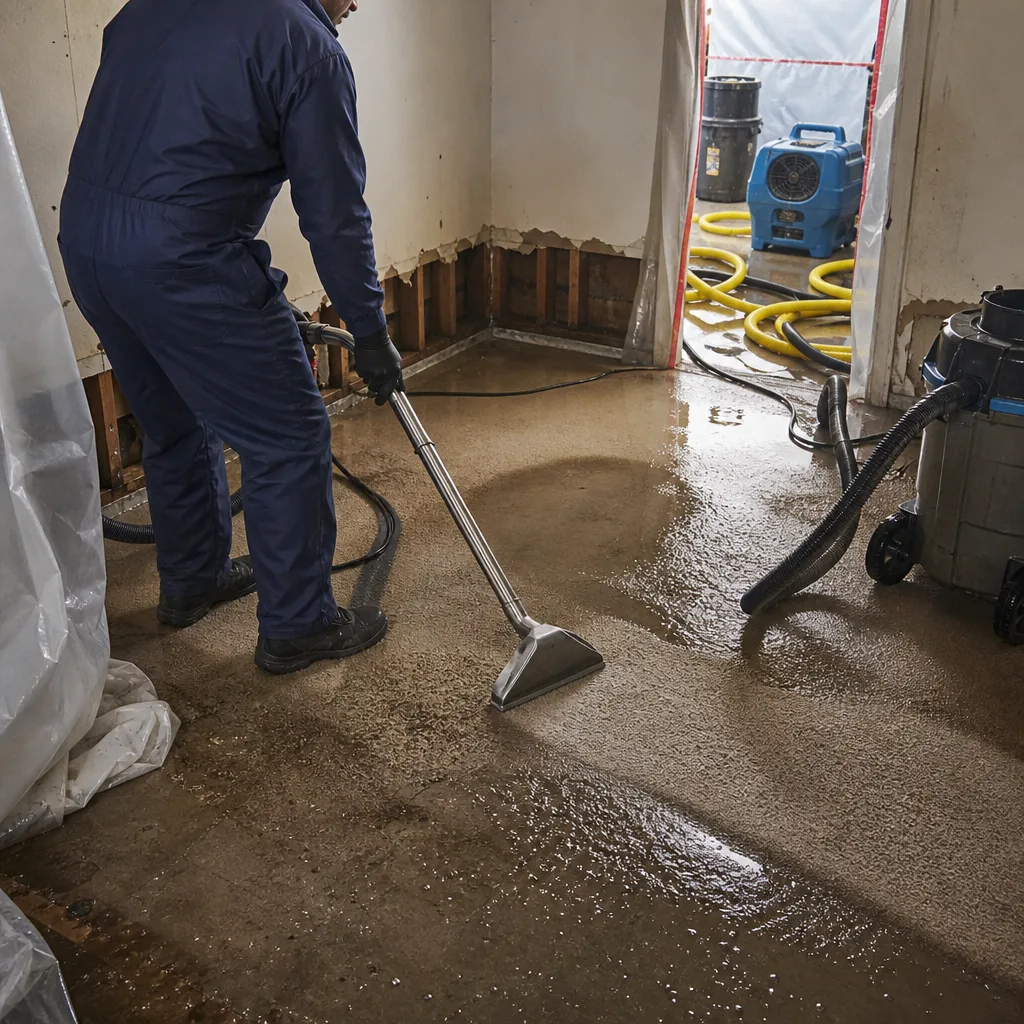
Before any contractor departs your Poway property, at any phase, you should hold specific documents in hand. Not “they’ll email them.” Not “it’s in the system.” Physical or digital files that you control, that you can forward to your adjuster, that you can reference if the work fails.
The Five Essential Documents
- Written Scope with Fixed Price: Line-item description of all work, material specifications by brand or grade, labor hours estimated, and total price. Signed by both parties before work begins. Haven Standard, Clause 1.
- Daily Moisture Logs: For drying jobs, every day’s readings with equipment serial numbers, room locations, and technician signatures. These prove the drying was necessary and complete.
- Timestamped Photo Record: Pre-work, during work, and post-work photos of all affected areas. For water damage, photos showing standing water before extraction. For fire damage, photos showing soot coverage before cleaning. For mold, photos showing containment setup and removal. Included as standard, never an upsell.
- Certificate of Completion: Signed statement that all work in the scope has been completed, materials have been installed per manufacturer specifications, and the work area has been cleaned. This triggers final payment and warranty activation.
- Signed Warranty Document: The 365-Day Done Right Promise, or equivalent, with specific terms, exclusions, and the process for invoking it. A verbal “call us if anything goes wrong” is not a warranty.
What These Documents Protect Against
In 2019, a homeowner in Poway’s Silver Saddle neighborhood hired a contractor for water damage restoration after a dishwasher supply line failed. The contractor completed the work, collected payment, and left. Six months later, mold appeared behind the new drywall. The contractor had no record of moisture readings showing the cavity was dry before closing. The homeowner’s insurer denied the mold claim as resulting from “faulty or inadequate repair,” and the contractor had no documentation to defend his work. The homeowner paid $11,400 out of pocket.
The daily drying log would have shown whether the cavity reached dry standard. The photo record would have shown whether the contractor inspected inside the cavity before closing it. The warranty would have provided a remedy path. None existed.
How to Cross-Check a Final Invoice Against the Written Scope
Scope creep is not always malicious. Sometimes a contractor discovers legitimate additional damage. Sometimes they don’t. The homeowner’s protection is a systematic cross-check before signing the final invoice.
The Four-Step Cross-Check
- Line-item comparison: Every charge on the final invoice should trace to a line item on the written scope or a signed change order. If it doesn’t, it’s a question, not a payment.
- Material verification: If the scope specifies “5/8-inch Type X fire-rated drywall,” the invoice should not charge for 1/2-inch standard drywall at the same price. Material substitutions require documentation and often a price adjustment.
- Labor hour reconciliation: Estimated hours versus actual hours. A 20% overrun is sometimes justified; a 100% overrun without documentation is a red flag. The daily logs should show what work was performed when.
- Equipment charge audit: Dehumidifiers and air movers are typically billed by the day. The invoice should match the equipment log showing delivery and pickup dates. We’ve seen invoices charging for equipment that was picked up three days before the invoice date.
Red Flags Specific to Poway’s Market
Poway’s restoration market includes contractors who commute from Riverside or Orange County for large-loss jobs. These contractors may charge travel time that wasn’t disclosed, or bill for “emergency response” when their crew arrived six hours after the call. The written scope should specify response time commitments; the photo timestamps should verify them.
Another pattern: contractors who bill for “specialty drying” with Injectidry or similar systems when standard air movement would suffice. Injectidry is appropriate for hardwood floors, ceramic tile over concrete, and wall cavities with limited access. It is not automatically necessary for every water damage job. The written scope should justify the equipment selection with reference to the specific materials affected.
Equipment and Drying Standards That Matter
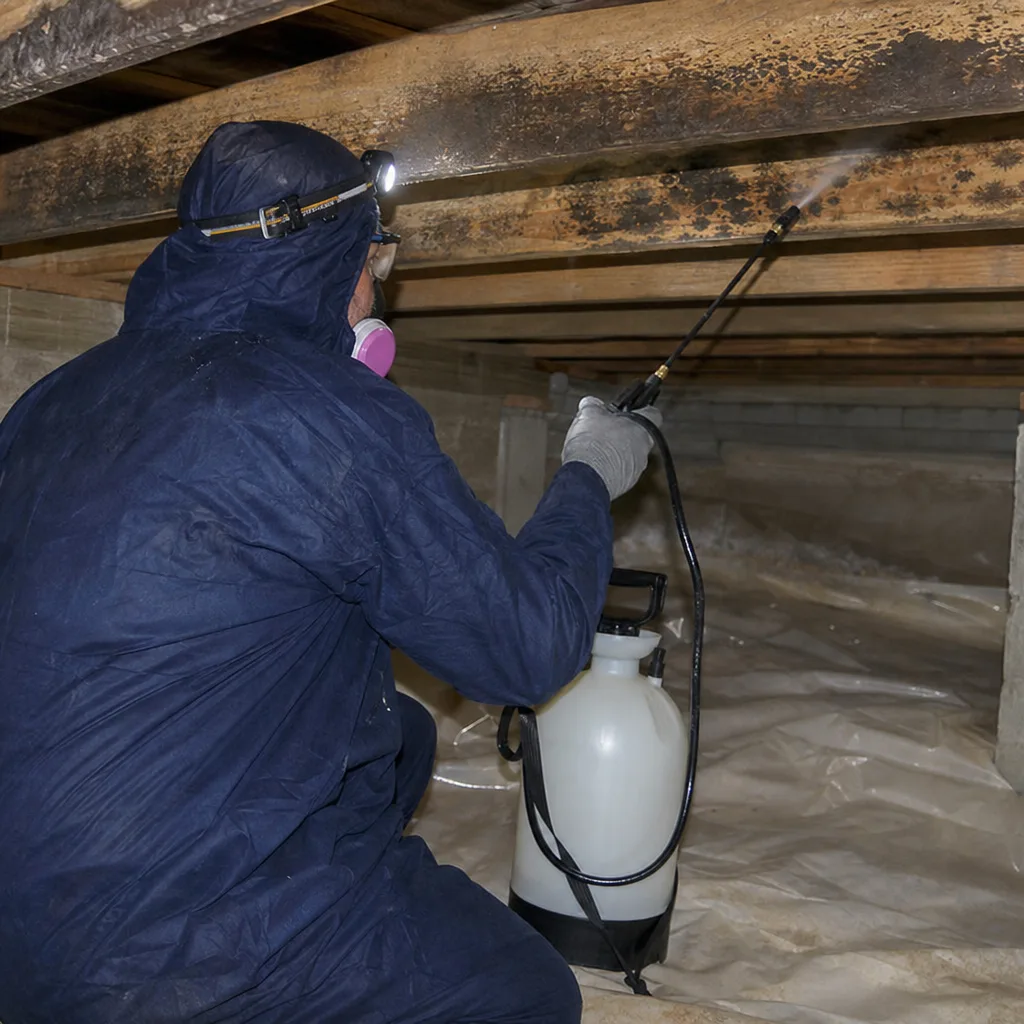
Not all drying equipment performs equally, and not all technicians operate it correctly. The difference between a Dri-Eaz Revolution LGR dehumidifier and a rental-store unit from a big-box retailer is measured in grains of moisture removed per hour, and in the documentation the unit produces.
Professional-Grade Equipment We Deploy
Our crews use Dri-Eaz and Phoenix LGR (low-grain refrigerant) dehumidifiers that maintain performance below 40 grains per pound, the threshold where standard units become ineffective. For hardwood and tile drying, we use Injectidry systems that create negative pressure within the floor cavity, pulling moisture from the subfloor without removing the finish surface. Air movement is handled by B-Air and XPOWER centrifugal units sized to the cubic footage of the affected space.
This equipment matters because it produces measurable results that can be documented. A rental dehumidifier with no hour meter and no data output cannot produce the drying log that your adjuster needs. Professional equipment logs its own runtime and can be correlated with the psychrometric readings.
IICRC, RIA, and IFA Standards
All work we perform is documented to IICRC (Institute of Inspection Cleaning and Restoration Certification), RIA (Restoration Industry Association), and IFA (Indoor Air Quality Association) standards, with more guides & resources available on our blog. These are not marketing affiliations. They are specific protocols:
- IICRC S500: Water damage restoration, including water classification, structural drying, and antimicrobial application
- IICRC S520: Mold remediation, including containment, negative air pressure, and post-remediation verification
- RIA guidelines: Fire and smoke damage restoration, including odor control and corrosion mitigation
A contractor who cannot cite the specific standard they follow, by number and edition, is not following a standard. They are following habit.
Common Mistakes to Avoid
- Waiting for the insurance adjuster before calling a contractor. In Poway, where Santa Ana winds can spread fire damage or slab leaks can saturate multiple rooms, waiting 24-48 hours for adjuster availability often makes the damage worse. Mitigation cannot wait. Document everything and let the adjuster review the documentation.
- Accepting a verbal estimate. Haven Standard, Clause 1 exists because verbal estimates become “I thought you said” disputes. A written price before work begins protects both parties. If a contractor won’t put it in writing, the reason is rarely in your favor.
- Signing a direction-to-pay without understanding it. Some contractors ask homeowners to sign over their insurance benefits directly. This removes your leverage if the work is incomplete or defective. You can pay the contractor yourself and seek reimbursement, or use a joint-check arrangement with your lender and insurer.
- Ignoring musty odors after “complete” drying. In Poway’s clay-soil environment, moisture can remain in wall cavities while surface materials read dry. A musty smell means microbial growth is active. Demand moisture readings from inside the cavity, not just the surface.
- Not photographing pre-existing conditions. Before any work starts, photograph undamaged areas, personal property, and the exterior condition. Contractors should do this too, but your independent record protects against disputes about what the disaster caused versus what was already present.
- Assuming reconstruction is included in the mitigation price. These are separate coverages with separate documentation. A contractor who bundles them without clear line-item separation may be hiding markup or creating an invoice your adjuster will reject.
- Failing to verify permit requirements. Poway requires permits for electrical, plumbing, and structural work in reconstruction. Unpermitted work can void your homeowner’s policy and create disclosure obligations when you sell. The written scope should identify required permits and who obtains them.
When to Call a Professional
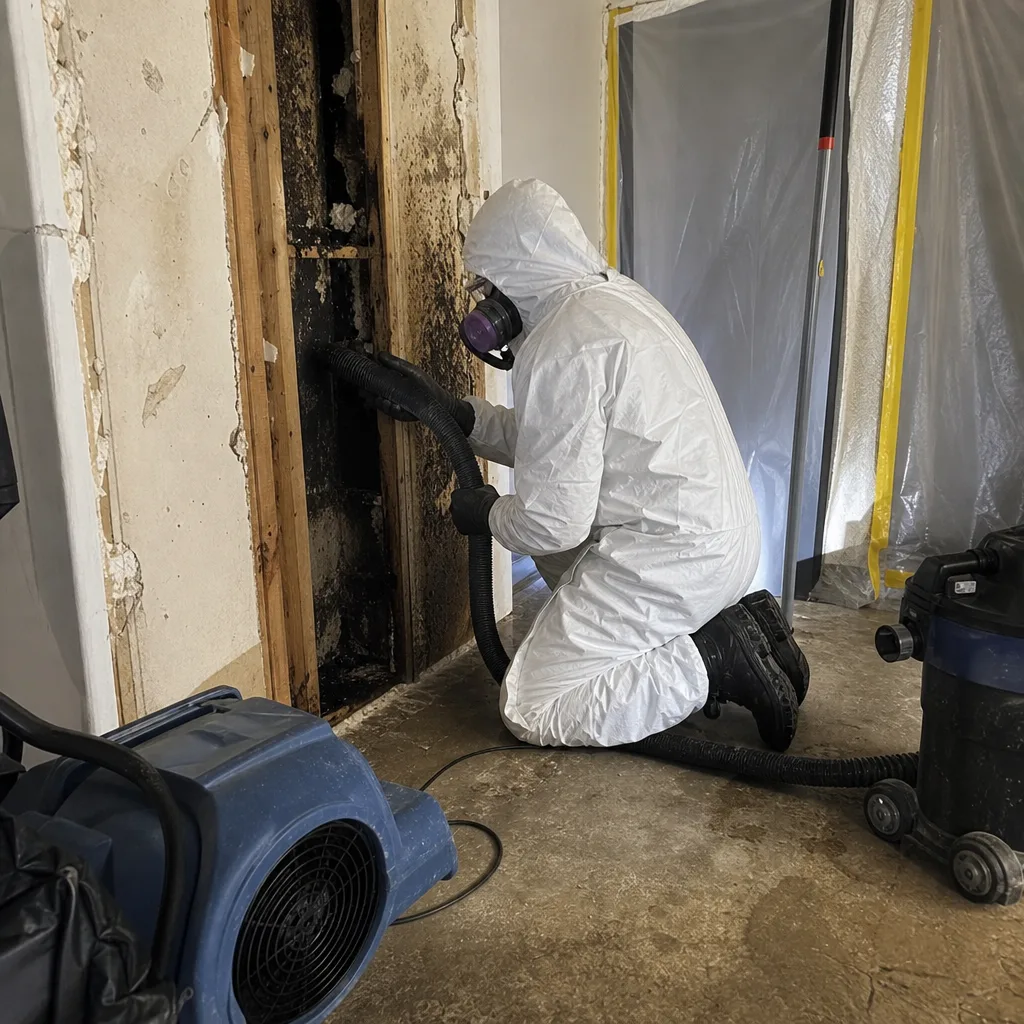
Some situations in Poway demand immediate professional response regardless of cost or insurance status. Standing water of any depth in a finished space requires extraction and drying within 24 hours to prevent mold colonization. Fire damage, even if confined to one room, produces smoke and soot that corrode electronics and etch glass within hours. Sewage backup is a Category 3 water loss that poses genuine health risks and requires full PPE and antimicrobial treatment.
Less obvious but equally urgent: any water damage in a home with original polybutylene plumbing, any mold visible on more than 10 square feet of surface, and any structural damage from wind or falling trees that compromises the building envelope.
Mold Remediation in Poway requires specific containment and air filtration that homeowners should not attempt themselves. Disturbing a large mold colony without proper containment releases spores throughout the HVAC system, turning a localized problem into a whole-house problem.
DryMark Restoration Poway offers free estimates in Poway. For emergency response or to schedule an assessment, call (858) 683-1768. A live person answers every call, 24 hours a day, 7 days a week, with no voicemail on emergency lines.
Frequently Asked Questions
Mitigation typically takes 1-3 days; structural drying averages 3-7 days depending on material saturation and weather conditions; reconstruction ranges from 1 week for minor repairs to 8-12 weeks for major rebuilds. The total timeline from emergency call to certificate of completion is typically 2-6 weeks for water damage, 4-12 weeks for fire damage, and 1-3 weeks for mold remediation. Call (858) 683-1768 for a specific timeline based on your property’s condition.
Most homeowner policies cover sudden and accidental damage, but coverage varies by cause of loss, policy limits, and endorsements. Flood damage from surface water requires separate flood insurance. Gradual leaks that went unreported may be excluded. The key to full coverage is complete documentation: written scope, daily logs, photo records, and certificates of completion. DryMark Restoration Poway coordinates directly with adjusters and provides the documentation package that supports maximum allowable recovery. Call (858) 683-1768 to review your specific policy implications.
Mitigation is emergency work to prevent further damage: extraction, demolition of unsalvageable materials, and initial drying. Restoration is the return to pre-loss condition: reconstruction, finishing, and final cosmetic work. Insurance treats them as separate coverages with separate documentation requirements. Mitigation cannot wait; restoration is scheduled and often requires permits. DryMark Restoration Poway provides both under separate written scopes with fixed prices for each phase.
Complete drying is measured, not assumed. Your contractor should provide daily moisture logs showing readings from affected materials declining to within 2-4 percentage points of unaffected materials in the same structure. For drywall, this typically means below 12% moisture content; for wood framing, below 16%. The final reading should be taken after 24 hours of stable conditions with no equipment running. Without these numbers, “dry” is a guess. DryMark Restoration Poway provides daily logs and a final moisture map as standard documentation.
Yes, for reconstruction involving electrical, plumbing, HVAC, or structural modifications. The City of Poway Building Division requires permits for drywall replacement in fire-damaged areas, electrical rewiring after water damage, and any structural repair. Permit requirements are determined by the scope of reconstruction, not the cause of damage. Your contractor should identify required permits in the written reconstruction scope and specify who obtains them. Unpermitted work can void insurance coverage and create title issues.
Request a detailed line-item comparison between the adjuster’s estimate and your contractor’s written scope. Disputes usually involve scope omissions (work the adjuster didn’t include) or price differences (the adjuster using outdated pricing data). DryMark Restoration Poway provides a Free Second Opinion on any competitor’s written estimate, including insurer estimates, and can document why additional work or different pricing is justified. Most disputes resolve with better documentation, not confrontation. Call (858) 683-1768 to schedule a review.
The Bottom Line
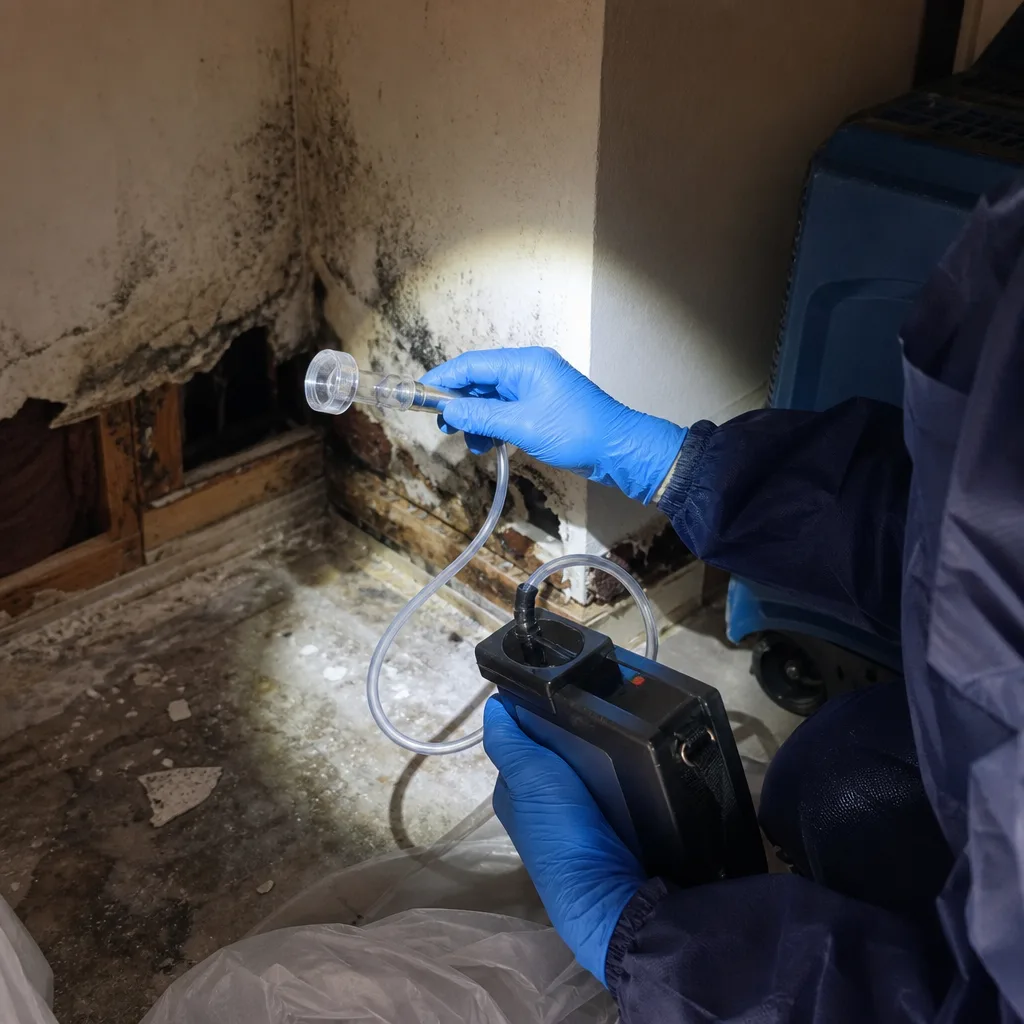
The financial damage from a disaster in Poway rarely comes from the event itself. It comes from undocumented work, blurred lines between mitigation and reconstruction, and invoices that don’t match the scope you approved. The protection is systematic: a written price before work begins, daily documentation during the job, and a complete file before anyone leaves. Four phases, five essential documents, and a cross-check before final payment. The 25-day claim delay that costs homeowners thousands is not caused by insurer complexity. It’s caused by contractor documentation that wasn’t kept. Keep the documentation, control the timeline, protect the recovery.
Written by Alicia Brennan, Owner at DryMark Restoration Poway, serving Poway since 2011.