
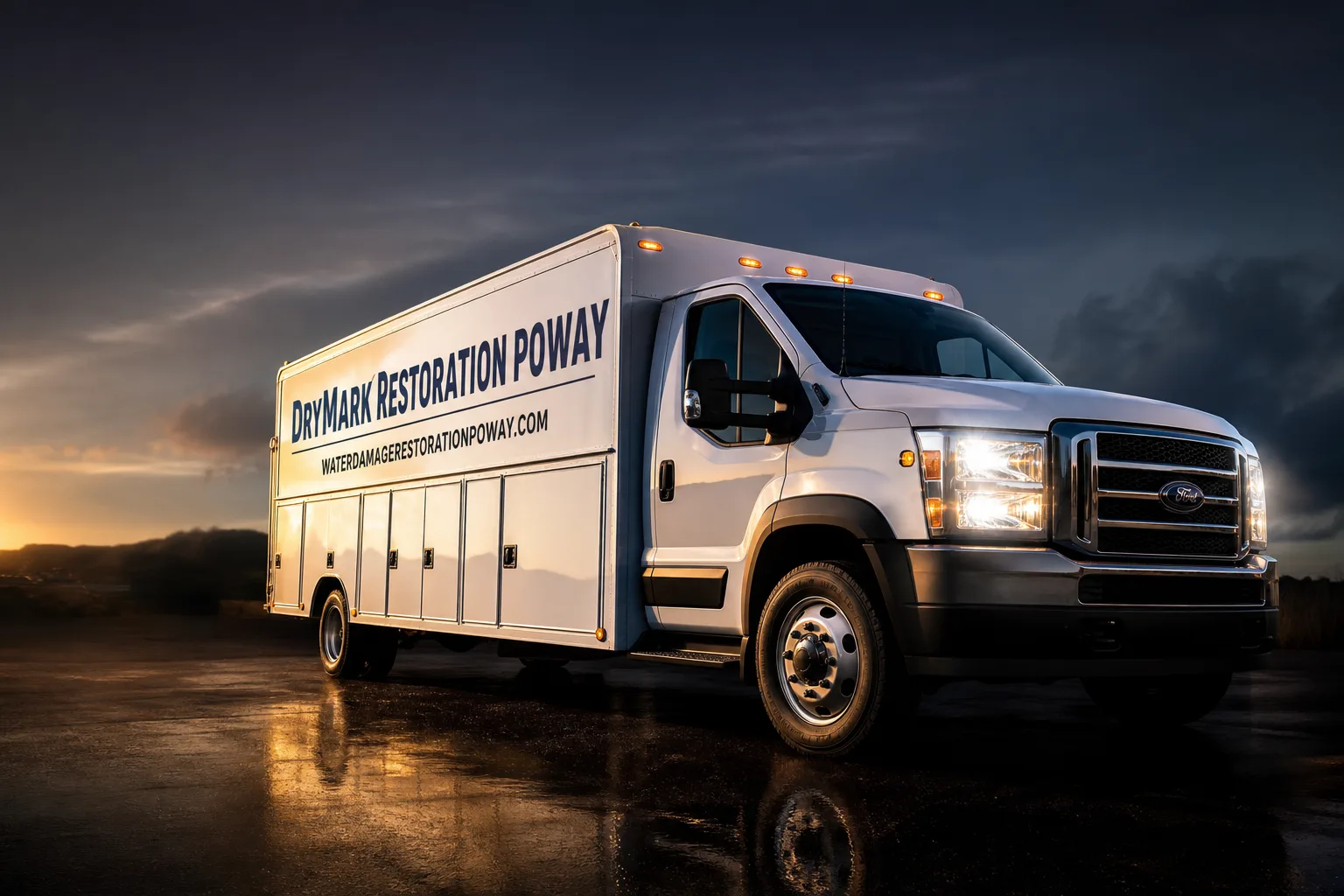
Free visual inspection and a written scope of work before any mitigation begins - photos, moisture readings, and drying logs go in your claim file
The scope we write is the scope we bill. Anything new gets shown to you, in writing, before we touch it.
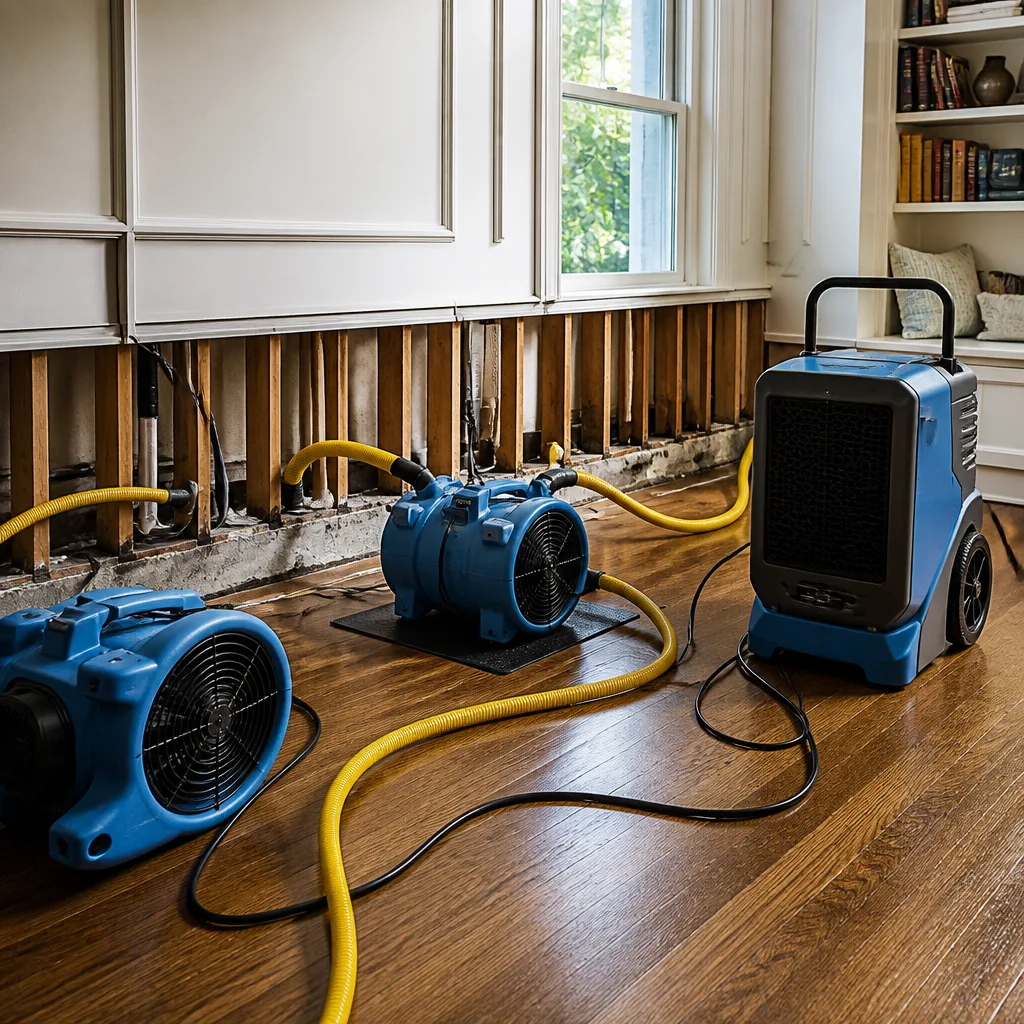
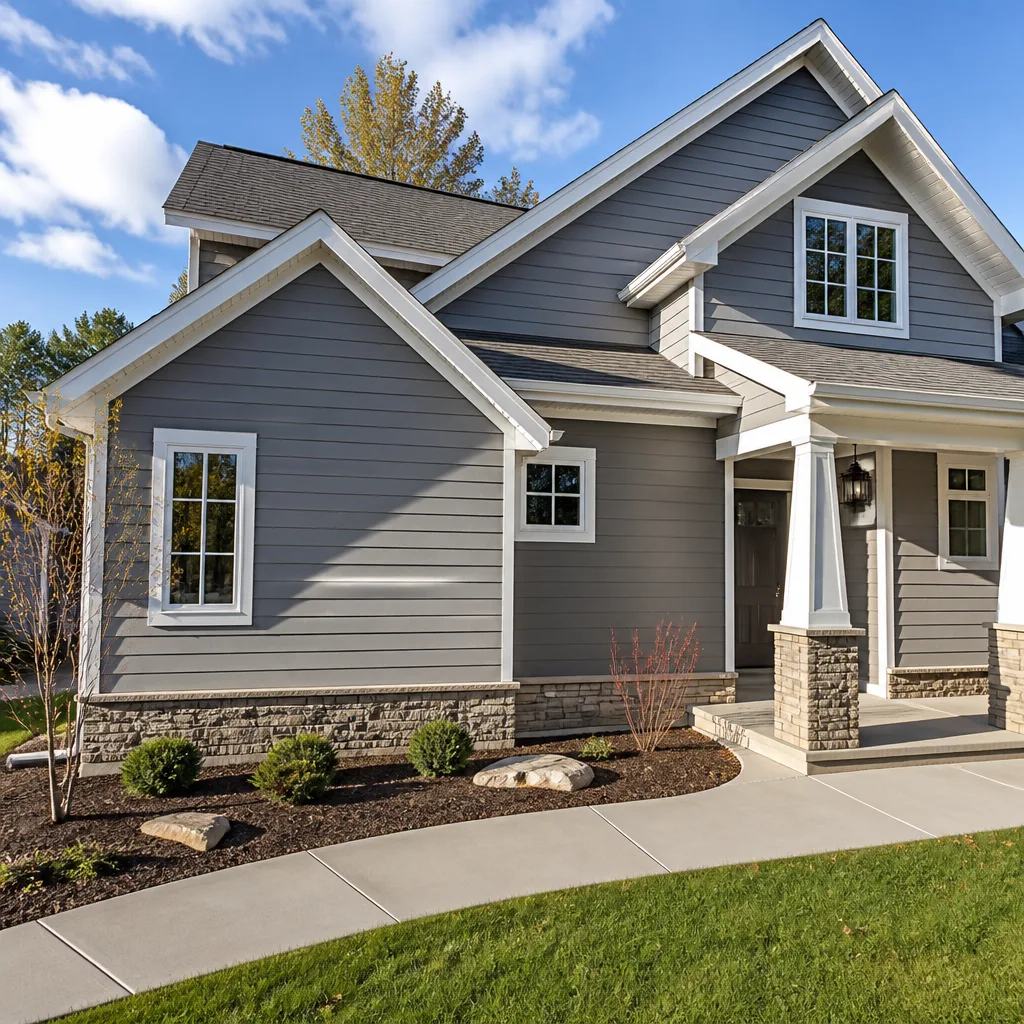
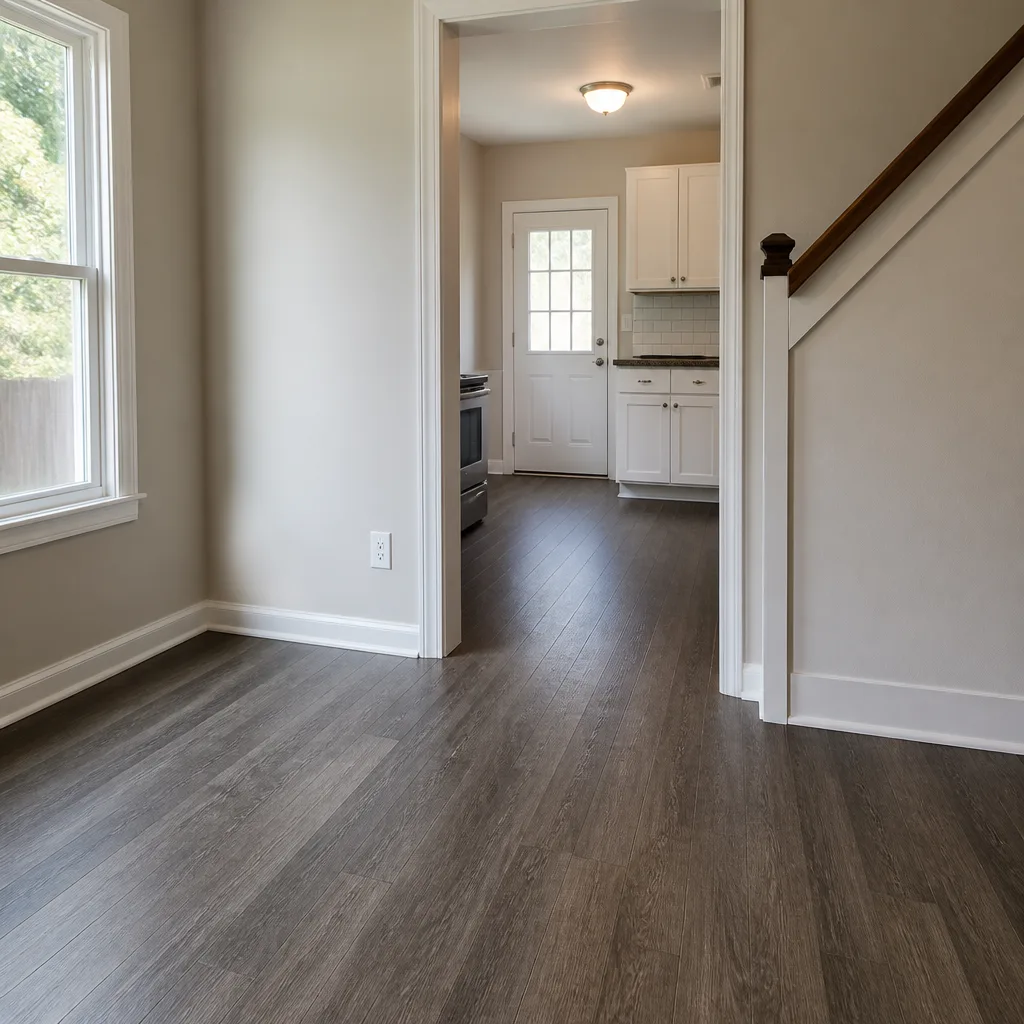
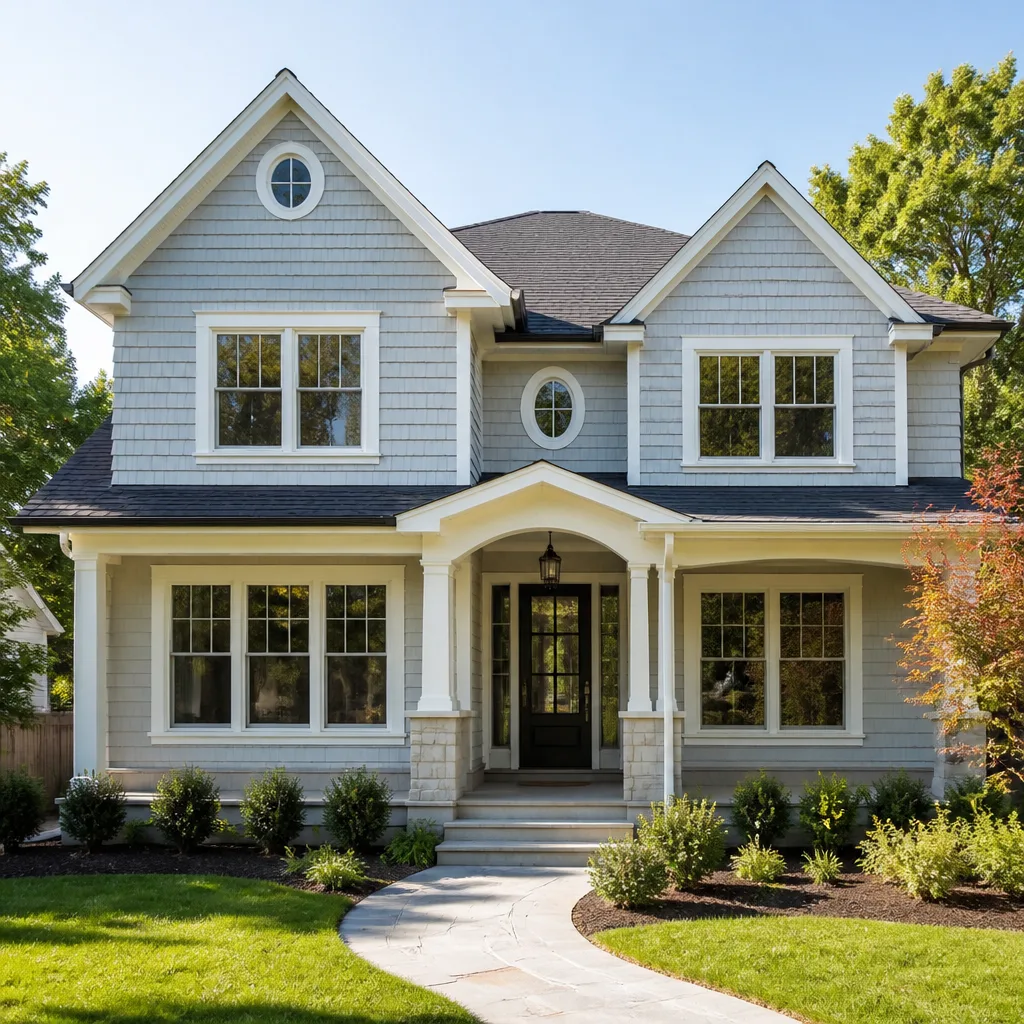
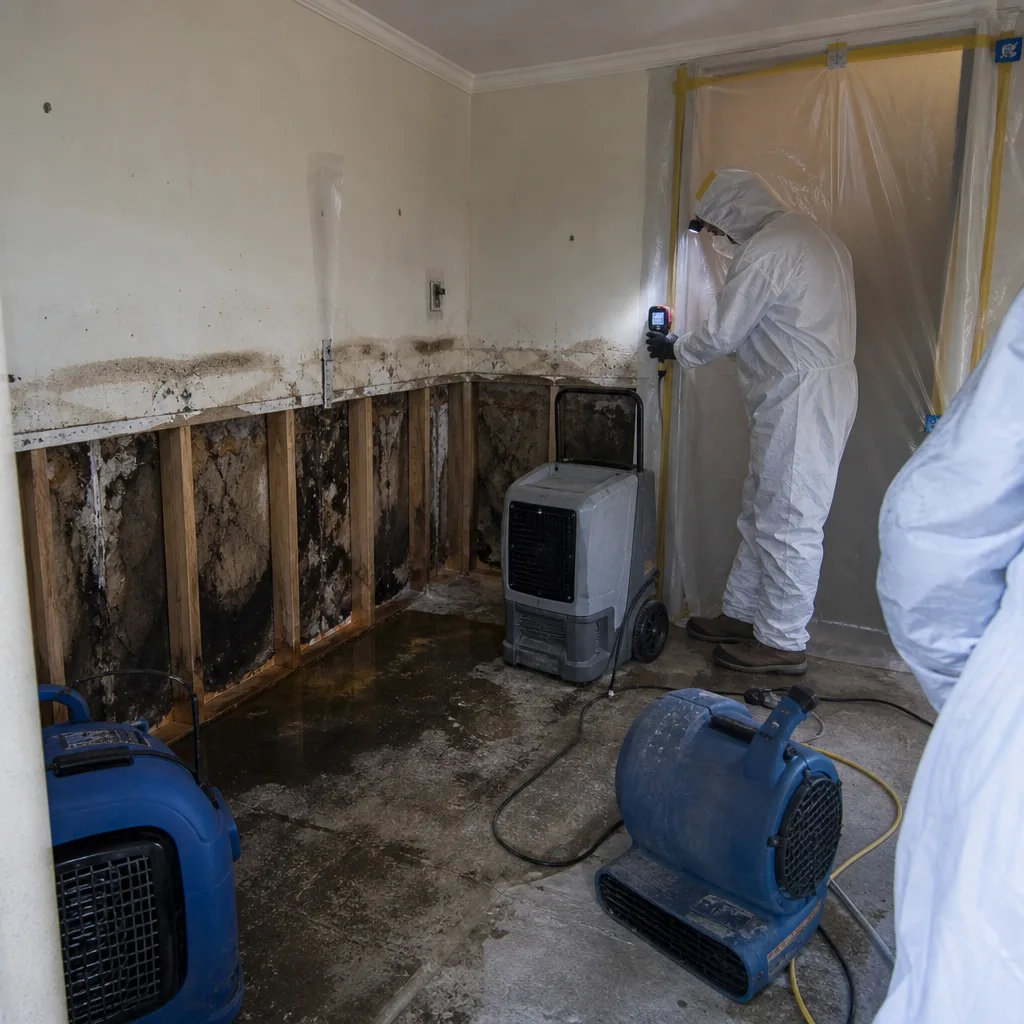 Before
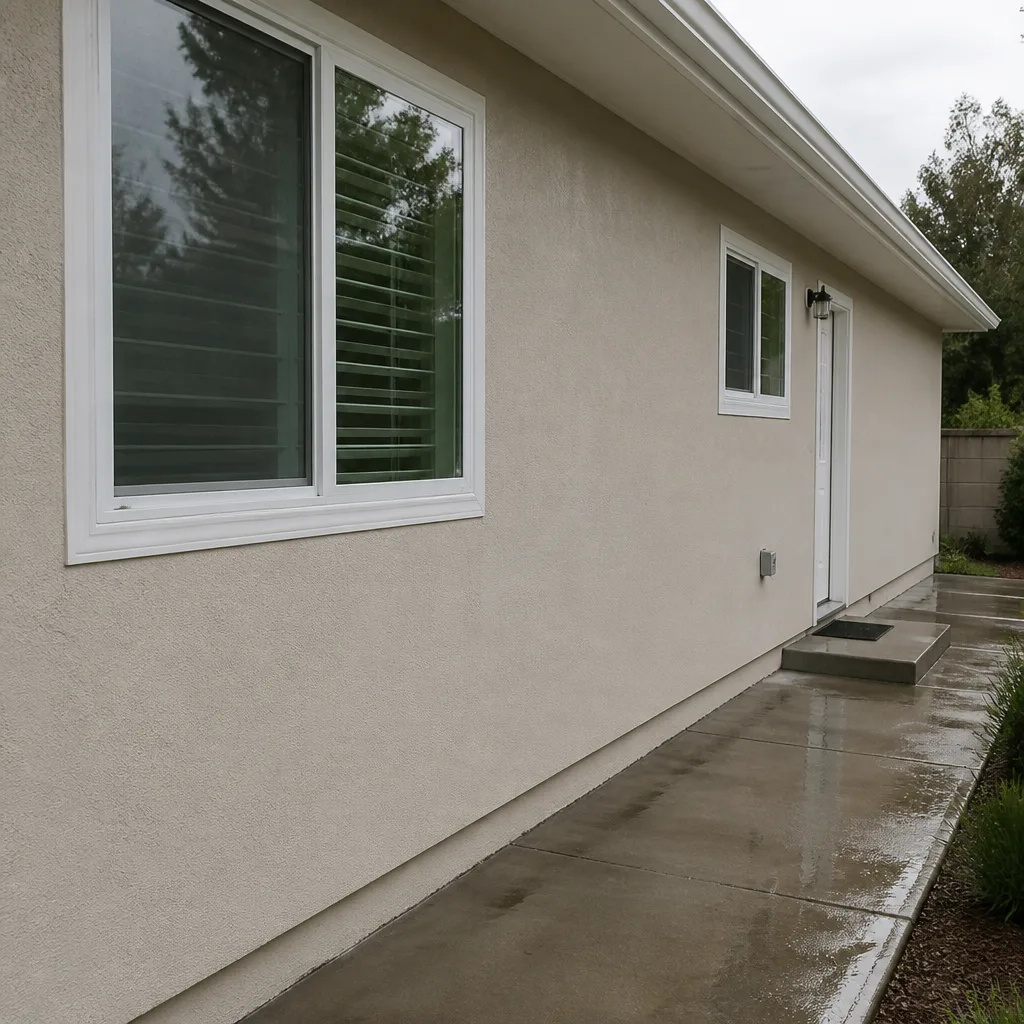 After
After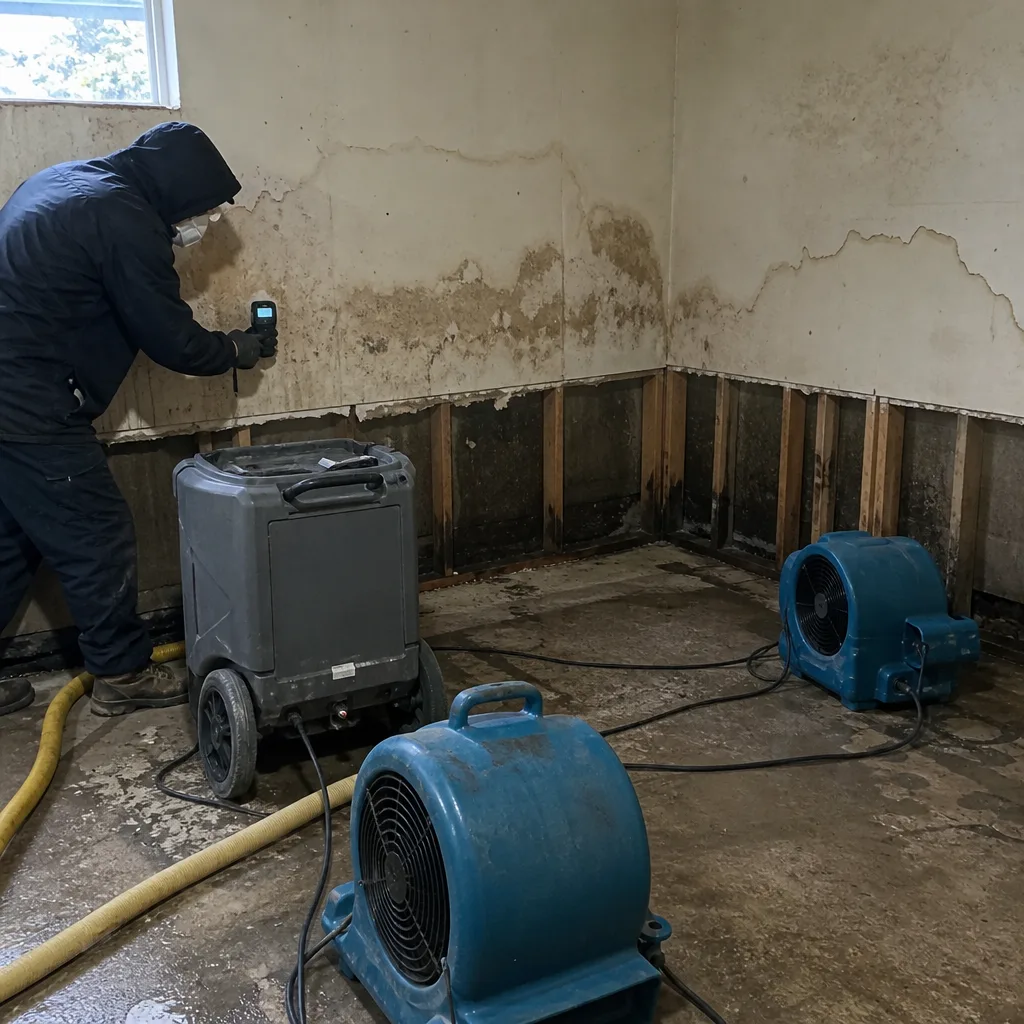 Before
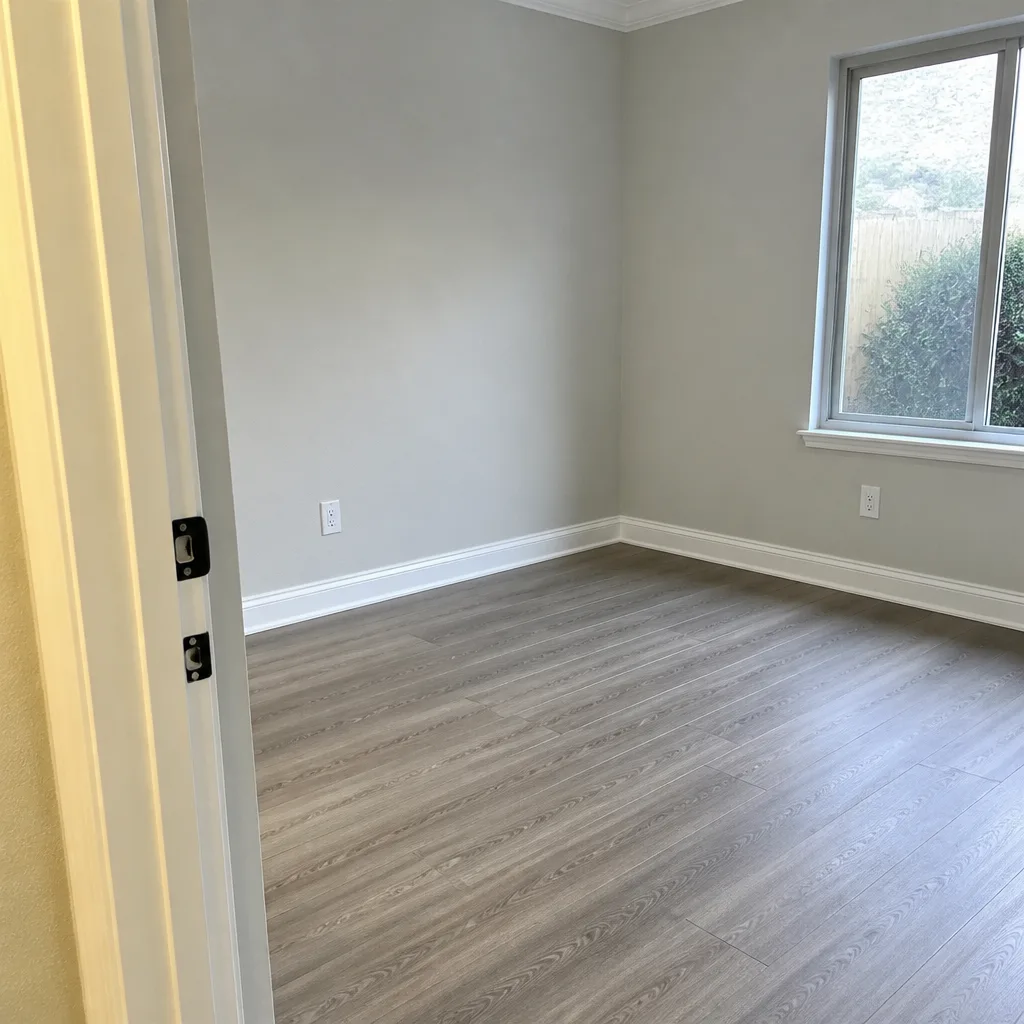 After
After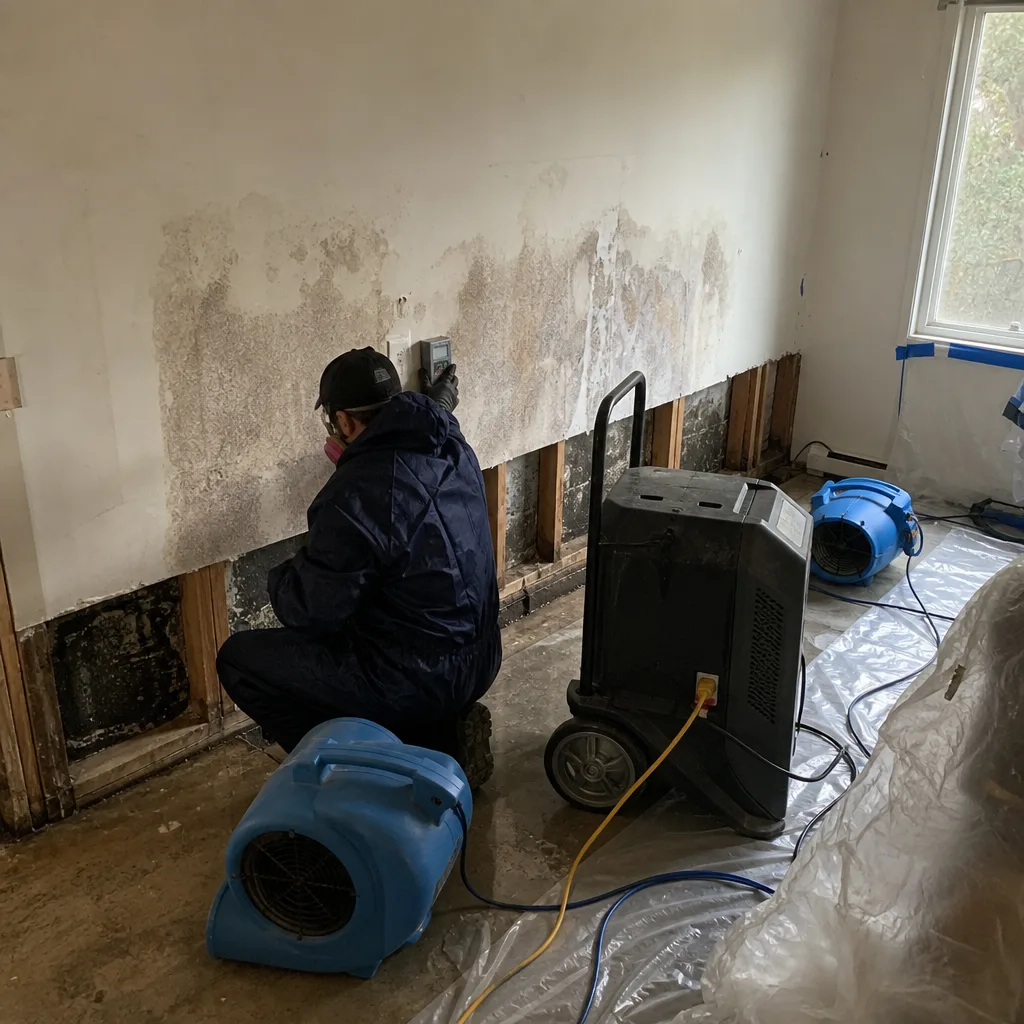 Before
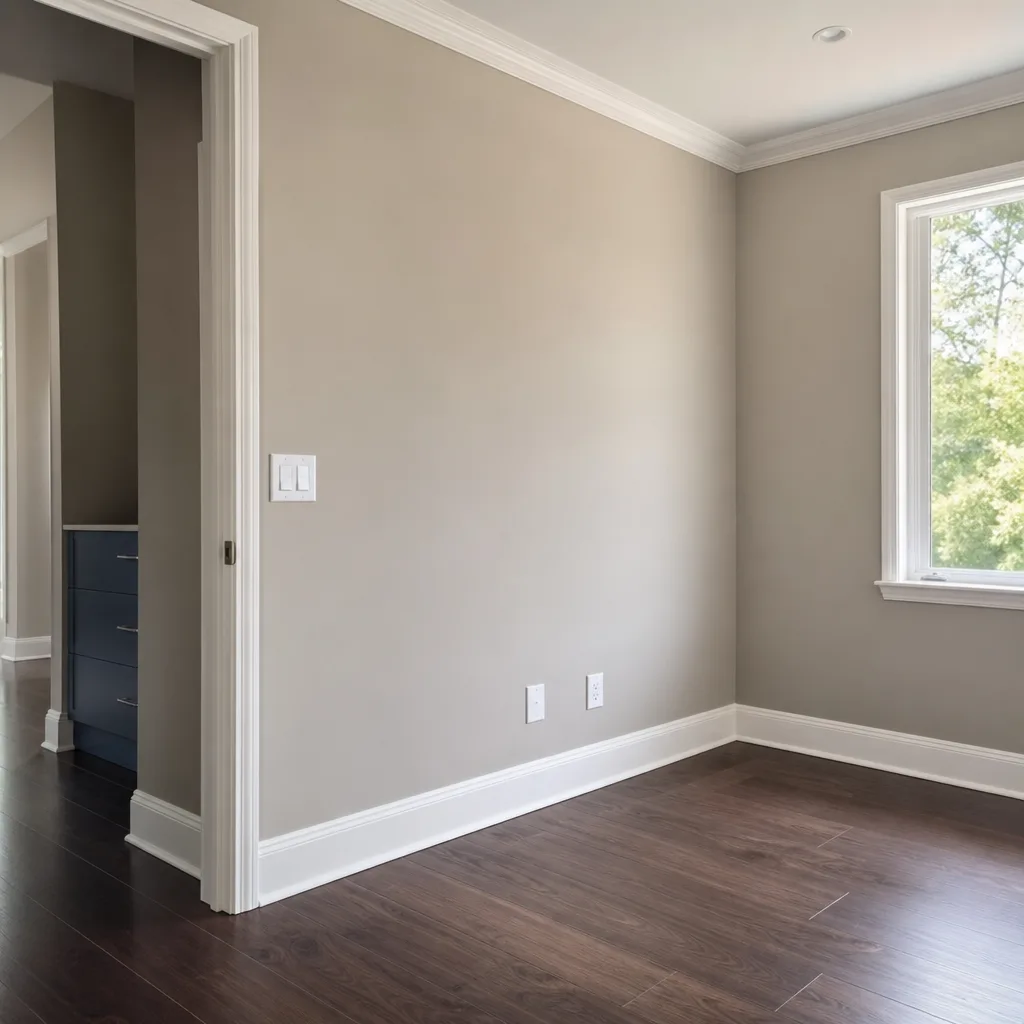 After
After24/7 Emergency Fire & Smoke Damage Restoration in Ramona
Fire and smoke damage restoration in Ramona typically runs $3,800-$18,500 depending on whether you’re facing a contained kitchen fire or wildfire smoke infiltration across a full ranch property. Most Ramona homeowners need same-day response, especially during Santa Ana wind events when red-flag conditions can turn a small fire into a structure-threatening event in minutes. Call (858) 683-1768 now and a live person will answer, 24 hours a day, 7 days a week - no voicemail, no callback queues. Crews are dispatched from our San Diego office and serve Ramona properties directly, usually arriving within 45 minutes of your call.
The first hour after a fire or smoke event determines how much of your structure and contents can be saved. Heat opens pores in drywall, wood, and textiles; smoke particles settle deep while surfaces are still warm. Wait too long and those particles set permanently. In Ramona’s dry inland climate, that window closes faster than in coastal humidity. Our Fire & Smoke Damage Restoration team starts with a free visual inspection, documents pre-loss condition with photos, and delivers a written price before any work begins - Haven Standard, Clause 1.
Understanding Fire & Smoke Damage Restoration Severity in Ramona Properties
Fire damage breaks into three categories that drive our scope: dry smoke residue from fast-burning, high-heat fires (paper, wood); wet smoke residue from slow, smoldering burns (plastics, rubber); and protein residue from kitchen fires that leaves nearly invisible but pungent films. Each demands different cleaning chemistry and agitation methods. Smoke migration follows pressure differentials and HVAC pathways - in Ramona’s older ranch homes with single-return duct systems, one room’s fire can contaminate the entire house through the air handler.
Ramona’s housing stock compounds these challenges. Most homes were built between the 1970s and 1990s with wood shake or early composite roofing, minimal attic ventilation, and no ignition-resistant eave vents. Stucco exteriors from this era often lack proper moisture barriers, so heat-driven moisture cycling (100°F-plus days, near-freezing nights) has degraded the substrate behind walls for decades. When we open a smoke-damaged wall in a 1985 Ramona ranch, we routinely find failed paper backing and hidden damp spots that crossed the 24-to-48-hour mold window years ago. Our thermal imaging identifies these pockets before demolition, and our drying logs document them for your insurer.
The severity scale we use on every Ramona job: Level 1 (contained fire, one room, no structural involvement, 1-3 days); Level 2 (multiple rooms affected, HVAC contamination, light structural char, 3-7 days); Level 3 (partial or total structural loss, extensive smoke migration, well contamination, 1-4 weeks). Each level gets a written scope, line-item pricing, and daily photo documentation.
Why Ramona Property Owners Choose DryMark Restoration Poway
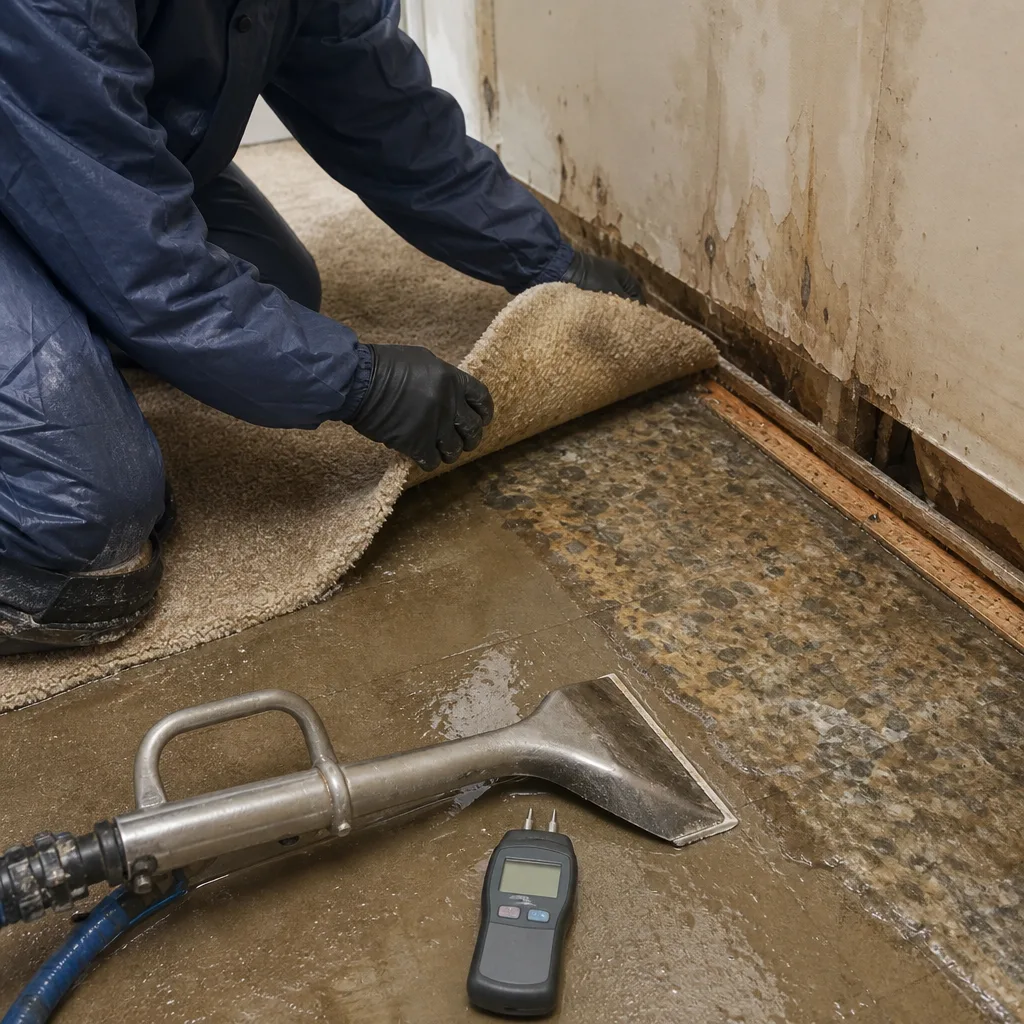
- 45-minute response commitment to Ramona properties - crews dispatched from our San Diego office with GPS routing through Highland Valley and Dye Road corridors.
- 24/7 live answer - a real person, never an automated system or voicemail tree, every hour of every day.
- IICRC-certified crews holding FSRT (Fire & Smoke Restoration Technician) and WRT (Water Damage Restoration Technician) certifications, with AMRT (Applied Microbial Remediation Technician) for secondary mold issues in water-damaged fire jobs.
- Free visual inspection - we arrive, assess, photograph, and deliver a written scope with pricing before you decide.
- Direct insurance billing - we coordinate with your adjuster, submit documentation to Xactimate standards, and handle carrier negotiation so you don’t become the middleman.
- One team from emergency response through reconstruction - no handoffs to unknown contractors, no scope-creep between phases, one accountable crew start to finish.
 Before
 After
AfterOur Fire & Smoke Damage Restoration Process
1. Inspection & Assessment
We document pre-loss condition with photos, test all surfaces for soot type (dry, wet, or protein), map smoke migration with thermal imaging, and inspect HVAC duct runs for ash infiltration. In Ramona’s private-well properties, we also assess well-casing integrity and water quality - a step coastal restoration crews routinely skip.
2. Emergency Board-Up & Stabilization
Fire-damaged structures lose integrity fast. We secure roof openings, board compromised walls, and establish containment zones with polyethylene barriers and negative air pressure to prevent cross-contamination. For rural Ramona properties far from hydrants, we also verify available water sources for restoration work.
3. Smoke & Soot Extraction
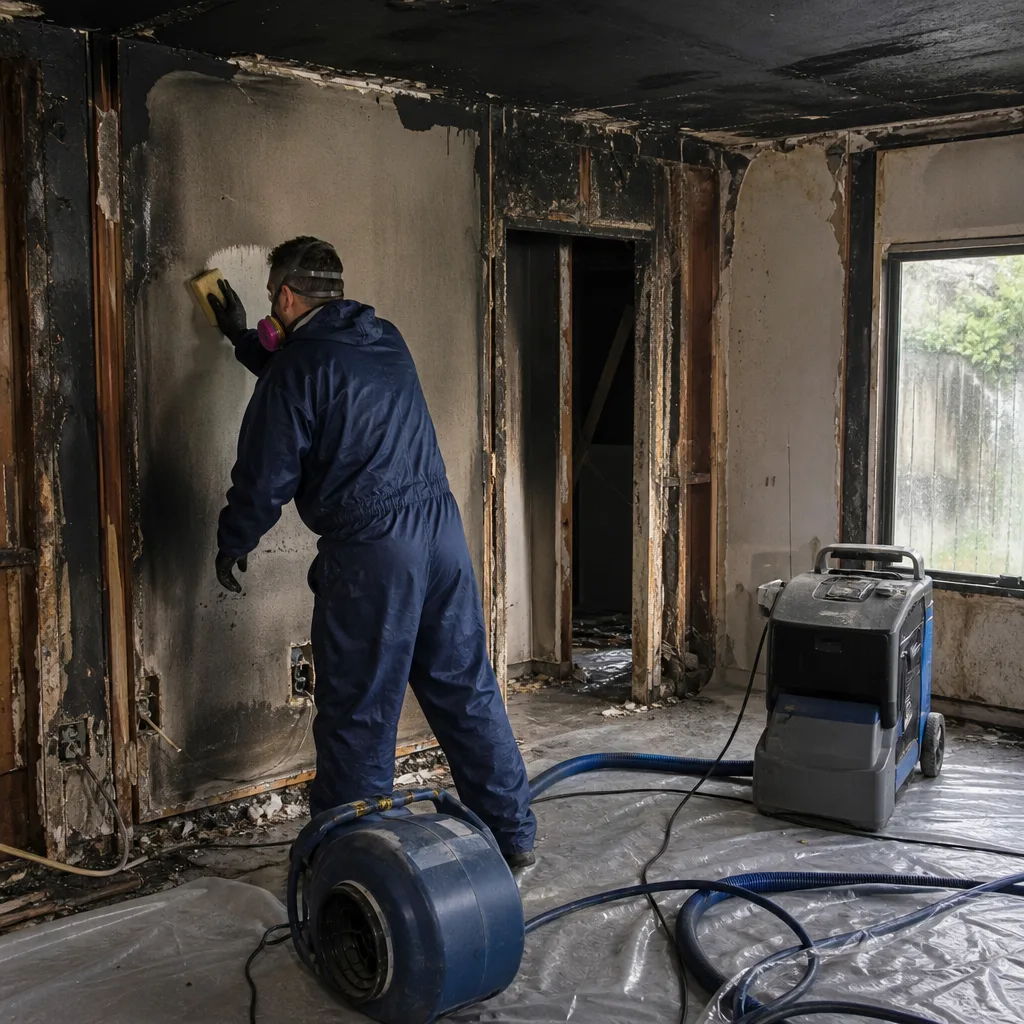
Using HEPA air scrubbers, thermal foggers, and specialized vacuums with HEPA filtration, we remove loose particulate before it embeds permanently. Dry smoke responds to dry sponges and contact vacuuming; wet smoke requires solvent-based cleaning with controlled agitation. We log every surface treated.
4. Deodorization & Air Quality Restoration
Odor molecules bond to porous materials at the molecular level. We deploy hydroxyl generators, ozone treatment (in unoccupied spaces), and thermal fogging with counteractants matched to the specific smoke chemistry. HVAC systems get dedicated duct cleaning with rotary brushes and negative-air collection, not just filter replacement.
5. Contents Cleaning & Pack-Out
Salvageable items are inventoried, photographed, and transported to our facility for ultrasonic cleaning, ozone deodorization, and antimicrobial treatment. We use the same documentation standards for your contents that we use for your structure - every item logged, every treatment recorded, every photo timestamped for your insurer.
6. Structural Repairs & Reconstruction
Charred framing is sistered or replaced; smoke-damaged drywall is removed to the clean substrate; stucco is patched with matching texture and color. We rebuild to current code, which in Ramona’s Very High Fire Hazard Severity Zone now means ignition-resistant vents, eave boxing, and Class A roofing where grandfathered wood shake is removed.
Need Emergency Fire & Smoke Damage Restoration in Ramona Now?
Crews minutes away, answering live 24 hours a day. The sooner we start, the less it costs.
Working With Your Insurance Company
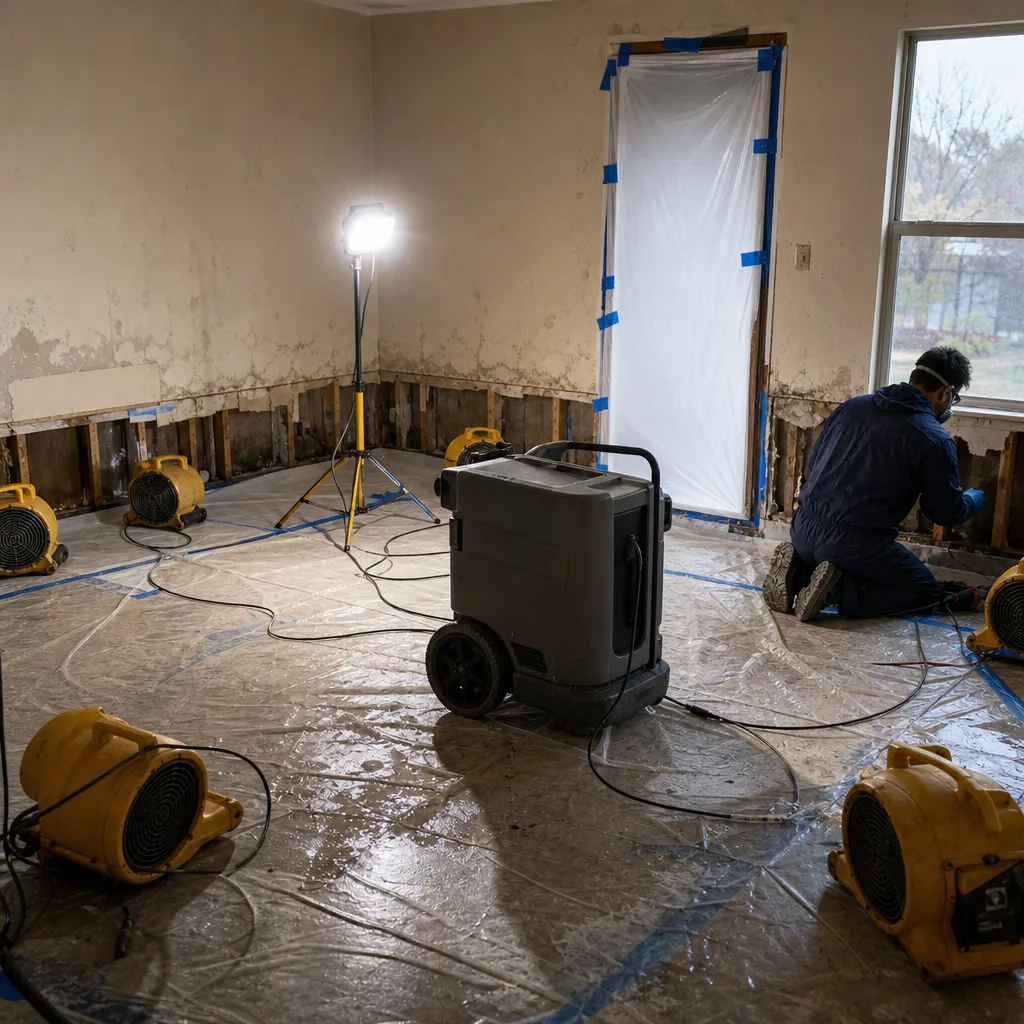
Fire claims fail more often than water claims because documentation starts too late and misses the smoke migration path. We begin documenting from the first hour: photos of every room, moisture readings on heat-affected walls, soot type testing results, and a complete inventory of contents. Our estimates are built to Xactimate standards with line-item detail that adjusters recognize and carriers pay without dispute.
We speak directly with your adjuster, not through you. Our photo records, drying logs, and written scopes are submitted as a complete package. If your carrier disputes scope or pricing, we defend our documentation with the evidence we’ve already collected - not with arguments, but with timestamped photos and measured data. Haven Standard, Clause 1 applies here too: the written price we give you before work starts is the price your insurer sees, with no additions once the crew is inside.
What We Provide Your Insurer
- Thorough documentation of the loss
- Photos of all damage, room by room
- Moisture readings and drying logs
- A detailed, line-item scope of work
- Direct coordination with your carrier
Built for Ramona’s Loss Calendar
Ramona’s fire and smoke damage calendar is driven by geography, not seasons in the traditional sense. January through March brings the strongest Santa Ana wind events, often with single-digit humidity and gusts over 60 mph - red-flag conditions that turn any ignition source into a structure threat. The 2003 Cedar Fire, which destroyed hundreds of structures in and around Ramona, started in October during exactly these conditions.
May through September builds fuel load in chaparral and grasslands surrounding the valley. By August, the backcountry is primed. Lightning strikes are rare; most fires start from equipment sparks, vehicle exhaust on dry grass, or power line contact in wind. October and November bring the most dangerous combination: dry fuel, Santa Ana winds, and low humidity. This is when our Ramona dispatch volume triples.
December’s near-freezing nights create a secondary pattern. Homeowners run space heaters and fireplaces in 1970s-1990s ranch homes with original chimneys and inadequate clearances. Creosote buildup in older flues, plus wood shake roofing with no spark arrestors, produces chimney fires that extend to structure. We see these as Level 1 and 2 fires with heavy smoke infiltration through attic spaces.
The summer-over-100°F, winter-near-freezing moisture cycle in Ramona’s stucco construction also creates chronic conditions we discover during fire restoration. Heat-driven vapor pressure differentials push moisture through failed paper backing behind stucco. By the time we open a smoke-damaged wall, we often find pre-existing mold that has nothing to do with the fire but must be remediated before reconstruction. Our moisture mapping catches this; crews without thermal imaging miss it and build over active mold growth.
Fire & Smoke Damage Restoration Across Ramona’s Neighborhoods
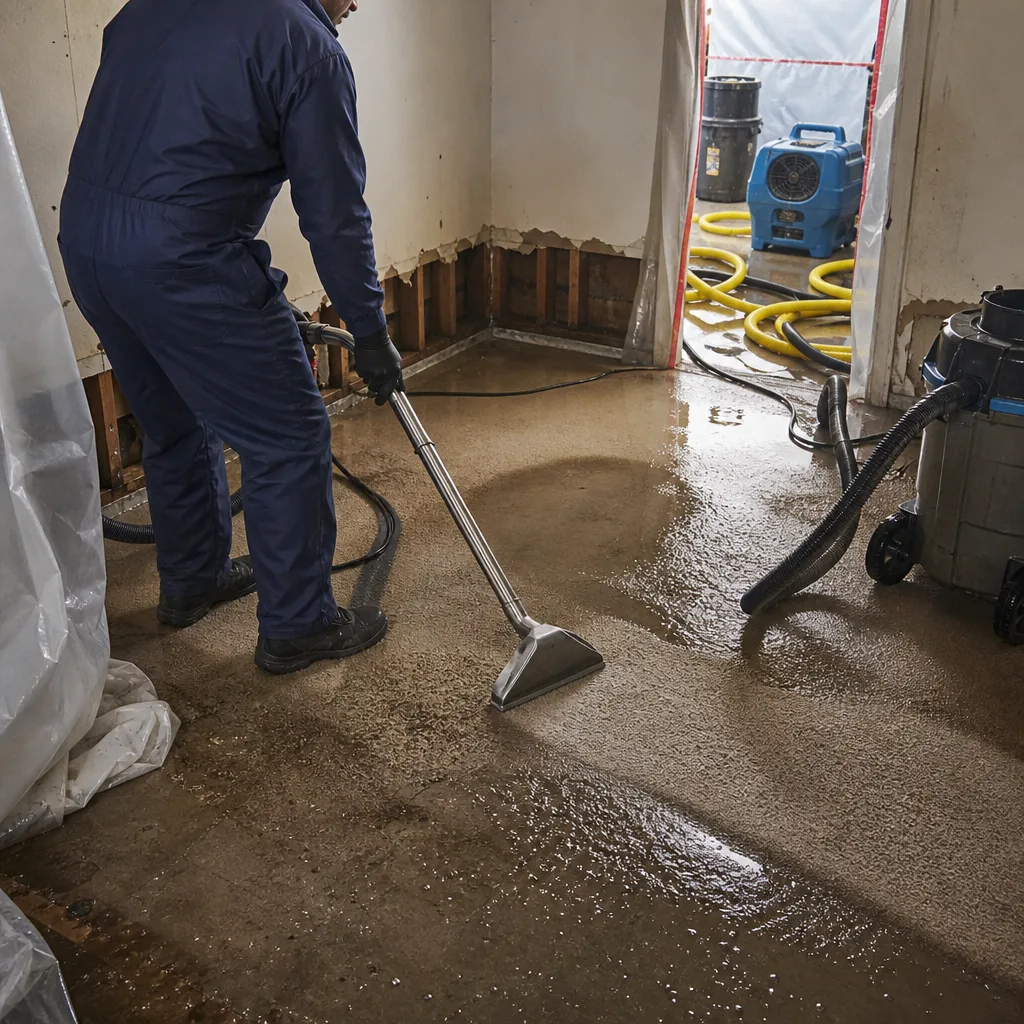
Ramona‘s geography shapes every restoration scope we write. In the central valley around Main Street and the historic downtown corridor, homes date to the 1970s and 1980s with smaller lots on municipal water and sewer. Fires here are typically kitchen or electrical origin, with smoke migration through shared attic spaces in closely spaced ranches. Response routes follow 10th Street and D Street; our crews know which blocks have alley access for equipment staging.
The Highland Valley corridor and Dye Road area transition to larger parcels, many 2.5 acres and up, with private wells and septic systems. This is where we handled the 1980s ranch fire after Santa Ana winds pushed a grass fire across the property - the field vignette that defines our Ramona work. These properties require well-casing inspection and water testing as standard scope, not optional add-ons. Ash infiltration into well casings after a burn event is routine; we coordinate with local well drillers for shock chlorination and bacterial testing before the homeowner resumes water use.
San Diego Country Estates and the foothill neighborhoods above the valley floor see newer construction but elevated wildfire exposure. Homes here often have panoramic views and extensive glazing that fails in radiant heat events, even when the structure itself doesn’t ignite. We see smoke damage through broken windows and heat-damaged stucco with intact roof systems - a partial-loss pattern that demands careful moisture mapping of the thermal envelope.
The rural acreage properties along Old Julian Highway and toward Mount Woodson represent our most complex scopes: total or near-total losses, sometimes miles from the nearest hydrant, with well contamination, septic system damage, and extensive ash deposition across large outbuilding complexes. These jobs run 2-4 weeks and require daily photo documentation, written progress reports, and direct adjuster site visits. We have completed dozens of these since 2011.
Specialized Fire & Smoke Damage Restoration Services We Offer in Ramona
Smoke & Soot Removal
Smoke particles are 0.1 to 4 microns - smaller than dust, able to penetrate deep into porous materials. In Ramona’s wind-driven fire events, those particles travel miles and infiltrate homes untouched by flame. We identify soot type by surface test, then match cleaning chemistry: dry sponges for dry smoke, solvent-based cleaners for wet smoke, enzymatic treatments for protein residue. Every surface is logged before and after treatment. Skipping this systematic approach is why DIY smoke cleaning fails and odors return.
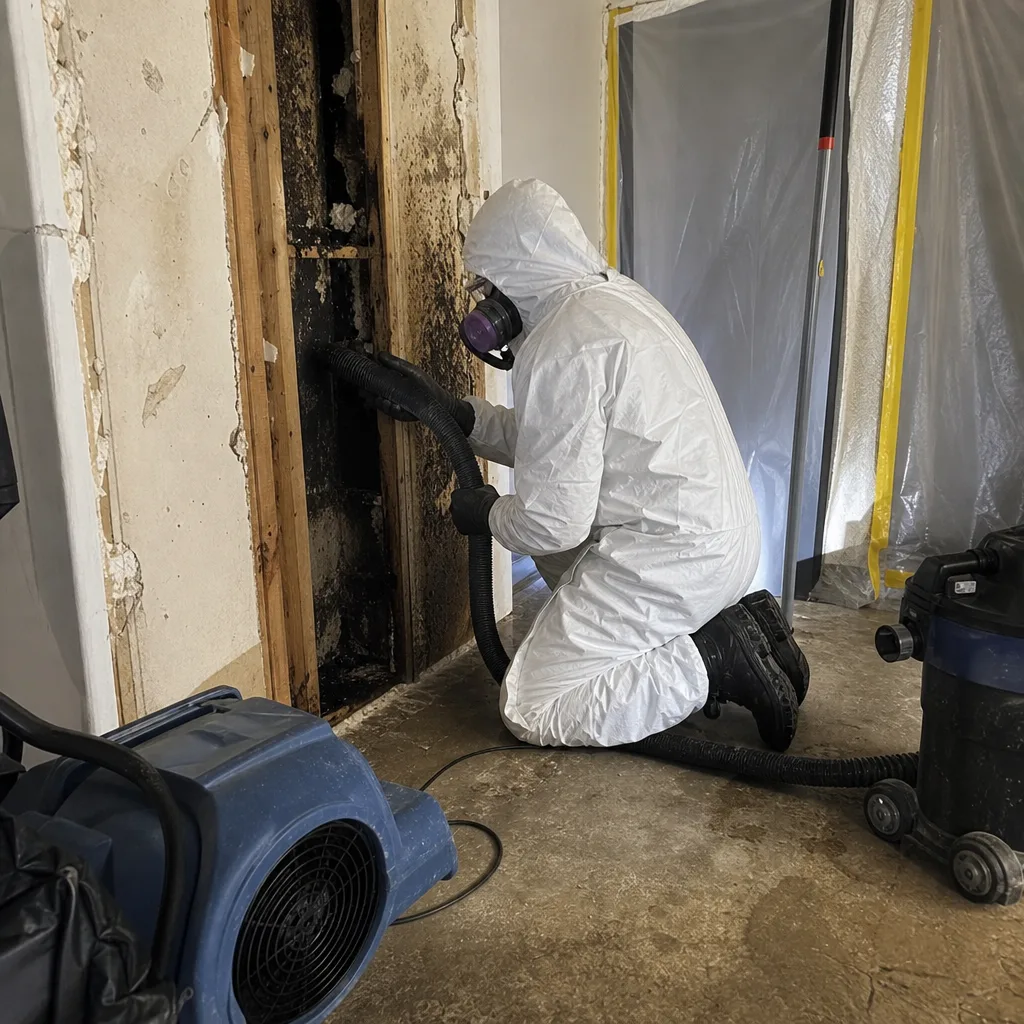
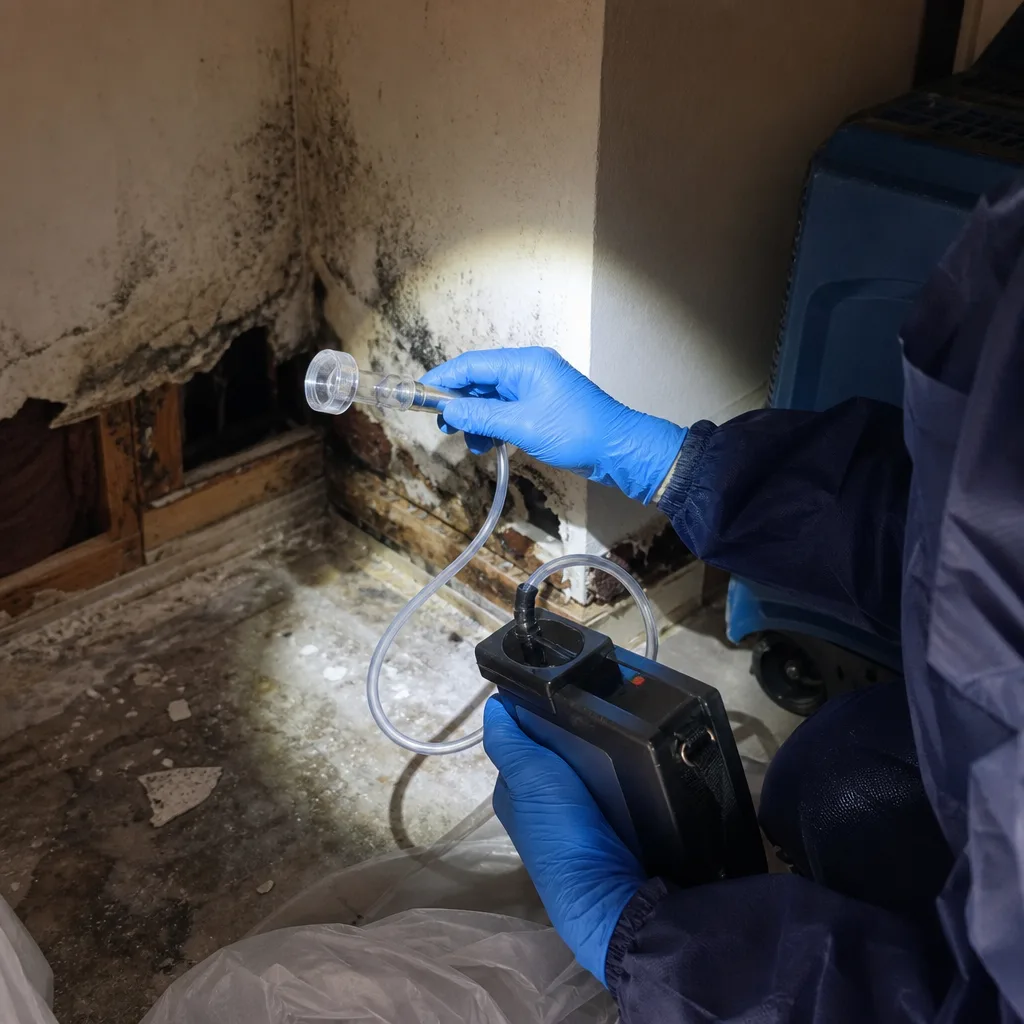
Odor Removal & Deodorization
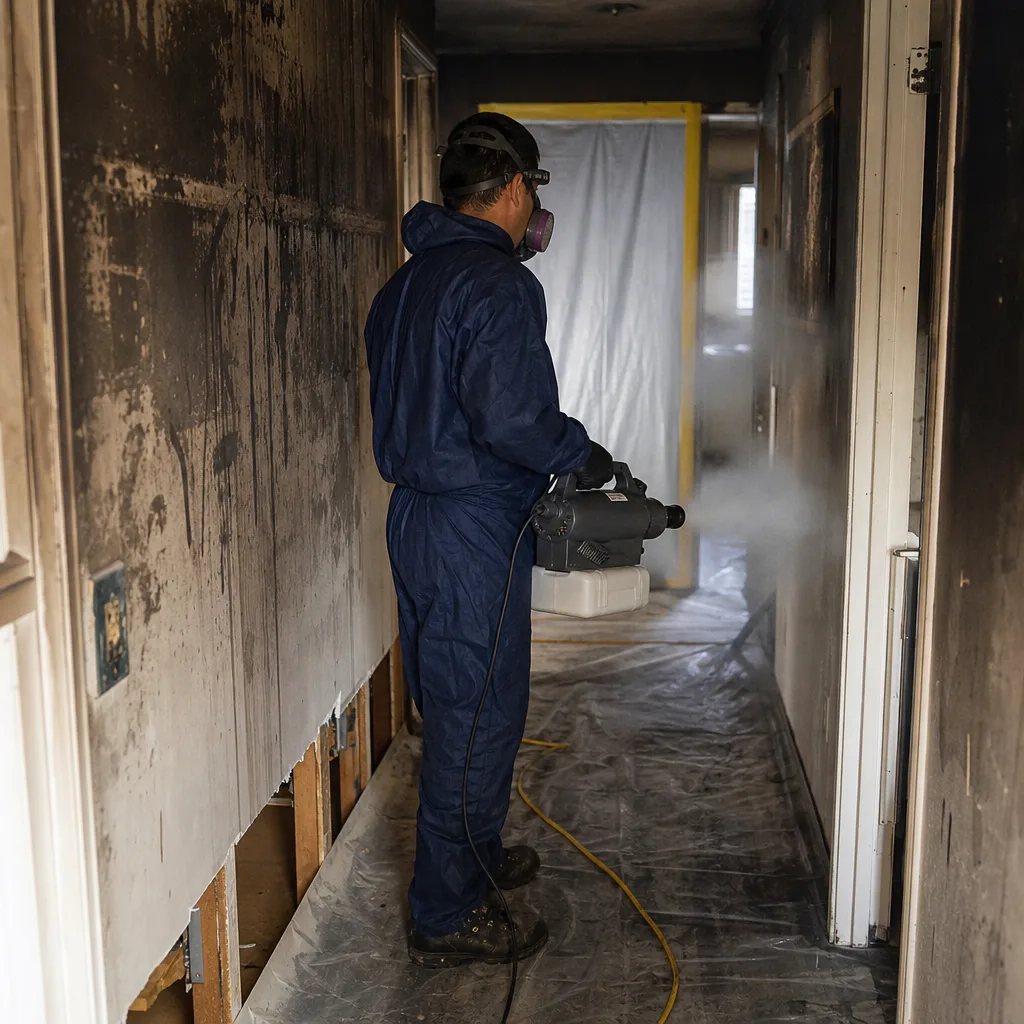
Smoke odor isn’t a surface problem; it’s a molecular bonding issue. We deploy hydroxyl generators that break odor molecules in occupied spaces safely, ozone generators for unoccupied structures, and thermal fogging that penetrates the same pathways the smoke took. In Ramona’s older ranch homes with single-return HVAC systems, duct contamination is the primary odor source we see missed by other crews. We clean duct runs with rotary brushes and negative-air collection, not just replace the filter.
Contents Cleaning & Pack-Out
After a wildfire smoke event in Ramona, many homeowners assume everything must be replaced. That’s rarely true. We inventory, photograph, and transport salvageable contents to our facility for ultrasonic cleaning, ozone deodorization, and antimicrobial treatment. Engineered wood furniture, electronics with sealed casings, and most textiles respond well. We document salvage rate and replacement value for your insurer. The homeowner in our Dye Road job chose to clean rather than replace; we returned 80% of their contents at 40% of replacement cost.
Emergency Board-Up & Tarping
Ramona’s rural properties often burn partially, leaving compromised roof sections and walls exposed to weather. We secure these structures with fire-resistant board-up materials and temporary roof covers that meet local code for occupied structures in Very High Fire Hazard Severity Zones. This isn’t just weather protection; it’s security and insurance compliance. Carriers deny claims for secondary damage that occurs after the initial event if the property wasn’t properly secured.
What happens when you call
- 1
A real person answersNo phone trees - you reach a local pro.
- 2
You get an upfront price rangeHonest numbers before anyone is dispatched.
- 3
A background-checked tech heads outLicensed & insured, dispatched right away.
- 4
You approve before work beginsNothing starts until you say go.
Fire & Smoke Damage Restoration Costs in Ramona, CA
| Service | Typical Range in Ramona |
|---|---|
| Level 1 smoke cleaning (single room, no structural damage) | $3,800 - $6,500 |
| Level 2 fire restoration (multiple rooms, HVAC cleaning, light structural repair) | $8,200 - $14,000 |
| Level 3 partial structural loss (rebuild required, well decontamination, contents pack-out) | $15,000 - $45,000+ |
| Emergency board-up and stabilization | $1,200 - $3,500 |
| Contents pack-out and cleaning (per truckload) | $2,800 - $5,500 |
| Private well testing and shock chlorination | $800 - $1,800 |
| HVAC duct cleaning and deodorization | $1,500 - $3,200 |
What moves the price: square footage affected, soot type (wet smoke requires more labor hours), structural involvement, well contamination requiring third-party coordination, and whether contents can be cleaned in-place or require pack-out. Insurance typically covers direct fire and smoke damage plus reasonable measures to prevent secondary damage; well decontamination is often covered when documented as fire-related. Out-of-pocket costs arise when coverage limits are exceeded or when pre-existing conditions (like the chronic moisture damage we find behind old stucco) require remediation beyond the fire scope.
Every job starts with a free visual inspection and written price - Haven Standard, Clause 1. No exceptions. Call (858) 683-1768 to schedule.
We Also Serve Cities Near Ramona
Our crews respond throughout the San Diego County backcountry and inner suburbs. We regularly handle fire and smoke restoration in Poway, where newer construction sees different smoke migration patterns; Lakeside, with its own wildland-urban interface exposure; Escondido, with a mix of historic and modern housing stock; and Santee, where canyon-driven fire behavior mirrors Ramona’s in smaller parcels. Each city gets the same documentation standards and written pricing, with scopes adapted to local building types and conditions.
Serving Ramona, CA - Our Local Coverage Area
We’re based in the Ramona area and know this community well. Use the map below to see our service coverage - if you’re nearby, we can almost certainly help.
Ramona Fire & Smoke Damage Restoration Questions, Answered
Our Ramona house survived a brush fire but everything smells like smoke and the HVAC stinks. Is that normal?
Yes, and it’s exactly what we expect in Ramona’s wind-driven fire events. Smoke particles are small enough to pass through standard HVAC filters and deposit in duct runs, then re-circulate whenever the system runs. The odor you’re smelling is likely active contamination in the ducts, not just surface residue in rooms. We test duct interiors with borescope cameras and collect samples for particulate analysis. HVAC cleaning with rotary brushes and negative-air collection is standard scope for Ramona smoke jobs, not an upsell. Call (858) 683-1768 and we’ll inspect at no charge.
Everybody in Ramona is on a private well - does a fire or flood mean I can’t drink my water?
Not necessarily, but it must be tested. Ash and debris infiltration into well casings is common after burn events, especially in Ramona’s rural properties with older well seals. We test for coliform bacteria, nitrates, and heavy metals from ash deposition. If contamination is found, we coordinate with local well drillers for shock chlorination and re-testing. This is standard scope on our Ramona fire jobs - something restoration crews working San Diego municipal water almost never handle. We document well condition and test results for your insurer. Call (858) 683-1768 to schedule testing.
How fast do I need to act after smoke gets into my walls?
Within 24 hours for best results, 48 hours at the outside. Smoke particles are acidic and begin etching and discoloring surfaces as they cool and set. In Ramona’s dry climate, this happens faster than in humid coastal areas. After 72 hours, porous materials like drywall, insulation, and unfinished wood may require replacement rather than cleaning. Our 45-minute response commitment exists because we’ve seen the difference between Day 1 and Day 3 on identical fire scenes. The sooner we start, the more we save. Call (858) 683-1768 now.
My Ramona property has wood shake roofing and old vents. Does that change the restoration?
It changes what we rebuild to, not how we restore. Wood shake roofing and unscreened eave vents are grandfathered in Ramona but must be replaced with Class A fire-rated materials and ignition-resistant vents when fire damage triggers reconstruction. We document existing conditions for your insurer, then rebuild to current Very High Fire Hazard Severity Zone code. This often reduces future premium costs and is required for occupancy permits on rebuilt sections. We handle the permit coordination as part of our reconstruction scope. Call (858) 683-1768 for a written assessment.
Can you pack out and clean my contents instead of throwing them away?
In most cases, yes. Our contents cleaning facility handles ultrasonic cleaning for hard goods, ozone deodorization for porous items, and antimicrobial treatment for textiles. We photograph and inventory everything before transport, then document salvage rate and replacement value for your insurer. In our Dye Road job, we returned 80% of the homeowner’s contents at 40% of replacement cost. Some items are unsalvageable - heavily charred plastics, melted synthetics, and certain electronics - but we make that determination with you present, not unilaterally. Call (858) 683-1768 for a free contents assessment.
How long does fire and smoke restoration take in Ramona?
Level 1 jobs (contained fire, one room, no structural damage) typically complete in 1-3 days. Level 2 jobs (multiple rooms, HVAC contamination, light structural repair) run 3-7 days. Level 3 partial or total losses with well decontamination and reconstruction extend to 1-4 weeks. Ramona’s rural properties sometimes add time for well-driller coordination and permit processing in Very High Fire Hazard Severity Zones. We provide a written timeline with our scope, updated daily with photo progress reports. Call (858) 683-1768 for a specific estimate on your property.
Will my insurance cover the full restoration cost?
Insurance covers direct fire and smoke damage plus reasonable measures to prevent secondary damage, subject to your policy limits and deductible. Documentation quality determines whether the full scope is paid. Our photo records, moisture readings, drying logs, and line-item Xactimate estimates are built to carrier standards. We coordinate directly with your adjuster and defend our scope with measured data, not arguments. Well decontamination, when documented as fire-related, is typically covered. Pre-existing conditions like chronic moisture damage behind old stucco may fall outside coverage. We identify these issues during inspection and explain them before work starts. Call (858) 683-1768 and we’ll review your situation at no charge.
What should I do in the first 30 minutes after a fire?
Ensure everyone is safe and accounted for, then call 911 if the fire is active or smoldering. Do not re-enter until fire officials clear the structure. Once cleared, call (858) 683-1768 for our 24/7 live dispatch. Do not touch soot-covered surfaces - the oils in your skin will set stains permanently. Do not run your HVAC system, as this will distribute smoke particles throughout the house. If safe, open windows for ventilation, but only if outside air quality is better than inside (check during active wildfire events). Gather your insurance policy and a list of medications or essentials you’ll need while displaced. Our crew will handle everything else from documentation through reconstruction.
Written by Alicia Brennan, Owner at DryMark Restoration Poway, serving Ramona since 2011.
Fire & Smoke Damage Restoration in Nearby Areas