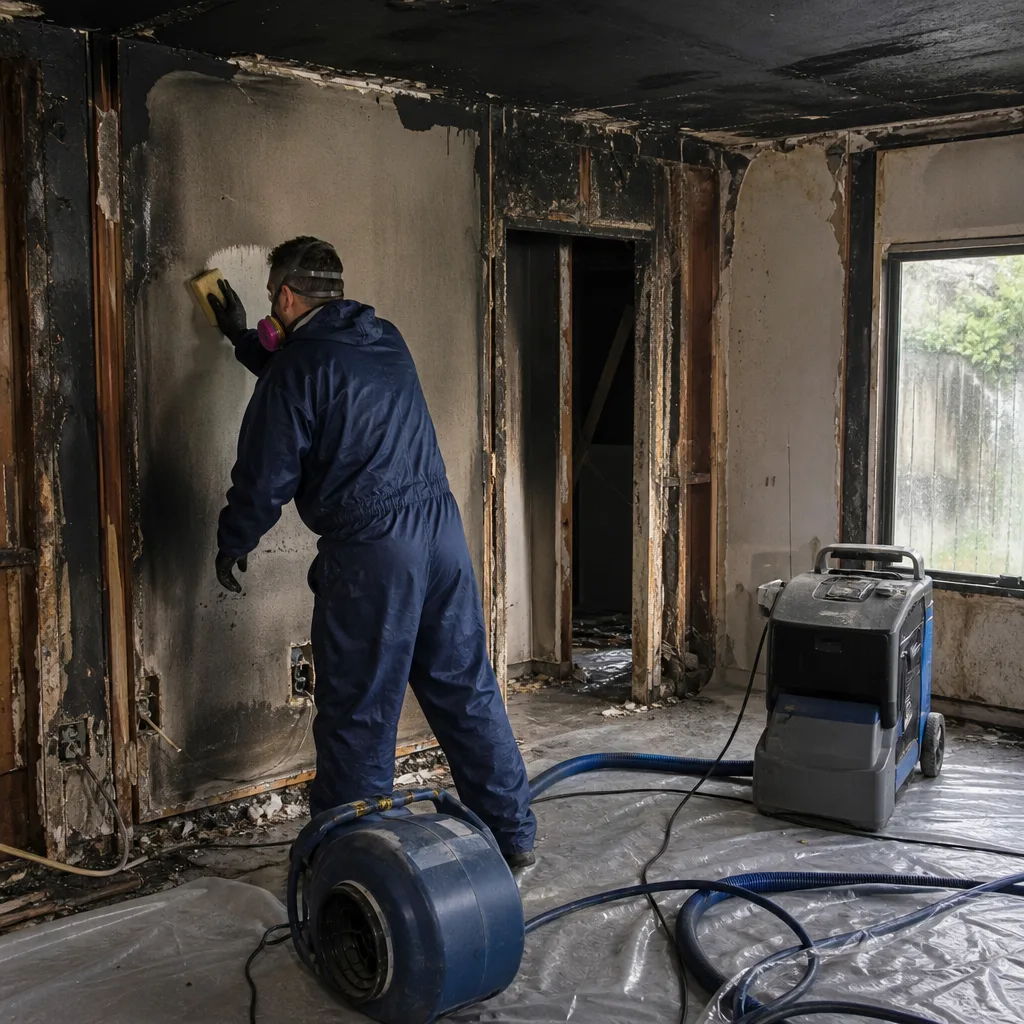
Free visual inspection and a written scope of work before any mitigation begins - photos, moisture readings, and drying logs go in your claim file
The scope we write is the scope we bill. Anything new gets shown to you, in writing, before we touch it.
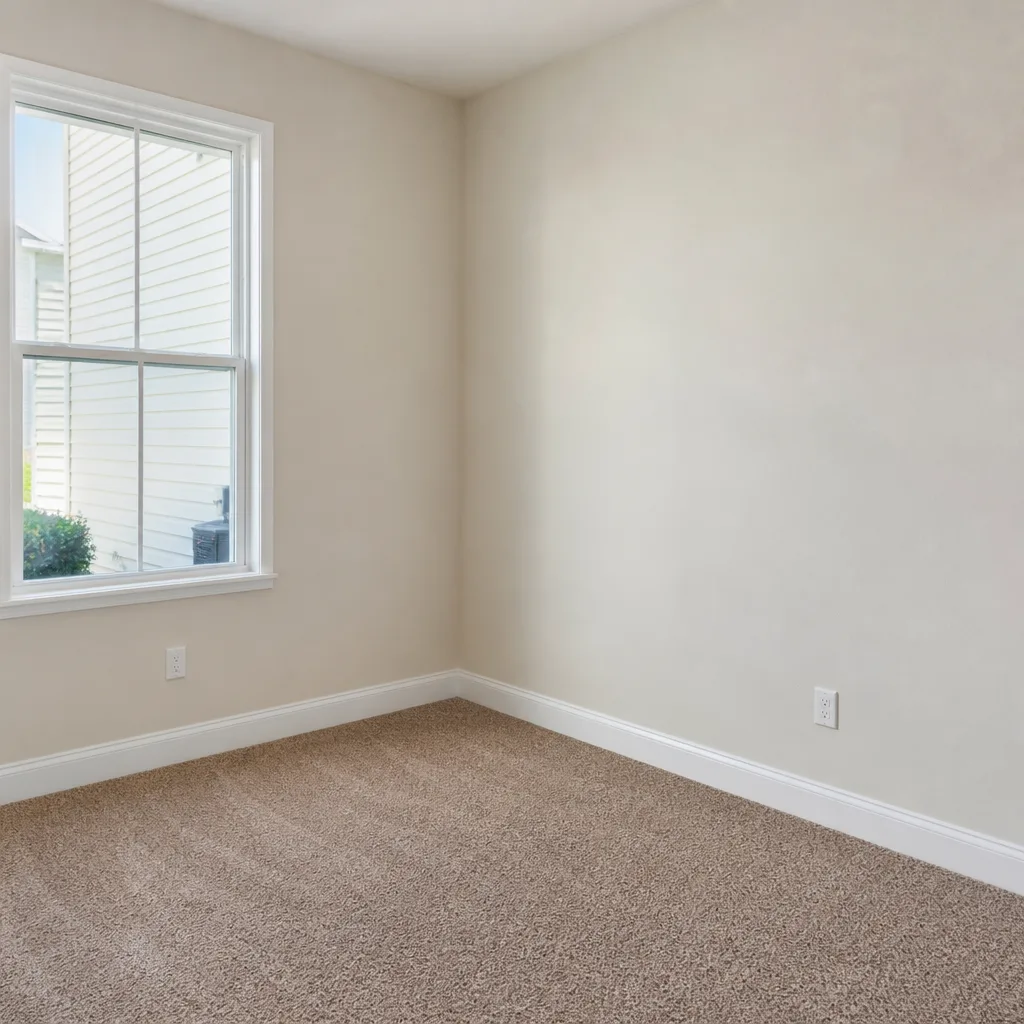
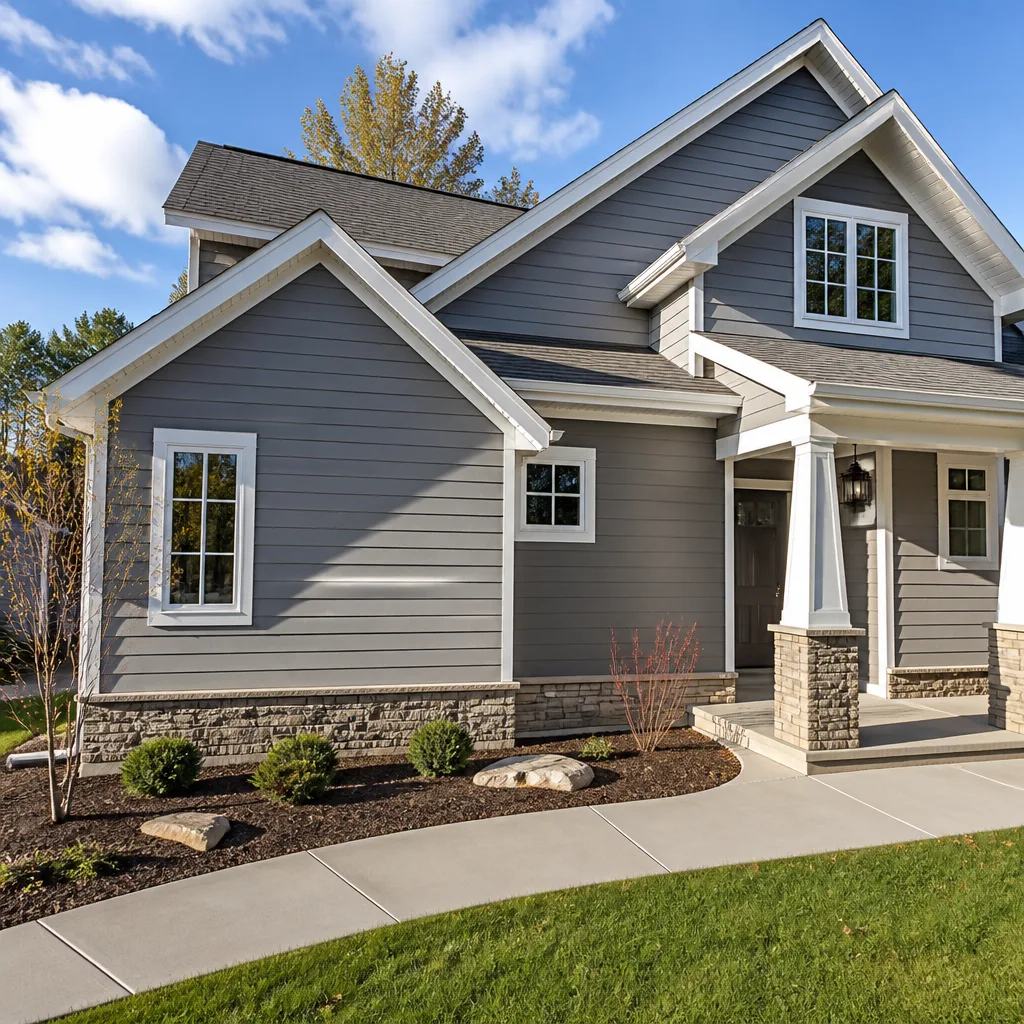
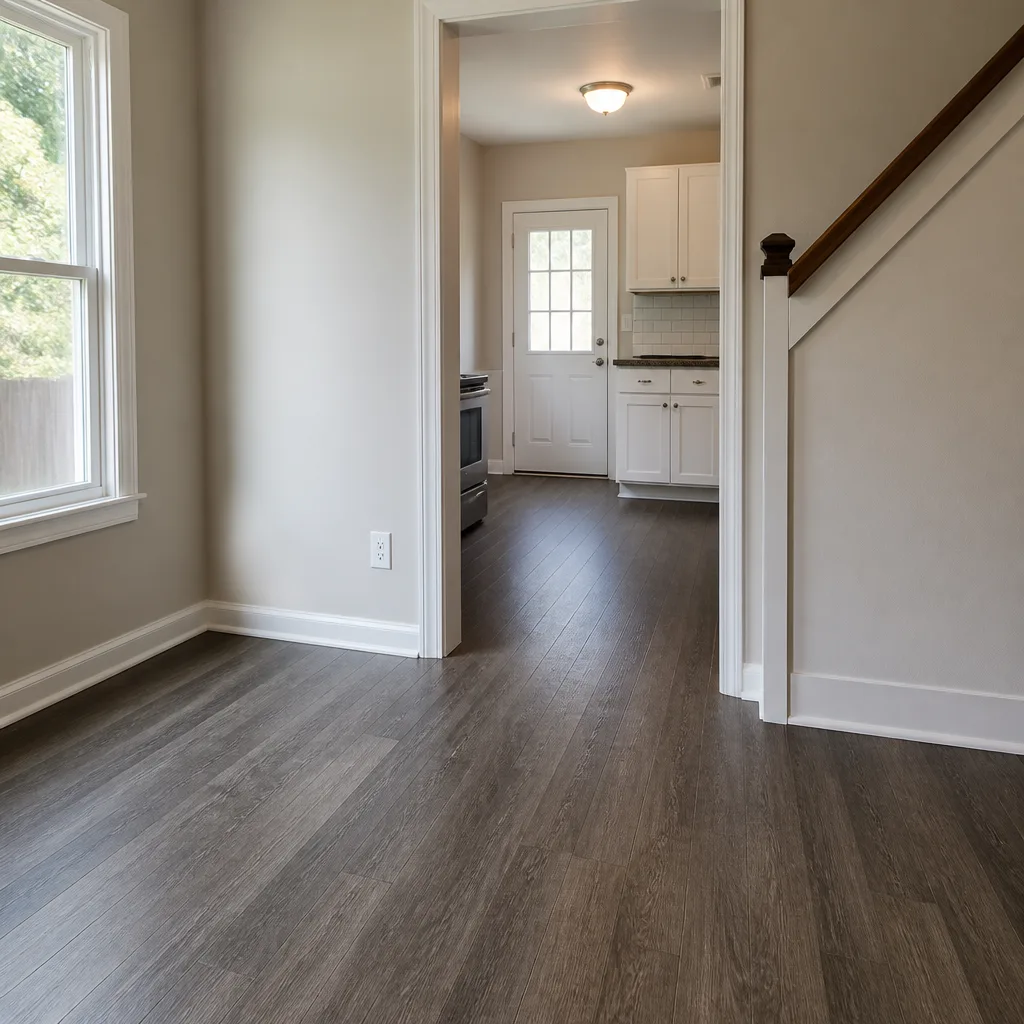
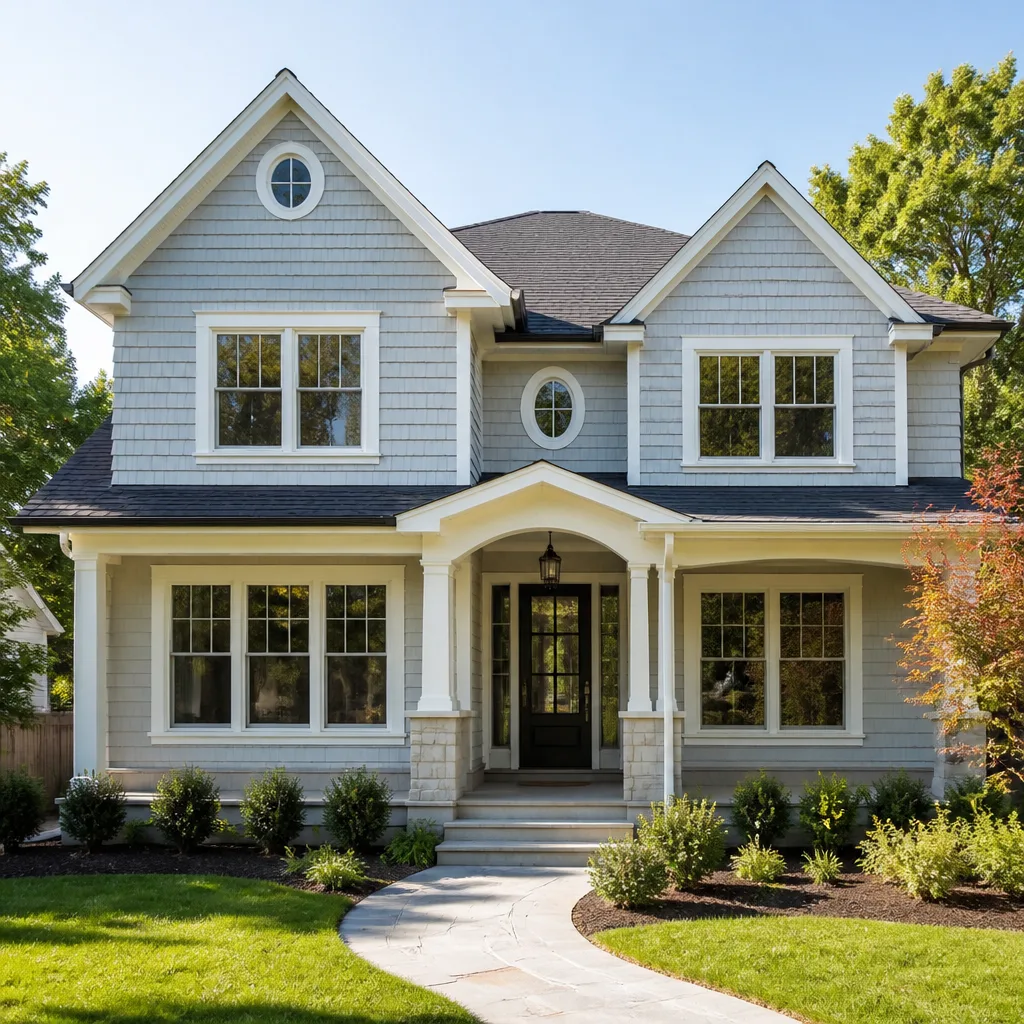
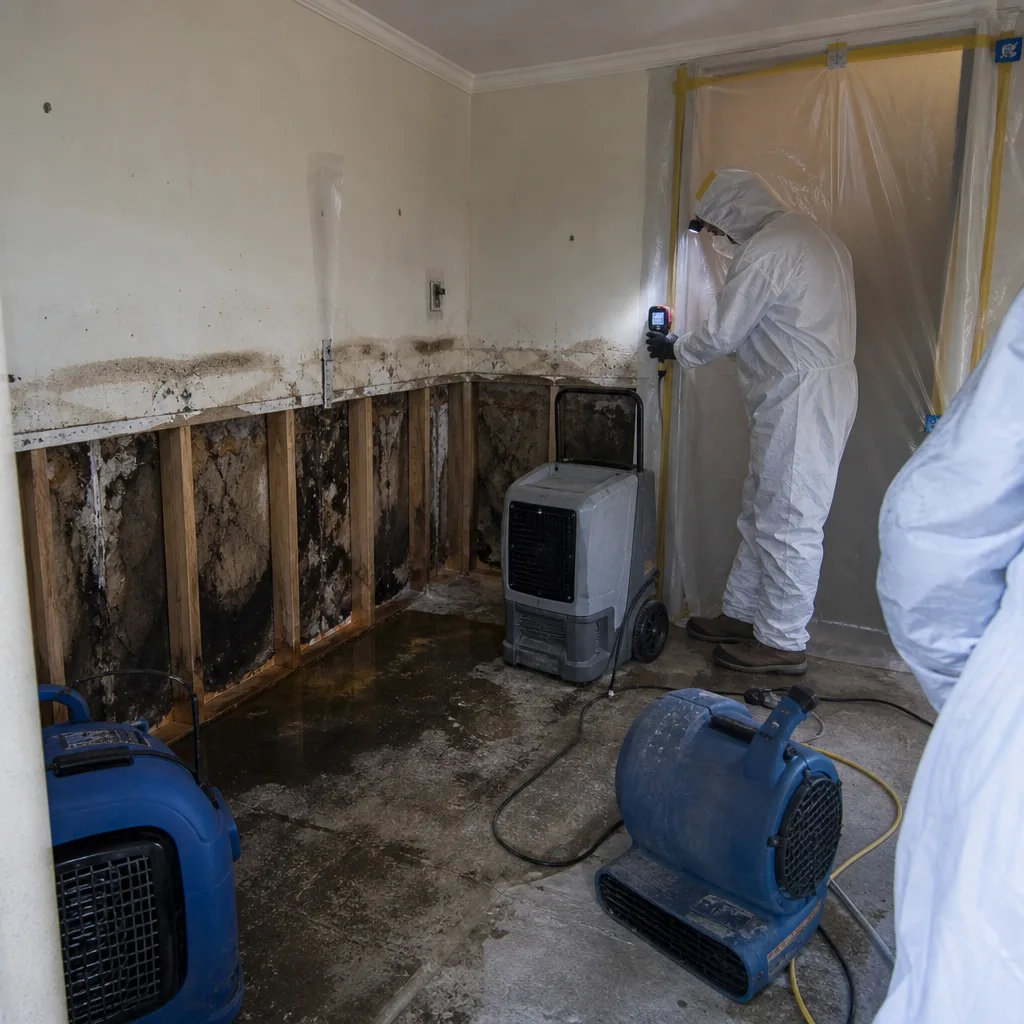 Before
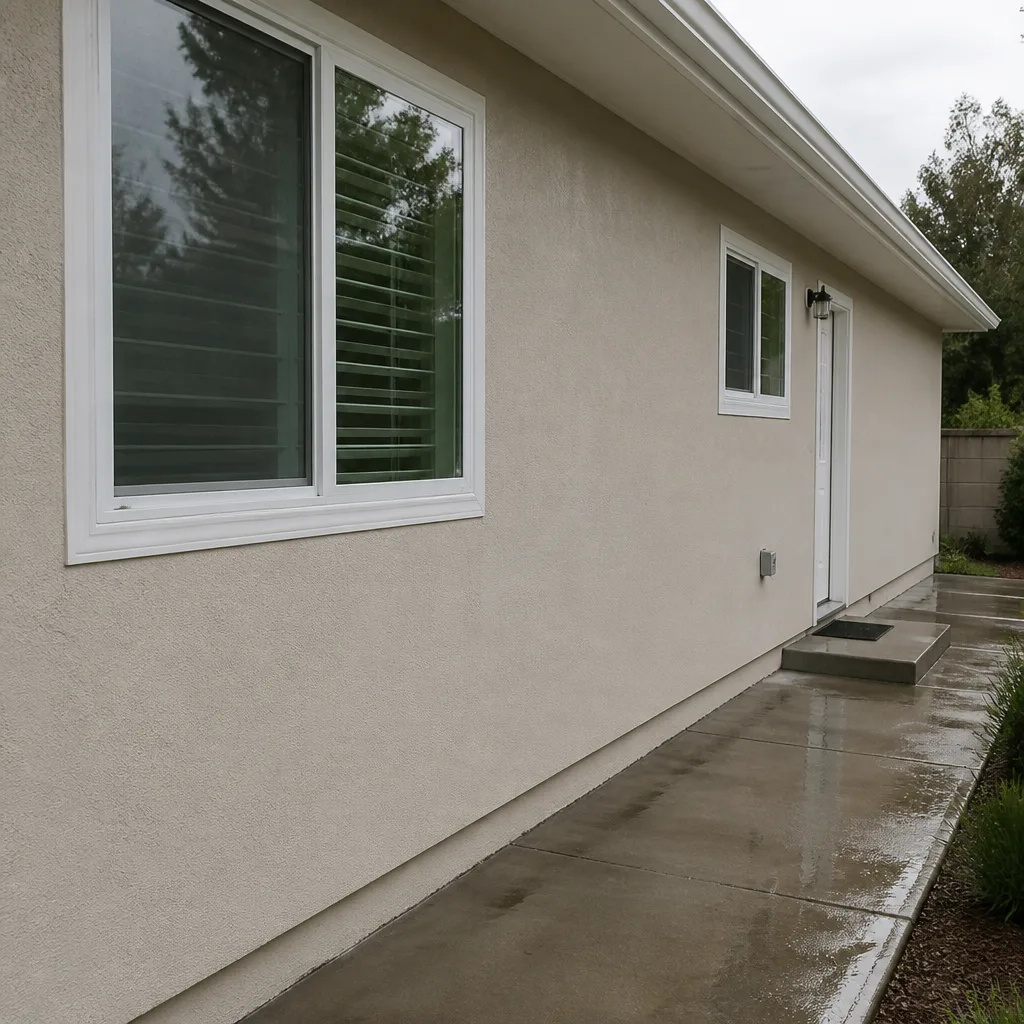 After
After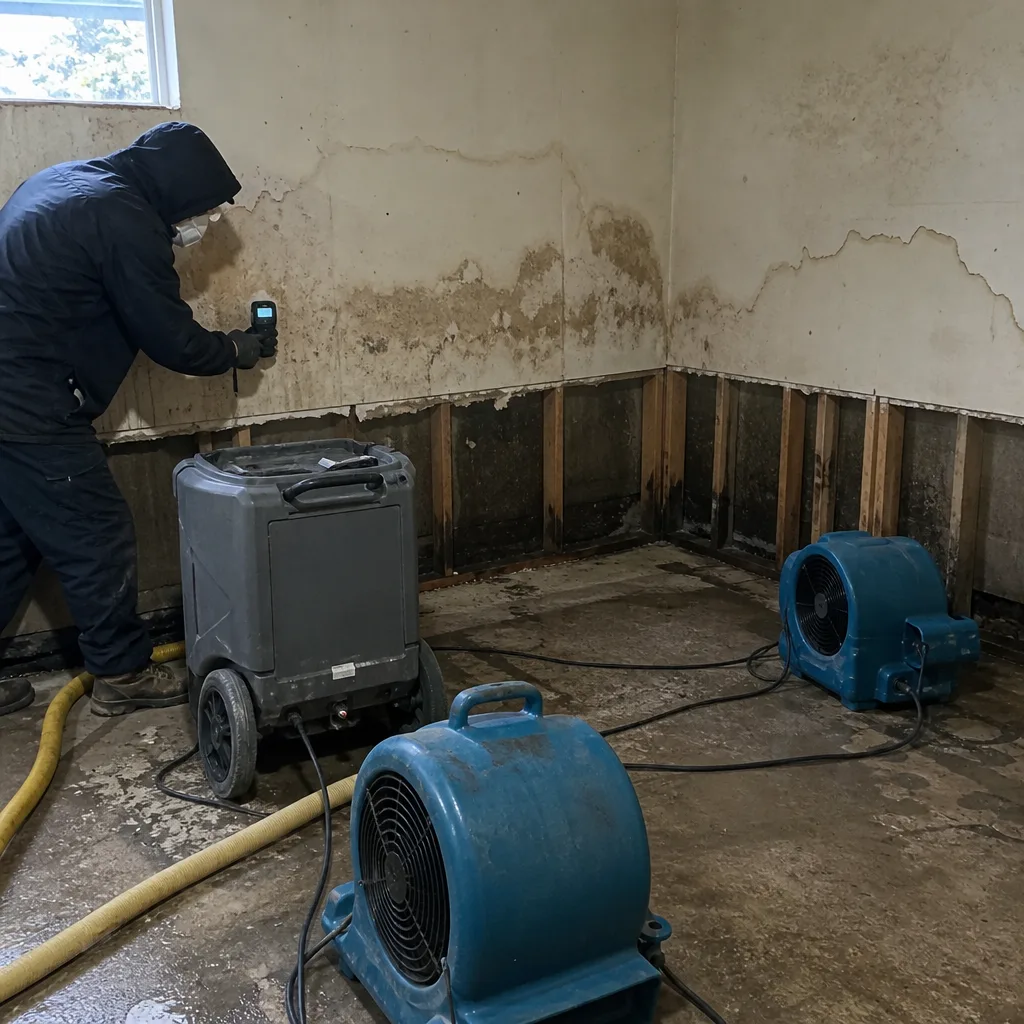 Before
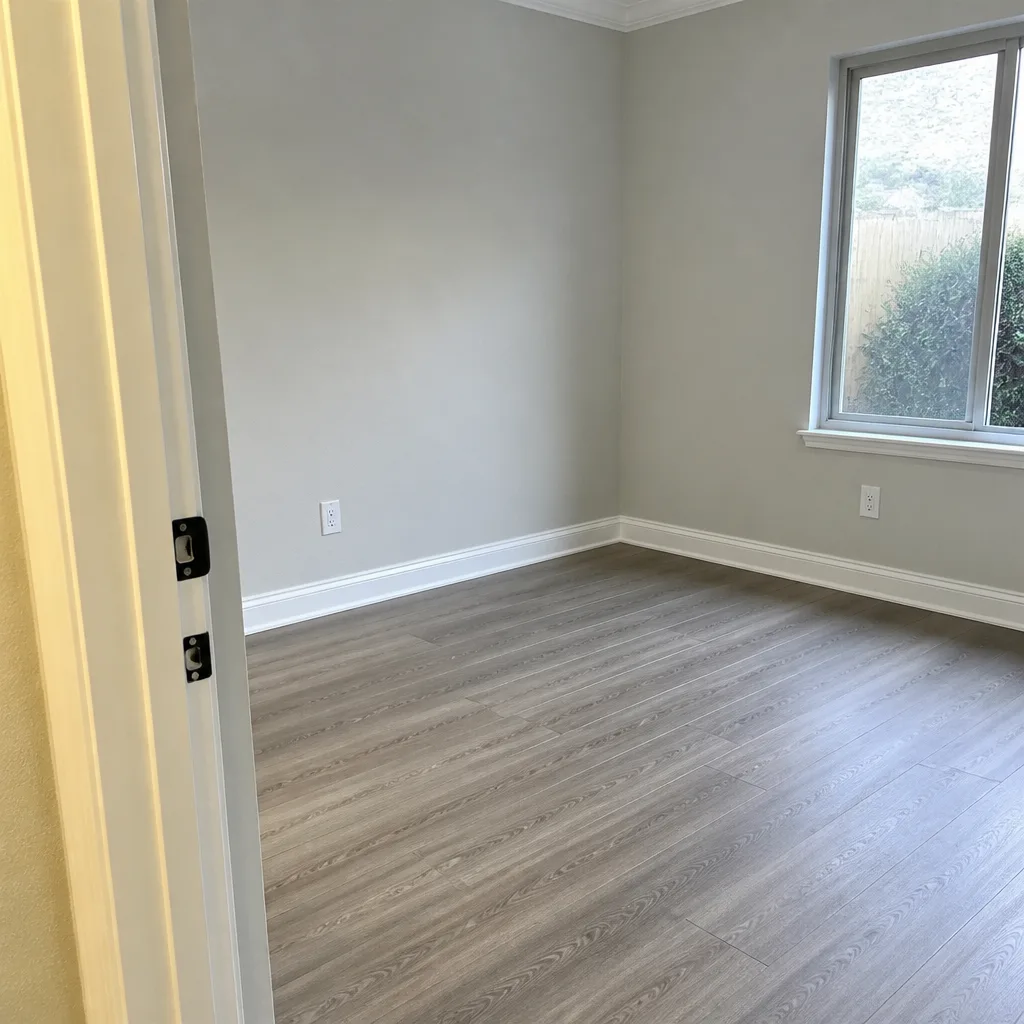 After
After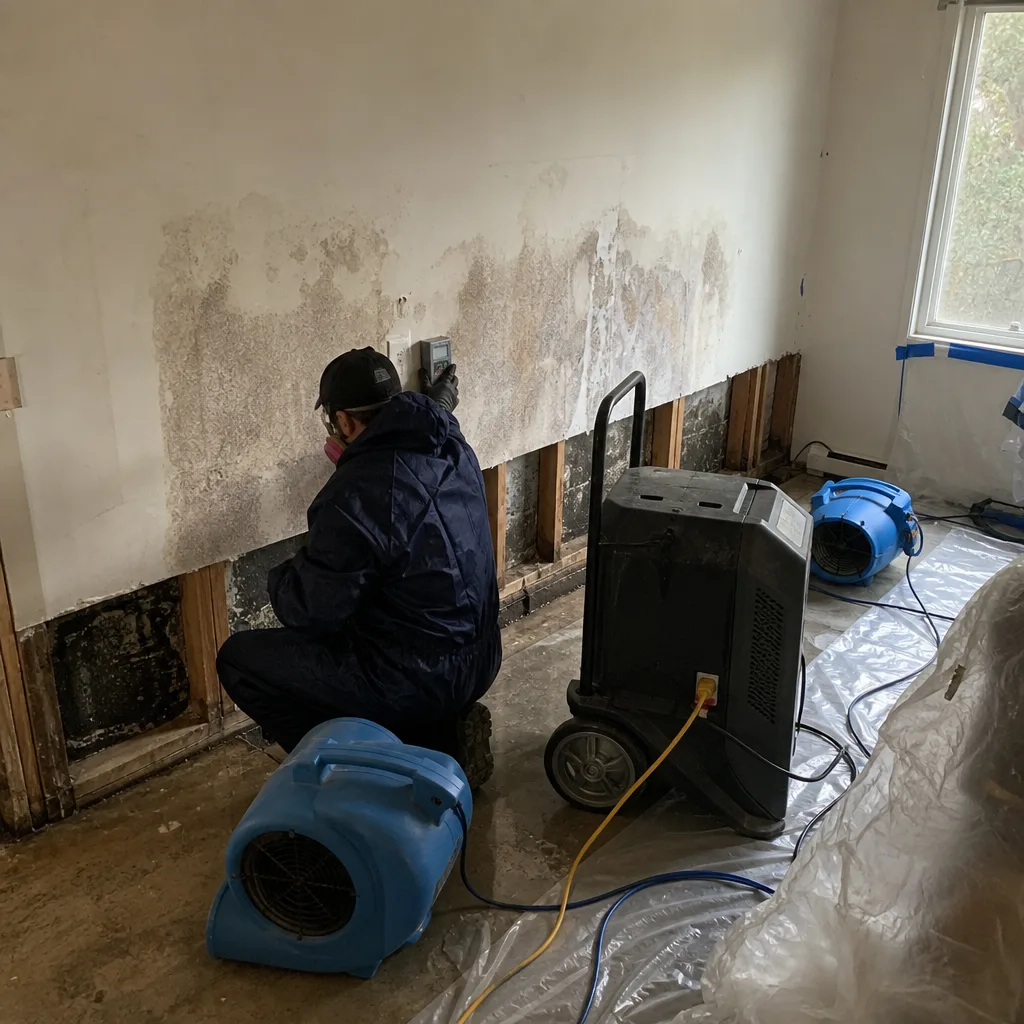 Before
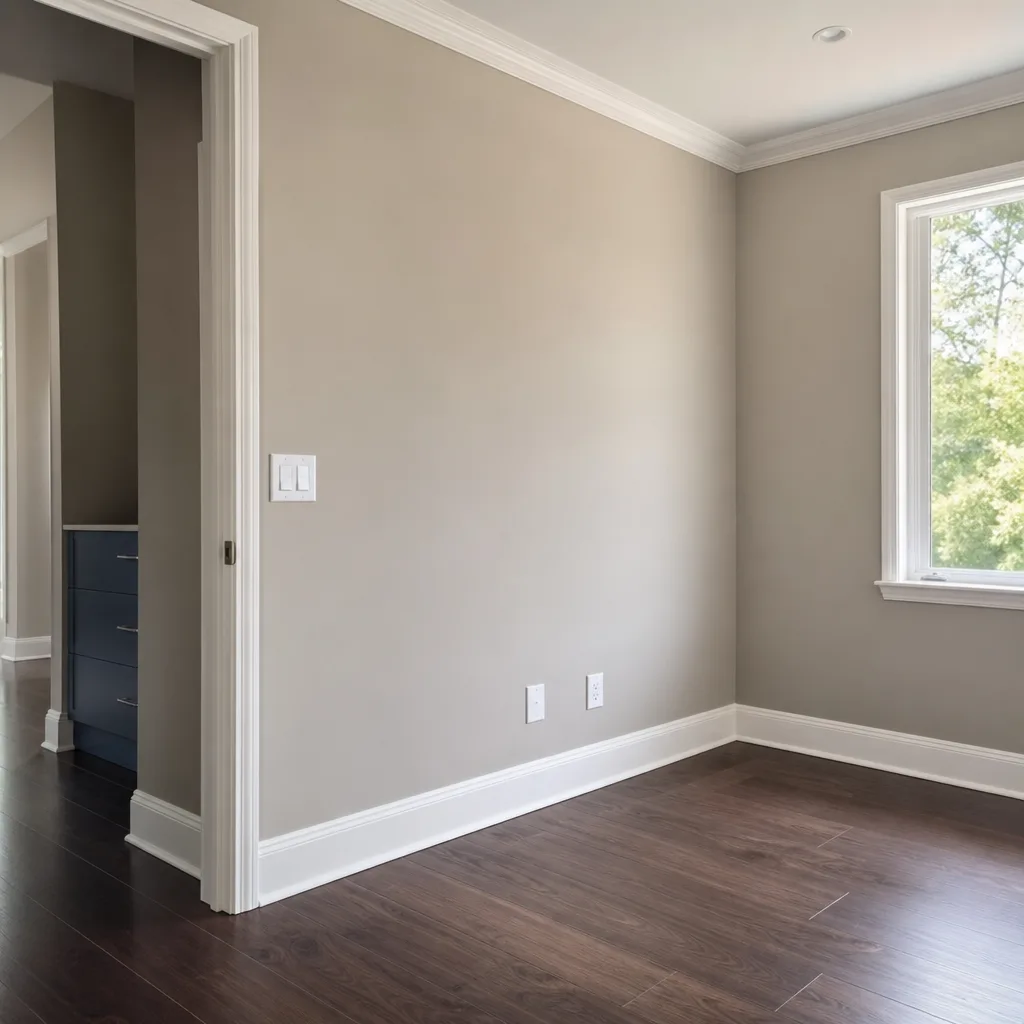 After
After24/7 Emergency Fire & Smoke Damage Restoration in Winter Gardens
Fire and smoke damage restoration in Winter Gardens typically costs $2,800-$8,500 for cleanup and deodorization of a single-family home, with full structural repair ranging $15,000-$45,000 depending on affected square footage and whether the fire compromised the roof or framing. Our crews answer live at (858) 683-1768, 24 hours a day, 7 days a week, with no voicemail on emergency lines. We dispatch to Winter Gardens from our San Diego coordination office and arrive within 45 minutes to board up, tarp, and begin documented moisture mapping and soot assessment.
The first hour after a fire determines how far smoke particulates migrate through your HVAC system and wall cavities. In Winter Gardens’s wood-frame ranch homes, especially the 1950s-1980s stock and post-2003 Cedar Fire rebuilds, delayed response means fine ash settles into insulation and subflooring where standard surface cleaning never reaches it. We bring containment, HEPA air scrubbers, and thermal imaging to the door on every Winter Gardens call.
Understanding Fire & Smoke Damage Restoration Severity in Winter Gardens Properties
Fire damage in Winter Gardens follows a severity scale that our crews document on every job. Class 1 losses affect a single room with light smoke residue, typically requiring 3-5 days of cleaning and deodorization. Class 2 extends to multiple rooms with moderate soot and possible water damage from suppression efforts, pushing timelines to 1-2 weeks. Class 3 involves heavy structural involvement, roof compromise, or significant water intrusion, often requiring full reconstruction.
The real complexity in Winter Gardens comes from the housing stock. The community’s 1950s-1980s wood-frame ranch homes on larger lots backing to brushy hillsides were built with varying moisture barriers and attic ventilation. Homes rebuilt after the 2003 Cedar Fire introduced inconsistent vapor retarders and construction methods. This mixed-age stock means two homes on the same block can present completely different smoke migration patterns and hidden moisture conditions after identical fire exposure. We scope each property individually, never applying a template.
Soot residue types matter for cleaning protocol. Dry smoke from fast-burning, high-heat fires produces powdery residue we remove with vacuum and dry sponging. Wet smoke from slow, smoldering burns creates sticky, smeary deposits requiring solvent-based cleaning. Protein fires, common in kitchen incidents, leave nearly invisible but pungent residues that demand enzyme treatments. Winter Gardens’s Santa Ana wind-driven fires typically produce dry smoke with fine ash particulates that penetrate deeper than coastal fog-zone fires.
Why Winter Gardens Property Owners Choose DryMark Restoration Poway
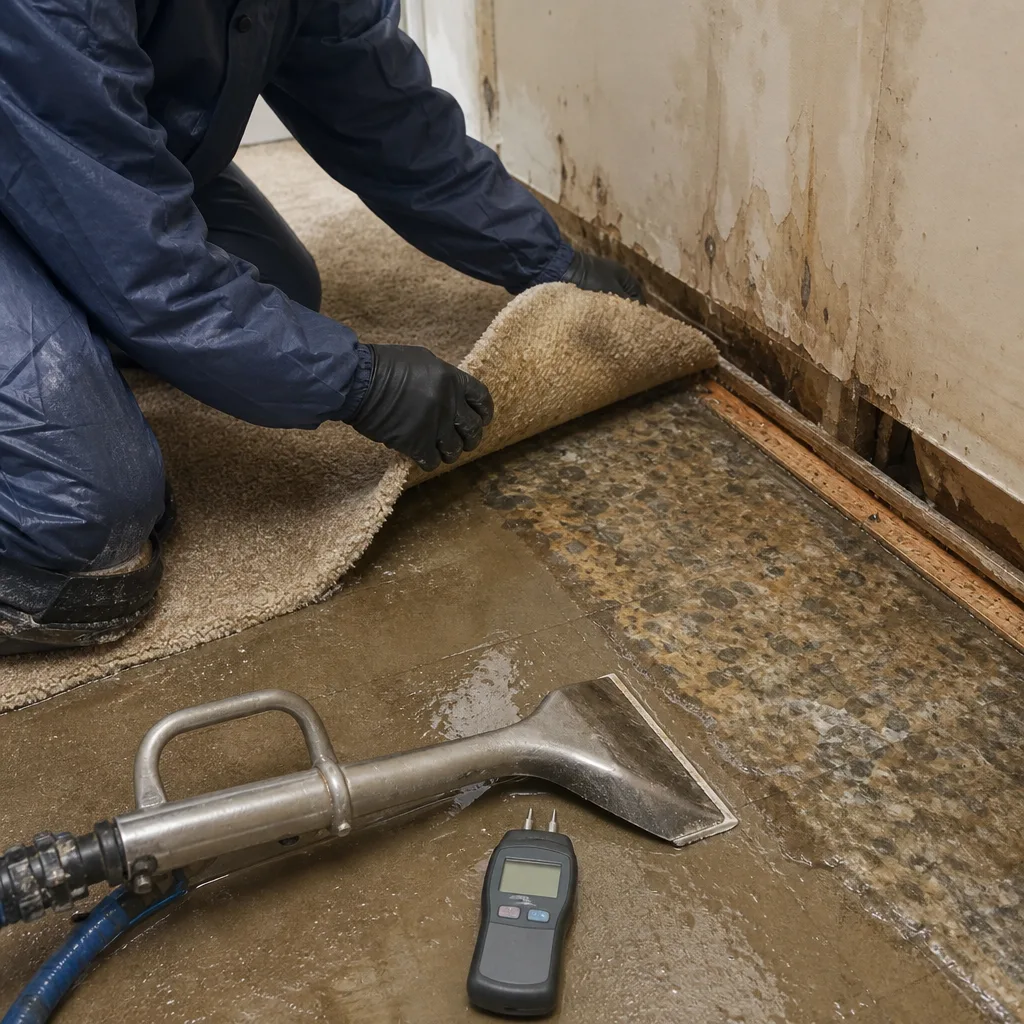
- 45-minute response commitment to Winter Gardens from dispatch, documented with timestamped arrival photos.
- 24/7 live answer by a real person, never an automated system or voicemail tree, on every call to (858) 683-1768.
- IICRC-certified crews holding FSRT (Fire and Smoke Restoration Technician) and WRT (Water Damage Restoration Technician) credentials, with license numbers provided on request.
- Free visual inspection and written scope before any work begins, every time, with no exceptions.
- Direct insurance billing with photo-documented estimates and daily drying logs that adjusters pay without dispute.
- One team from emergency board-up through final reconstruction, eliminating handoff errors between contractors.
 Before
 After
AfterOur Fire & Smoke Damage Restoration Process
1. Inspection & Assessment
We arrive with thermal imaging cameras, moisture meters, and hygrometers to map every affected surface. In Winter Gardens’s brush-adjacent ranch homes, we pay particular attention to attic ventilation paths and HVAC duct runs where Santa Ana wind-driven ash penetrates deepest. Every reading is logged with a photo record before any equipment is placed.
2. Emergency Board-Up & Tarping
Broken windows, compromised roofing, and damaged doors get immediate temporary protection. We use plywood and roof tarps rated for the wind loads Winter Gardens experiences during Santa Ana events, securing the structure before secondary weather damage occurs.
3. Water Extraction & Structural Drying
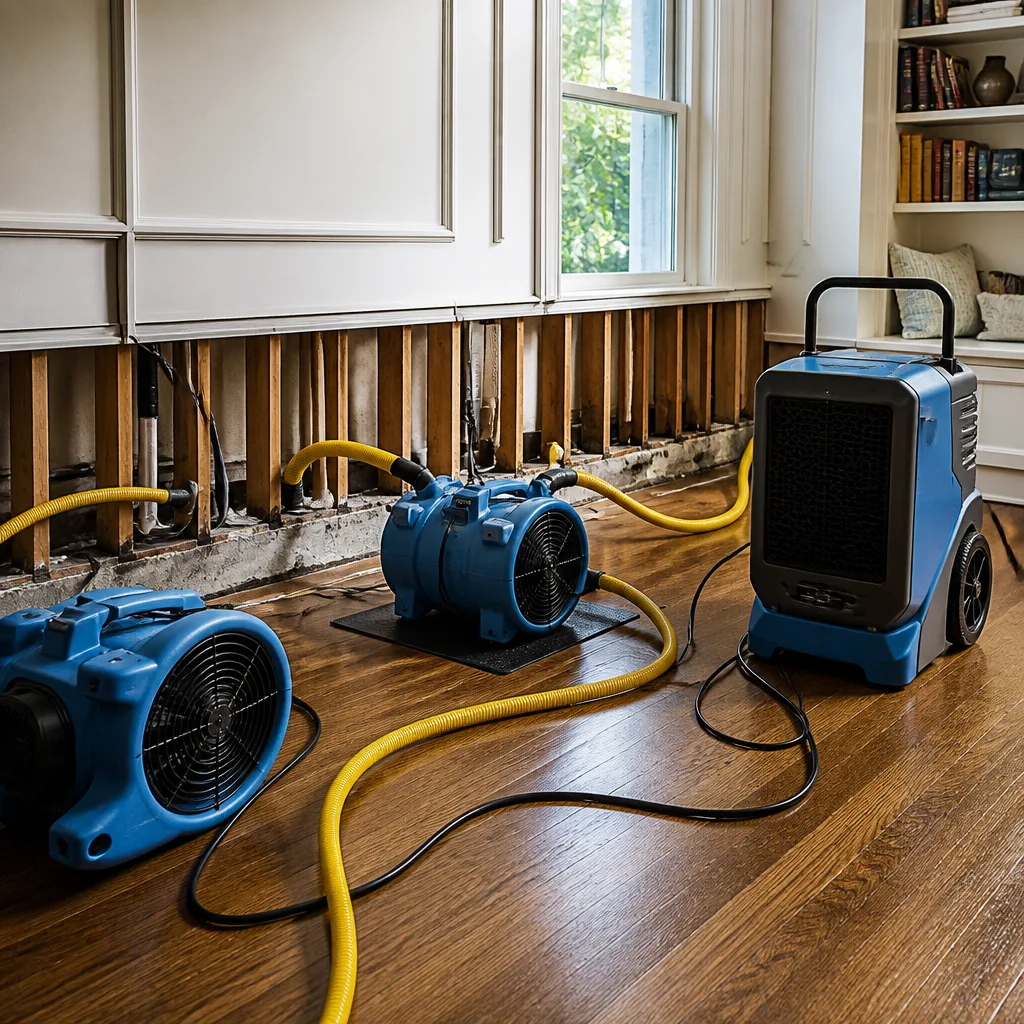
Fire suppression leaves Category 2 or 3 water in walls, subfloors, and crawlspaces. We deploy Dri-Eaz and Phoenix dehumidifiers with XPOWER air movers, calculating specific humidity and vapor pressure differentials to establish drying goals. Daily moisture logs track progress to IICRC S500 standards.
4. Smoke & Soot Removal
HEPA-filtered vacuums capture loose particulates before wet cleaning begins. We use dry sponging, solvent cleaning, and ultrasonic methods matched to the specific soot type. In Winter Gardens homes with post-2003 rebuilds, we test vapor retarder integrity before applying any liquid cleaning agents that could trap moisture.
5. Odor Removal & Deodorization
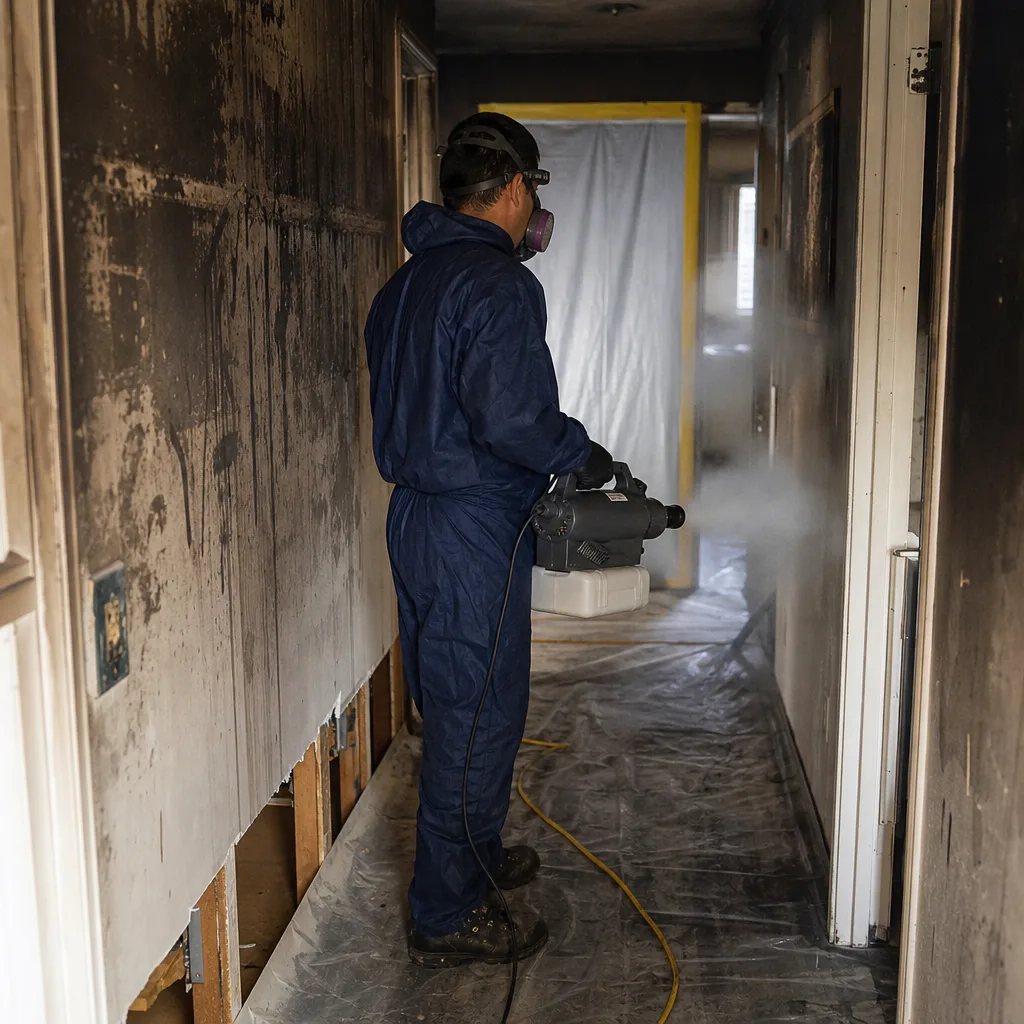
Thermal fogging and ozone treatment neutralize odor molecules in porous materials. For deep-set smoke in wall cavities, we deploy Injectidry systems that force deodorizing agents through the same pathways smoke traveled. We verify results with olfactory testing and air quality measurement, not guesswork.
6. Repairs & Restoration
Our reconstruction crew replaces compromised drywall, flooring, insulation, and framing with materials matched to existing finishes. A written price for this phase is delivered before work begins, backed by our 365-Day Done Right Promise under The Haven Standard.
Need Emergency Fire & Smoke Damage Restoration in Winter Gardens Now?
Crews minutes away, answering live 24 hours a day. The sooner we start, the less it costs.
Working With Your Insurance Company
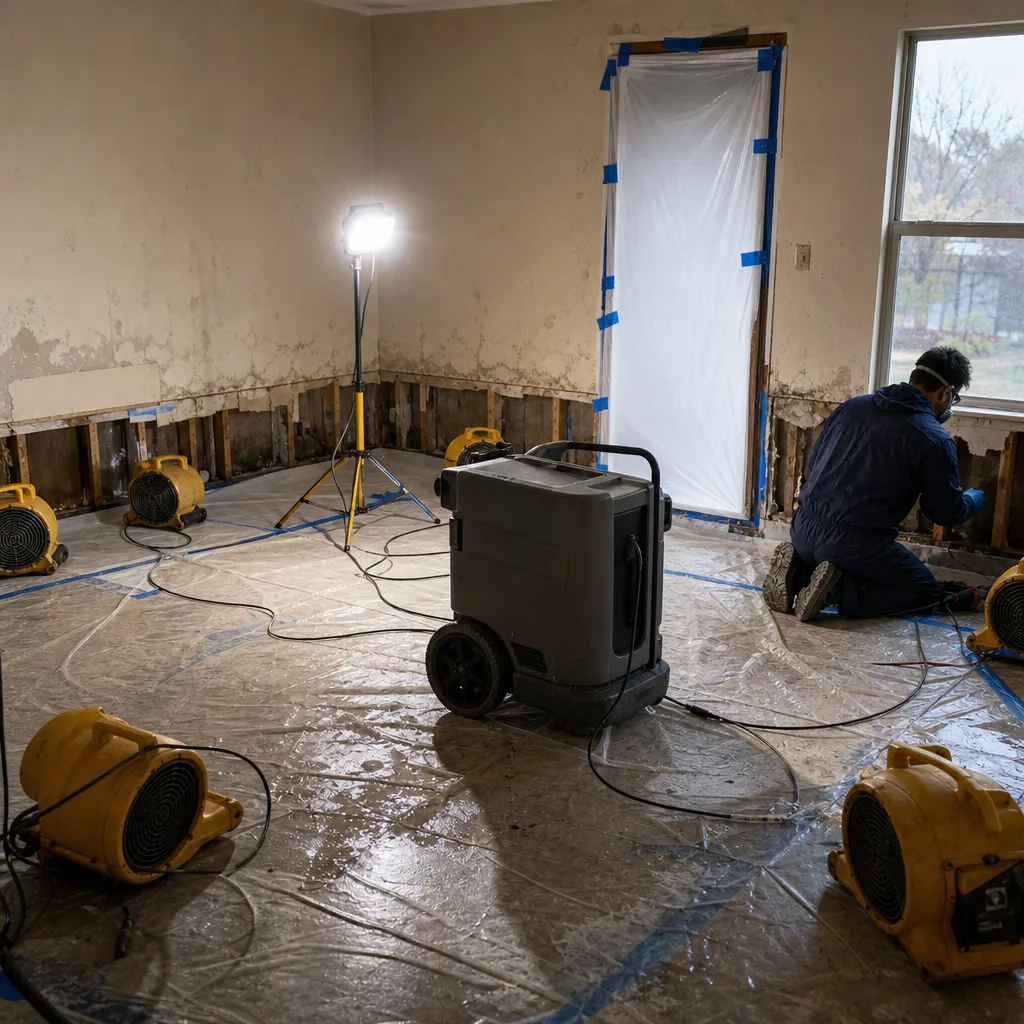
Fire claims live or die on documentation. From our first hour on site, we build a file that mirrors how adjusters evaluate losses: timestamped photos, moisture readings with psychrometric data, material classifications by trade name, and a line-item scope written to Xactimate standards. Our founder built Back to Dry Restoration in 2011 after seeing how sloppy documentation cost homeowners their claims, and that documentation-first approach defines every Winter Gardens job.
We coordinate directly with your adjuster, providing the evidence they need to approve payment without repeated site visits or disputed line items. Our daily drying logs, photo records, and written scopes turn restoration invoices into claims that close cleanly.
What We Provide Your Insurer
- Thorough documentation of the loss
- Photos of all damage, room by room
- Moisture readings and drying logs
- A detailed, line-item scope of work
- Direct coordination with your carrier
Built for Winter Gardens’s Loss Calendar
Winter Gardens’s fire and smoke damage calendar is driven by San Diego County’s inland wildland-urban interface conditions, not coastal weather patterns. September through November brings Santa Ana wind events with sustained 25-40 mph winds and gusts to 60+, driving rapid fire spread from the brushy hillsides that border the community’s eastern edge. The 2003 Cedar Fire proved how fast this spreads; embers travel miles ahead of flame fronts, depositing fine ash and smoke in homes that never saw direct flame contact.
December through March shifts the risk. Winter rainfall on fire-denuded, hydrophobic soils creates flash runoff that channels mud and debris against foundations. The same homes that survived fire season now face sub-slab moisture and crawlspace mold from saturated soils that shed water instead of absorbing it. This two-punch cycle, unique to inland wildland-urban interface communities like Winter Gardens, means fire restoration work that ignores winter moisture pathways leaves the real damage unaddressed.
Spring and summer bring lower fire risk but higher demand for delayed-discovery claims: homeowners who cleaned surface soot in fall find persistent odors, HVAC contamination, or mold in crawlspaces by April. We scope for these 12-18 month delayed conditions on every Winter Gardens fire job, even when the initial claim has closed.
Fire & Smoke Damage Restoration Across Winter Gardens’s Neighborhoods
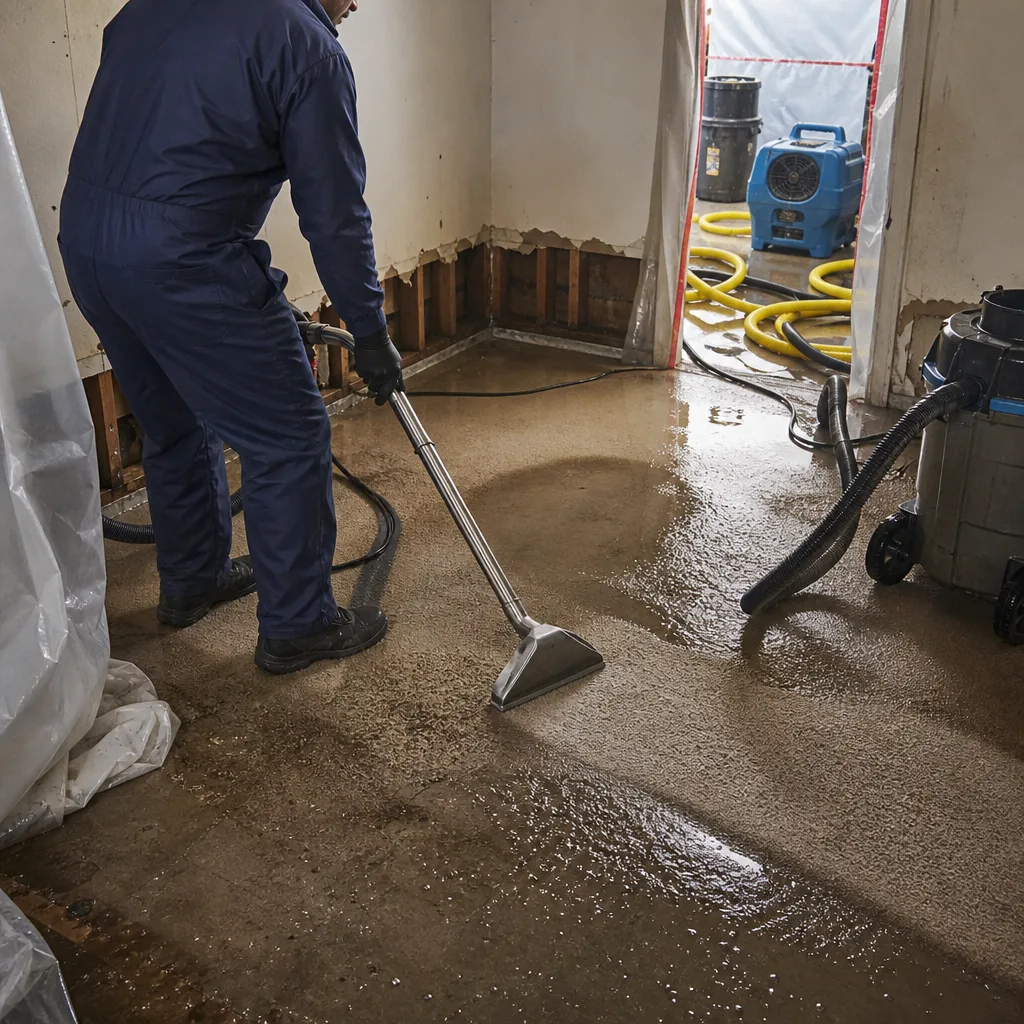
Winter Gardens’s geography creates distinct restoration profiles by area. Along Winter Gardens Boulevard and the corridors feeding into it, the original 1950s-1970s ranch homes sit on larger lots with mature landscaping that can both shield and trap smoke. Our crews working these properties frequently find that eucalyptus and pepper trees, common in older plantings, create thermal drafts that pull smoke into attic spaces even when ground-level fire never approached the structure.
The eastern edge, where lots back directly to brushy hillsides, presents the most complex cases. Here, Santa Ana wind events drive fine ash through every penetration in the building envelope. We have found ash in wall cavities 30 feet from apparent entry points, carried by pressure differentials during the wind event itself. Post-2003 Cedar Fire rebuilds in this zone vary widely in construction quality; some contractors installed proper vapor retarders and sealed attics, others did not, and we test before assuming.
Areas closer to the community’s center, near the intersection with major local thoroughfares, tend toward the 1980s stock with early central HVAC systems. These duct runs, often flex duct in unconditioned attics, become smoke distribution pathways. We scope duct replacement separately from surface cleaning, because sealed duct systems that look intact often test positive for particulate contamination.
The hillside-adjacent properties above the main drainage channels face the secondary flood risk most severely. When winter rains hit hydrophobic soils above these homes, water sheets off instead of soaking in, concentrating against foundations and producing the sub-slab moisture conditions we document 12-18 months after fire events. We map these drainage paths during initial fire assessment, even when no water is yet present.
Specialized Fire & Smoke Damage Restoration Services We Offer in Winter Gardens
Fire Damage Cleanup
We remove charred debris, compromised materials, and contaminated contents with documented chain-of-custody for insurance purposes. In Winter Gardens’s mixed-age housing stock, we test for asbestos in pre-1980s materials and lead in older finishes before demolition begins. A written scope with disposal and testing line items is delivered before any removal starts.
Smoke & Soot Removal
Our FSRT-certified technicians identify soot type and select cleaning chemistry accordingly. For Winter Gardens’s typical Santa Ana wind-driven fires, dry smoke with fine ash particulates requires HEPA vacuuming before any wet contact, or the ash smears into porous surfaces. We use thermal imaging to locate smoke migration paths invisible to visual inspection.
Odor Removal & Deodorization
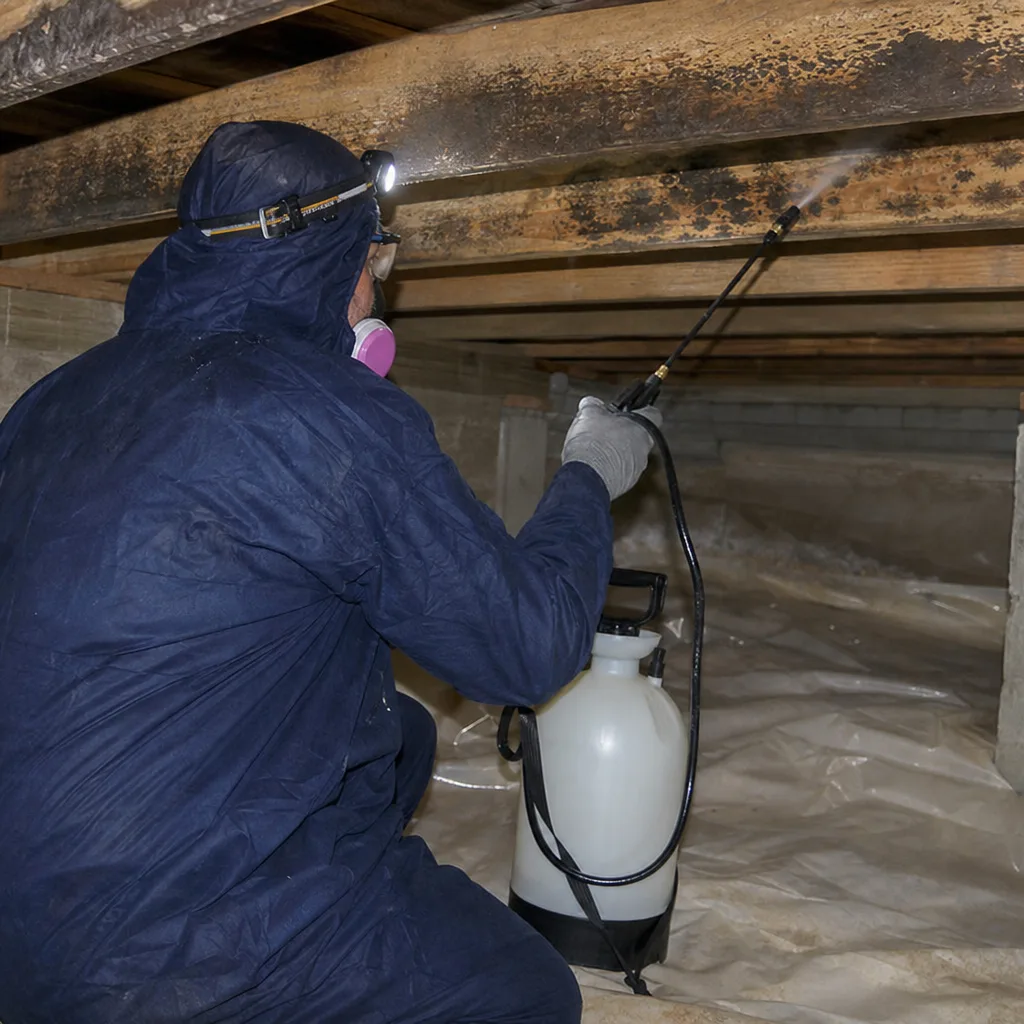
Persistent smoke odor indicates particulates trapped in porous materials or HVAC systems. We deploy thermal fogging, ozone treatment, and hydroxyl generators matched to the occupancy status of the home. For Winter Gardens properties with crawlspace moisture from winter runoff, we address the source odor (mold) separately from smoke odor, because masking one with the other fails within weeks.
Contents Cleaning & Pack-Out
Salvageable contents receive ultrasonic cleaning, deodorization, and secure storage in our facility. We inventory every item with photo documentation for insurance replacement value disputes. Non-salvageable items are documented for proof-of-loss with the same photo record standard.
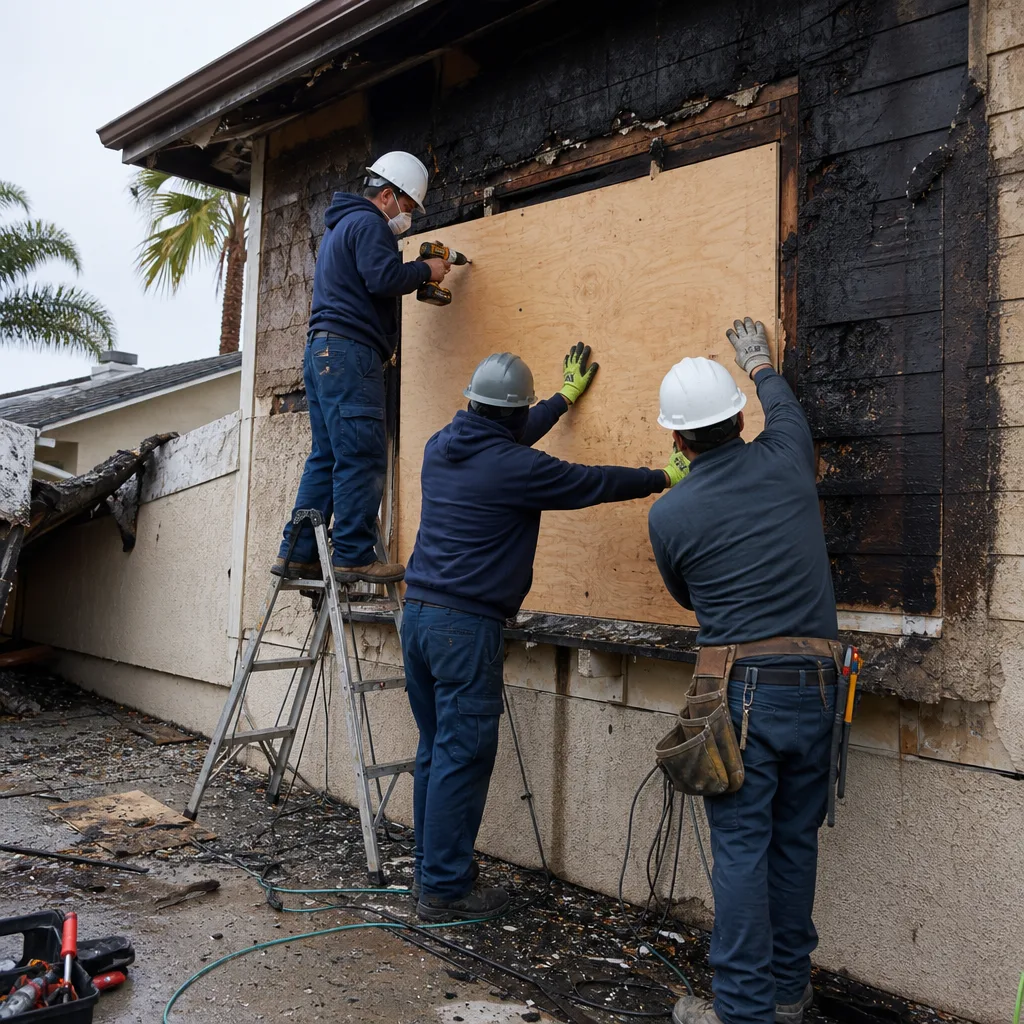
Emergency Board-Up & Tarping
Before Santa Ana winds arrive or winter rains begin, we secure compromised structures with materials rated for the specific exposures Winter Gardens faces. Our board-up work includes ventilation strategy to prevent moisture buildup in sealed structures, critical in the humid periods between fire season and winter rains.
What happens when you call
- 1
A real person answersNo phone trees - you reach a local pro.
- 2
You get an upfront price rangeHonest numbers before anyone is dispatched.
- 3
A background-checked tech heads outLicensed & insured, dispatched right away.
- 4
You approve before work beginsNothing starts until you say go.
Fire & Smoke Damage Restoration Costs in Winter Gardens, CA
Fire damage cleanup and smoke removal for a typical Winter Gardens single-family ranch home runs $2,800-$5,500 for light to moderate damage confined to 2-3 rooms. Heavy soot and odor requiring full HVAC cleaning and cavity deodorization pushes to $5,500-$8,500. Structural repair, including drywall replacement, flooring, insulation, and partial reconstruction, ranges $15,000-$45,000 depending on affected square footage and framing involvement.
What moves the price: the extent of smoke migration into wall cavities and HVAC systems, water damage from suppression efforts requiring structural drying, hazardous material testing in pre-1980s construction, and whether roof or framing compromise requires engineered repair. Insurance typically covers direct fire and smoke damage plus water damage from suppression; gradual moisture from post-fire winter runoff may require separate claim handling if the fire claim has already closed.
We provide a free visual inspection and written scope with line-item pricing before any work begins. Haven Standard, Clause 1: the price you approve is the price you pay, with no scope-creep additions once our crew is inside. Call (858) 683-1768 for your written estimate.
We Also Serve Cities Near Winter Gardens
Our crews respond throughout northeast San Diego County, including Winter Gardens and surrounding communities: Poway, Eucalyptus Hills, Ramona, and Santee. Each shares similar inland valley fire exposure and wildland-urban interface conditions, though Winter Gardens’s specific Cedar Fire history and hydrophobic-soil drainage patterns create restoration challenges unique to this community.
Serving Winter Gardens, CA - Our Local Coverage Area
We’re based in the Winter Gardens area and know this community well. Use the map below to see our service coverage - if you’re nearby, we can almost certainly help.
Winter Gardens Fire & Smoke Damage Restoration Questions, Answered
Winter Gardens had the Cedar Fire in 2003-why would my home still have moisture problems years later?
Post-fire hydrophobic soils repel water instead of absorbing it, so winter rainfall sheets off burned hillsides and concentrates against foundations. In Winter Gardens’s eastern-edge homes, this produces sub-slab moisture and crawlspace mold 12-18 months after the fire event, often after the fire-damage insurance file has already closed. We map these drainage paths during initial fire assessment and document conditions for potential supplemental claims. Call (858) 683-1768 for moisture mapping.
Why does fire and smoke damage restoration in Winter Gardens usually require more than just cleaning soot off the walls?
Santa Ana wind-driven fires force fine ash and smoke particulates deep into HVAC systems, wall cavities, and attic insulation where surface cleaning never reaches. In Winter Gardens’s wood-frame ranch homes with varying vapor retarder quality, these particulates continue re-soiling cleaned surfaces and can mask underlying moisture damage from suppression efforts or subsequent winter runoff. Our process includes thermal imaging, cavity inspection, and moisture mapping to find what cleaning alone misses. Call (858) 683-1768 for a full assessment.
My Winter Gardens ranch home was rebuilt after 2003-does that make restoration easier or harder?
Post-Cedar Fire rebuilds vary widely in construction quality and moisture barrier installation. Some contractors sealed attics and installed proper vapor retarders; others did not, creating pockets where smoke and moisture migrate unpredictably. We test each rebuilt home individually rather than assuming code-compliance, because inconsistent post-fire construction across Winter Gardens’s mixed-age blocks makes template scoping unreliable. Call (858) 683-1768 for property-specific assessment.
Do you board up and tarp in Winter Gardens before the Santa Ana winds arrive?
Yes, our emergency board-up uses materials rated for Santa Ana wind loads, with specific attention to roof tarping that won’t tear in 40-60 mph gusts common during Winter Gardens fire season. We also engineer ventilation into sealed structures to prevent moisture buildup between fire damage and winter rains. Crews dispatched to Winter Gardens carry wind-rated materials as standard equipment. Call (858) 683-1768 for immediate board-up.
What does the drying and deodorization process actually involve after a Winter Gardens fire?
We establish drying goals using psychrometric data-specific humidity, temperature, and vapor pressure readings-then deploy Phoenix dehumidifiers and XPOWER air movers to achieve them. For deodorization, we match method to source: thermal fogging for porous materials, ozone or hydroxyl treatment for unoccupied spaces, and Injectidry cavity injection where smoke penetrated wall voids. Daily moisture logs document progress to IICRC S500 standards. Call (858) 683-1768 for process details.
How fast can your crew actually get to Winter Gardens?
We commit to 45 minutes from dispatch to arrival in Winter Gardens, with live phone coverage 24 hours a day, 7 days a week and no voicemail on emergency lines. Our San Diego coordination office dispatches crews already stocked with fire-specific equipment, so assessment and board-up begin immediately upon arrival. Call (858) 683-1768 and a real person answers.
Will insurance cover fire and smoke damage restoration in Winter Gardens?
Homeowners insurance typically covers direct fire and smoke damage, water damage from suppression efforts, and debris removal. The 12-18 month delayed moisture and mold from post-fire hydrophobic-soil runoff may require a supplemental claim if the original fire claim has closed. We document all conditions with photo records, moisture logs, and written scopes that adjusters accept without dispute, and we coordinate directly with your carrier. Call (858) 683-1768 for claim documentation support.
Can my family stay in the home during fire and smoke damage restoration?
Occupancy depends on damage extent and active work phase. During initial soot removal and deodorization with ozone or thermal fogging, the home must be vacant. Once air quality testing confirms safe particulate levels and structural repairs begin, partial occupancy may be possible depending on which zones are active. We provide written air quality documentation for your insurer and your family’s decision. Call (858) 683-1768 to discuss your specific situation.
Written by Alicia Brennan, Owner at Back to Dry Restoration, serving Winter Gardens since 2011 under The Haven Standard.
Fire & Smoke Damage Restoration in Nearby Areas